Step-by-Step Car Travel Training for Anxious Dogs
Learn how to safely train an anxious dog to love car rides with this step-by-step guide, including gear recommendations and a desensitization timeline.

Introduction to Canine Car Anxiety
Sharing your life with a dog means sharing your adventures, but for many pets, the car is a source of immense stress rather than excitement. Canine car anxiety can manifest as excessive panting, drooling, whining, trembling, or even destructive behavior. Unlike simple motion sickness, which is a physiological response to movement, car anxiety is a psychological fear often rooted in negative past experiences, lack of early socialization, or a feeling of lost control. Fortunately, through systematic desensitization and counter-conditioning, you can rewrite your dog's emotional response to travel.
This step-by-step training guide will walk you through transforming your vehicle from a scary metal box into a safe, comfortable space. We will cover essential gear, precise training phases, and troubleshooting tips to ensure your dog feels secure on the road.
Pre-Travel Preparation: Essential Gear
Before beginning your training protocol, you must establish a safe physical environment. A dog that feels physically unstable in a moving vehicle will never fully relax. According to the Center for Pet Safety, standard walking harnesses are not designed to withstand the kinetic forces of a car crash and can actually cause severe internal injuries.
Restraint Systems and Costs
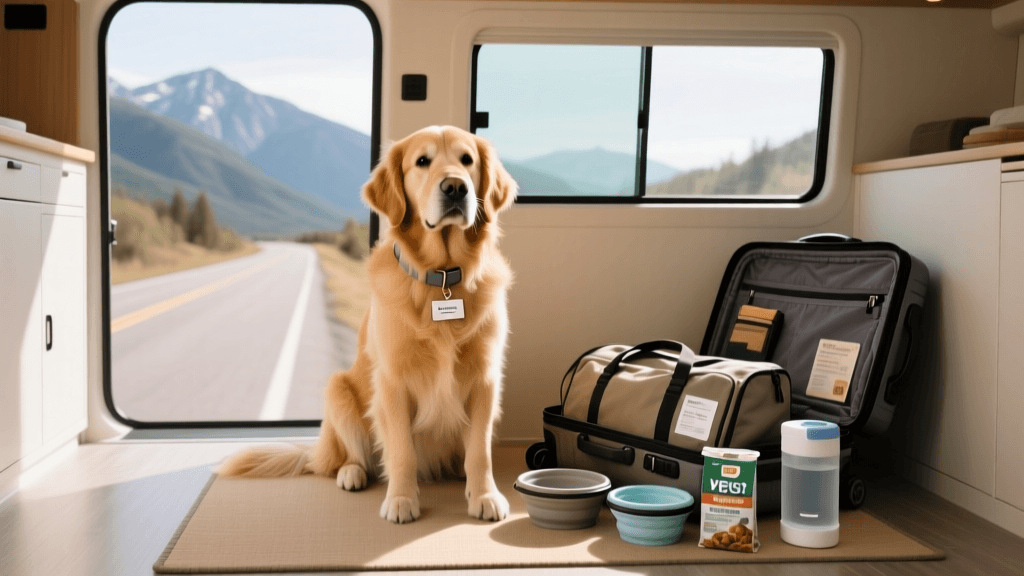
- Crash-Tested Harness: The Sleepypod Clickit Sport (approx. $90) is a widely recommended, independently crash-tested harness that secures your dog using the vehicle's existing seatbelt system. It distributes force across the chest and shoulders.
- Secured Crate: For crate-trained dogs, a crash-tested kennel like the 4Pets ProLine Milan (approx. $300) anchored to the vehicle's tie-down points is the gold standard for safety.
- Non-Slip Matting: Place a rubberized mat or a specialized dog car seat cover (approx. $40) on the seat or crate floor to prevent your dog's paws from slipping, which drastically reduces baseline anxiety.
Calming Aids and High-Value Treats
You will need a treat pouch filled with high-value, easily consumable rewards. Avoid crunchy biscuits that take time to chew. Instead, opt for soft treats like Zuke's Mini Naturals ($8 per bag) or squeeze tubes of peanut butter. For highly anxious dogs, consider using an Adaptil Transport Spray (approx. $15) on their bedding 15 minutes before training to release calming canine-appeasing pheromones.
The Step-by-Step Desensitization Protocol
Desensitization requires breaking the car experience into micro-steps. Never force your dog into the car, as this will trigger a fight-or-flight response and set your training back weeks. Keep all training sessions short—between 5 to 10 minutes maximum.
Phase 1: The Parked Car (Days 1-3)
Goal: Create a positive association with the car while it is completely stationary and turned off.
- The Approach: Walk your dog toward the car on a loose leash. The moment they look at the car without pulling away, mark the behavior with a 'Yes!' and give a treat.
- The Sniff Test: Open all the car doors to remove the feeling of being trapped. Toss high-value treats onto the floorboards and seats. Let your dog enter and exit freely.
- The Settlement: Once your dog willingly hops in, ask them to sit or lie down on their designated non-slip mat. Feed them a continuous stream of treats for 30 seconds, then calmly walk away from the car. This teaches them that entering the car predicts great things, and exiting is just as easy.
Phase 2: Engine On, No Movement (Days 4-6)
Goal: Desensitize your dog to the sound and vibration of the engine without the added stress of motion.
- Have your dog settle on their mat in the parked car.
- Step outside, close the door, and start the engine.
- Immediately get back in the car and begin feeding high-value treats. The engine running must predict a 'treat party'.
- After 2 to 3 minutes, turn the engine off, stop feeding treats, and let your dog out. Repeat this twice a day.
Phase 3: Short Drives and Positive Destinations (Days 7-14)
Goal: Introduce motion while ensuring the destination is highly rewarding.
Many dogs only associate the car with trips to the veterinarian. To break this negative association, your first few moving trips must end at a highly positive location, such as a favorite hiking trail or a park where they love to play fetch.
- Secure your dog in their crash-tested harness or crate.
- Drive for exactly 2 to 5 minutes around your quiet neighborhood.
- Pull into the driveway of a local park, unclip the leash, and engage in 15 minutes of vigorous play.
- Load the dog back into the car and drive straight home. Gradually increase the drive time by 2 minutes every subsequent session.
Training Timeline and Milestones
Use the table below to track your dog's progress. Remember, every dog learns at their own pace. If your dog shows signs of stress (lip licking, yawning, whale eye), drop back to the previous phase for another 2-3 days.
| Training Phase | Estimated Duration | Primary Goal | Success Metric to Advance |
|---|---|---|---|
| Phase 1: Parked Car | 3 - 5 Days | Voluntary entry and settling | Dog jumps in immediately and lies down on mat without hesitation. |
| Phase 2: Engine Idling | 3 - 5 Days | Tolerance to noise and vibration | Dog remains relaxed, accepts treats, and shows no panting or trembling. |
| Phase 3: Short Drives | 7 - 14 Days | Motion tolerance and positive association | Dog remains seated/lying down during turns and stops without vocalizing. |
| Phase 4: Long Trips | Ongoing | Endurance and routine maintenance | Dog sleeps or relaxes during drives exceeding 20 minutes. |
Troubleshooting Common Roadblocks
My dog refuses to eat treats in the car.
Refusal of high-value food is a primary indicator that a dog is over their stress threshold. If your dog won't eat, the environment is too overwhelming. Make the scenario easier: close the car doors but don't sit inside, or stand further away from the vehicle and toss treats toward it.
My dog paces and whines as soon as the car moves.
This often indicates a lack of physical stability. Ensure your harness is fitted snugly (you should only be able to slide two fingers between the harness and your dog's chest). If they are in a crate, ensure the crate is tightly secured with straps so it does not shift during braking.
Differentiating Anxiety from Motion Sickness
It is vital to distinguish between psychological fear and physiological motion sickness. According to the American Kennel Club, motion sickness in dogs is often related to their inner ear vestibular system, which may not be fully developed in puppies or may be highly sensitive in certain breeds. Symptoms of motion sickness include excessive drooling, smacking lips, vomiting, and lethargy, even if the dog appears calm.
If your dog exhibits these physical symptoms despite successful desensitization training, consult your veterinarian. They may prescribe anti-nausea medications such as Cerenia (maropitant citrate), which blocks the neurokinin-1 receptors in the brain that trigger vomiting, allowing your dog to travel comfortably while you continue behavioral training.
Final Thoughts on Patience and Consistency
'The greatest mistake in car training is rushing the process. A single terrifying trip to the vet before the dog is ready can undo weeks of positive conditioning. Always prioritize your dog's emotional state over your travel schedule.' — Certified Canine Behavior Consultant Consensus
Training an anxious dog to tolerate car travel is a marathon, not a sprint. By investing in proper safety gear, utilizing high-value rewards, and strictly following a step-by-step desensitization timeline, you can help your dog overcome their fear. For more comprehensive guidelines on traveling safely with pets, always refer to resources provided by the American Veterinary Medical Association (AVMA). With patience and consistency, the car will eventually become just another cozy room in your shared life together.
tom-renshaw
All our authors care for dogs every day — read more of their work on the authors page.