Diagnosing and Solving Dog Leash Reactivity on Walks
Discover the root causes of dog leash reactivity and learn proven, step-by-step solutions to transform stressful walks into peaceful outings.
Understanding Leash Reactivity: Fear vs. Frustration
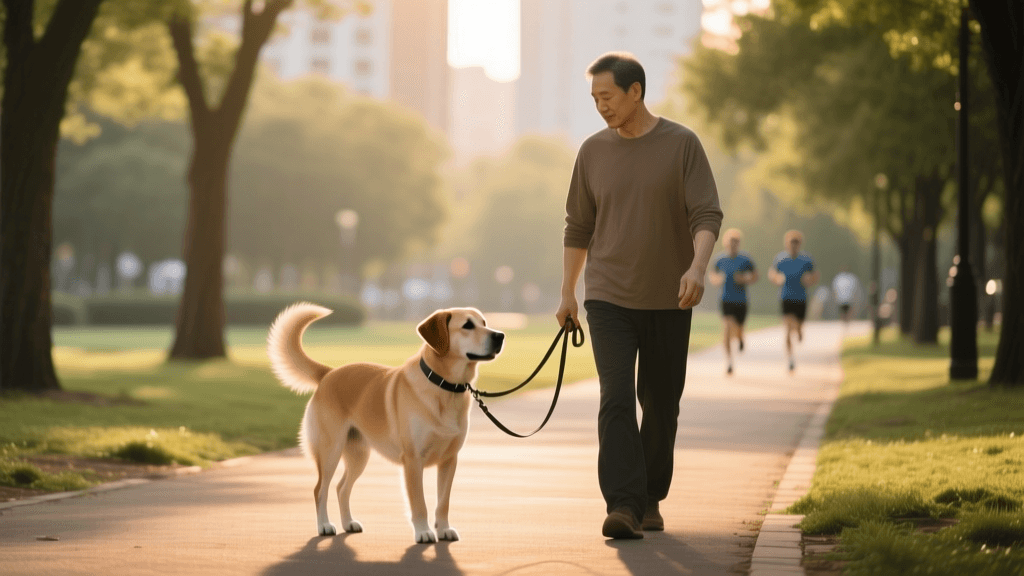
Leash reactivity is one of the most stressful behavioral challenges a dog owner can face. If your dog barks, lunges, or pulls aggressively toward other dogs, people, or moving objects while on a walk, you are not alone. However, before you can solve the problem, you must accurately diagnose the root cause. According to the ASPCA, reactivity is rarely about true aggression; it is almost always an emotional response driven by either fear or frustration.
Fear-Based Reactivity: A fearful dog lunges because they feel trapped by the leash and want to increase the distance between themselves and the trigger. According to body language guides published by The Humane Society of the United States, signs of fear include a tucked tail, pinned-back ears, 'whale eye' (showing the whites of the eyes), and a tense, low posture. The lunge is a defensive mechanism designed to make the scary thing go away.
Frustration-Based Reactivity: Also known as 'barrier frustration,' this occurs when a dog is highly social and desperately wants to greet the trigger, but the leash holds them back. Signs include a high, wagging tail, forward-leaning posture, whining, and frantic pulling. While the outcome (barking and lunging) looks identical to fear, the underlying emotion is excitement, not terror.
Reactivity is a symptom of an underlying emotional response, not a measure of your dog's obedience or your training skills.
The Wrong Gear: What to Stop Using Immediately
Many owners unintentionally worsen reactivity by using the wrong walking equipment. Retractable leashes, which can extend up to 26 feet, teach dogs that pulling yields more freedom. Furthermore, they offer zero emergency control if your dog bolts into traffic. Similarly, aversive tools like choke chains, prong collars, and shock collars inflict pain or discomfort when the dog pulls. If a dog is reacting out of fear, adding pain to the presence of a trigger will only validate their belief that the trigger is dangerous, severely worsening the reactivity over time.
The Right Gear: Tools for Success
To safely manage and train a reactive dog, you need equipment that provides control without causing pain. A front-clip harness is the gold standard. When the dog pulls, the front attachment gently redirects their momentum back toward you, naturally breaking their forward focus. Here is a comparison of top-rated options:
| Equipment | Best For | Estimated Cost | Pros & Cons |
|---|---|---|---|
| Freedom No-Pull Harness | Strong pullers | $35 - $45 | Pros: Dual-clip option, velvet-lined chest. Cons: Can be tricky to size initially. |
| Rabbitgoo No-Pull Harness | Everyday walks | $20 - $30 | Pros: Highly affordable, reflective strips. Cons: Less durable for extreme chewers. |
| Gentle Leader Headcollar | Severe lunging | $15 - $25 | Pros: Maximum head control. Cons: Requires slow desensitization; dogs often paw at it. |
Pair your chosen harness with a standard 4-to-6-foot biothane or leather leash. Biothane is highly recommended because it is waterproof, easy to clean, and does not burn your hands if the dog pulls suddenly.
The 'Engage-Disengage' Training Protocol
Once you have the right gear, you can begin counter-conditioning. The most effective method for leash reactivity is the 'Engage-Disengage' game, popularized by modern force-free trainers and endorsed by behavior experts at the American Kennel Club (AKC). This protocol changes your dog's emotional response to triggers from 'panic/excitement' to 'calm anticipation of a reward.'
Step 1: Find the Sub-Threshold Distance
A 'threshold' is the distance at which your dog notices a trigger but remains capable of learning. If your dog is barking, they are over threshold. For some dogs, this distance is 50 feet; for others, it is 150 feet. You must start training at a distance where your dog can look at the trigger and still easily take a treat from your hand.
Step 2: Mark the 'Engage' (Looking at the Trigger)
When your dog spots the trigger (e.g., another dog across the street), immediately mark the behavior. Use a clicker or a consistent verbal marker like 'Yes!' The timing is critical: the mark must happen within 1 second of your dog noticing the trigger, but before they begin to bark or lunge.
Step 3: Reward the 'Disengage' (Turning to You)
After the mark, your dog will naturally turn their head toward you to get the treat. Deliver a high-value reward immediately. Over time, your dog will learn that seeing another dog is simply the cue to look at you for a snack.
The Importance of High-Value Treats
Dry kibble will not work for reactivity training. You need treats that are pungent, soft, and highly motivating. Top choices include:
- Boiled Chicken Breast: Cut into pea-sized pieces. (Cost: ~$5/lb)
- Freeze-Dried Beef Liver: Extremely aromatic and easy to break apart. (Cost: ~$15/bag)
- String Cheese: Great for cold weather when meat treats freeze. (Cost: ~$4/pack)
Management Strategies for Daily Walks
Training takes months, but you still need to walk your dog daily. Management prevents your dog from rehearsing the reactive behavior. Every time your dog practices lunging, the neural pathway associated with that behavior grows stronger. Use these strategies to protect your training progress:
| Trigger Type | Average Threshold | Management Action |
|---|---|---|
| Unfamiliar Dogs | 30 - 50 feet | Cross the street, use parked cars as visual barriers, or step behind a tree. |
| Skateboards/Bikes | 20 - 40 feet | Step off the path into the grass; ask your dog to sit and scatter treats on the ground. |
| Strangers Approaching | 10 - 20 feet | Advocate for your dog. Politely say, 'We are in training, please do not approach.' |
The Emergency U-Turn: Teach a 'Let's Go!' cue in a low-distraction environment like your living room. Say 'Let's Go!', pivot 180 degrees, and run a few steps away, rewarding heavily when your dog catches up. When you encounter a surprise trigger on a walk that is too close, use this cue to quickly retreat to a safe distance before your dog reacts.
Time-Shifting Your Walks: If your neighborhood is overly busy, shift your walking schedule. Walking at 6:00 AM or 9:30 PM drastically reduces the volume of dogs and pedestrians, allowing your dog to decompress and get exercise without the constant stress of triggers.
When to Call a Professional
While many cases of leash reactivity can be improved with patience, consistency, and the protocols outlined above, some situations require professional intervention. If your dog has a history of biting, if you feel physically unable to hold them back, or if their reactivity is causing you severe anxiety, it is time to seek help. Look for a certified professional who uses force-free, science-based methods. Credentials to look for include CPDT-KA (Certified Professional Dog Trainer) or IAABC (International Association of Animal Behavior Consultants). A professional can provide real-time feedback, help you accurately read your dog's subtle stress signals, and create a customized desensitization plan to help you and your dog reclaim the joy of walking together.
marcus-aldridge
All our authors care for dogs every day — read more of their work on the authors page.