How to Train Senior Dogs: Cognitive Enrichment Tips
Discover effective senior dog training techniques, cognitive enrichment games, and joint-friendly obedience tips to keep your aging pup sharp and happy.
The Golden Years: Why Training Matters for Senior Dogs
When we think of dog training, we often picture energetic puppies learning to sit or leash walk. However, training is a lifelong journey. As your dog enters their senior years—typically around age seven for large breeds and age ten for smaller breeds—their physical capabilities may decline, but their need for mental stimulation remains just as critical. In fact, engaging in senior dog training and cognitive enrichment is one of the most effective ways to stave off age-related mental decline and improve your aging companion's quality of life.
According to the ASPCA, senior dogs benefit immensely from routines that challenge their brains. Mental exercise tires a dog out just as effectively as physical exercise, making it an ideal activity for dogs with mobility issues, arthritis, or heart conditions. By adapting your training methods to suit their aging bodies, you can keep your senior dog sharp, happy, and deeply engaged with their environment.
Adapting Training to Physical Limitations
Before introducing new tricks or enrichment games, it is vital to assess your senior dog's physical health. Conditions like osteoarthritis, hip dysplasia, and degenerative myelopathy can make traditional obedience training painful or frustrating.
Creating a Safe Training Environment
Slippery floors are a major hazard for aging dogs. Before starting any training session, ensure your dog has secure footing. Invest in non-slip rug pads, such as the Gorilla Grip Extra Strong Rug Pad (8x10 feet, approx. $45), or interlocking foam play mats. This provides the traction needed for your dog to stand confidently without fear of splaying their hips.
Adjusting for Vision and Hearing Loss
Many senior dogs experience lenticular sclerosis (cloudy eyes) or age-related hearing loss. If your dog is losing their hearing, transition from verbal cues to distinct hand signals. If their vision is fading, rely on scent-based enrichment and verbal markers. Always approach a visually or hearing-impaired dog from the front where they can see you or feel your gentle vibrations on the floor before initiating a training session to prevent startling them.
Top Cognitive Enrichment Products for Seniors
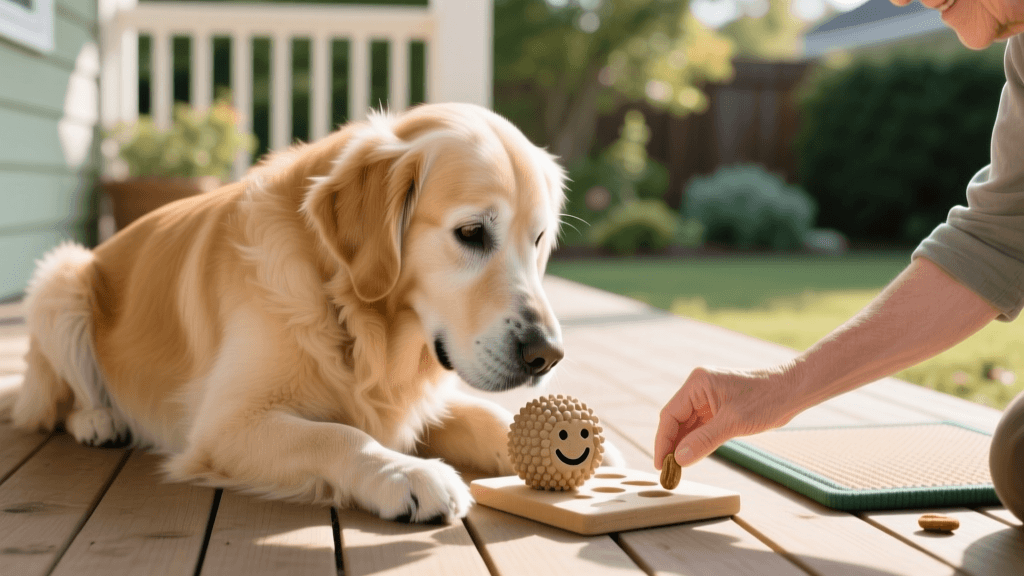
Interactive toys are fantastic for promoting neuroplasticity in older dogs. Here are three highly recommended, joint-friendly enrichment products:
- Outward Hound Dog Brick Interactive Puzzle ($15-$20): This intermediate-level puzzle requires dogs to flip lids and slide blocks to reveal hidden treats. It encourages problem-solving without requiring excessive physical movement. Because it is made of BPA-free, phthalate-free plastic, it is safe for senior dogs with sensitive gums.
- Kong Senior (Purple) ($12-$18): Specifically formulated for aging teeth and jaws, the purple Kong is made from a softer rubber compound. Stuff it with a mixture of plain pumpkin puree, low-sodium chicken broth, and kibble, then freeze it for two hours. This provides up to 45 minutes of soothing, low-impact mental stimulation.
- Wool Snuffle Mats ($25-$35): Sniffing is a powerful cognitive exercise. A dog's brain dedicates a massive amount of processing power to scent analysis. Sprinkle high-value, smelly treats (like freeze-dried salmon) into the fleece strips of a snuffle mat. Ten minutes of active sniffing can be as mentally exhausting as a one-mile walk.
Comparison Chart: Training Adjustments by Life Stage
| Life Stage | Primary Training Focus | Ideal Session Length | Physical Considerations |
|---|---|---|---|
| Puppy (2-6 mos) | Socialization, basic cues, bite inhibition | 5-10 minutes | Growth plates open; avoid repetitive jumping |
| Adult (1-7 yrs) | Advanced obedience, agility, trick training | 15-30 minutes | Peak physical condition; high endurance |
| Senior (7+ yrs) | Cognitive enrichment, scent work, low-impact tricks | 3-5 minutes | Arthritis, sensory loss, lower stamina |
Step-by-Step: Teaching the 'Hand Target' to Low-Mobility Dogs
The 'Hand Target' (or 'Touch') is an invaluable trick for senior dogs. It teaches the dog to touch their nose to your palm, which can be used to guide them onto a car ramp, off a slippery couch, or through a doorway without needing to pull their leash or grab their collar.
- Preparation: Sit on the floor or a low chair next to your dog. Have a pouch of soft, pea-sized treats (like Zuke's Mini Naturals) ready.
- The Presentation: Hold your open palm about two inches from your dog's nose. Most dogs will naturally lean forward to sniff your hand.
- The Marker: The exact millisecond their nose makes contact with your skin, use a verbal marker like 'Yes!' or click a clicker.
- The Reward: Feed the treat from your opposite hand, moving your target hand away to reset the behavior.
- Progression: Gradually increase the distance. Hold your hand a foot away, then two feet away, encouraging your dog to take a step. Never force the dog to move quickly; let them navigate their stiff joints at their own pace.
Diet, Treats, and Joint Support During Training
Senior dogs have slower metabolisms, meaning training treats can quickly lead to obesity, which exacerbates joint pain. According to the American Kennel Club (AKC), maintaining a lean body condition is one of the best ways to extend a senior dog's lifespan.
Use your dog's daily kibble allotment for training sessions, or switch to ultra-low-calorie options. Greenies Senior Dental Treats (approx. $22 for 27 oz) are formulated with joint-supporting ingredients and are easily breakable into tiny pieces. Additionally, consult your veterinarian about adding an Omega-3 fatty acid supplement, such as Nordic Naturals Omega-3 Pet ($20), to your dog's diet. Omega-3s have been clinically shown to reduce joint inflammation and support cognitive function in aging canines.
Sample Weekly Cognitive Enrichment Schedule
Consistency is key for senior dogs. Here is a structured, low-impact weekly schedule designed to keep their brain active without overtaxing their body:
- Monday: 5 minutes of Hand Target practice in the hallway; 10 minutes of frozen Kong Senior in the crate.
- Tuesday: 'Find It' scent game. Hide 5 strong-smelling treats around the living room and encourage your dog to sniff them out.
- Wednesday: 5 minutes of gentle grooming and massage (tactile enrichment); Outward Hound Dog Brick puzzle for dinner.
- Thursday: Short, 10-minute 'sniffari' walk in a quiet, flat grassy park. Let the dog dictate the pace and stop to smell every bush.
- Friday: Review basic cues (Sit, Down, Look at Me) using hand signals; reward with soft, high-value treats.
- Weekend: Snuffle mat feeding for breakfast; car ride to a new, quiet location for novel visual and olfactory stimulation.
Recognizing Canine Cognitive Dysfunction (CCD)
While training helps maintain brain health, it is important to monitor your senior dog for signs of Canine Cognitive Dysfunction (CCD), a condition similar to Alzheimer's disease in humans. The Humane Society of the United States notes that symptoms often include disorientation, wandering into corners and getting stuck, changes in sleep-wake cycles, and a sudden disregard for previously learned house-training rules.
If you notice these signs, do not punish your dog. They are not being stubborn; their brain is undergoing pathological changes. Consult your veterinarian immediately. There are prescription diets rich in antioxidants and medium-chain triglycerides (MCTs), such as Hill's Prescription Diet b/d, as well as medications like Selegiline, that can significantly slow the progression of CCD and improve your dog's cognitive baseline.
Conclusion
Training a senior dog is not about demanding perfect obedience or physical feats; it is about preserving their dignity, independence, and joy. By swapping high-impact physical drills for scent work, puzzle toys, and gentle targeting exercises, you provide your aging dog with a sense of purpose. The golden years should be exactly that—golden, enriching, and filled with quiet, rewarding moments of connection between you and your lifelong companion.
marcus-aldridge
All our authors care for dogs every day — read more of their work on the authors page.