Curing Leash Reactivity: Diagnosis and Solutions
Is your dog lunging or barking on walks? Learn how to diagnose leash reactivity triggers and apply proven, step-by-step training solutions today.
Understanding Leash Reactivity: More Than Just Bad Behavior
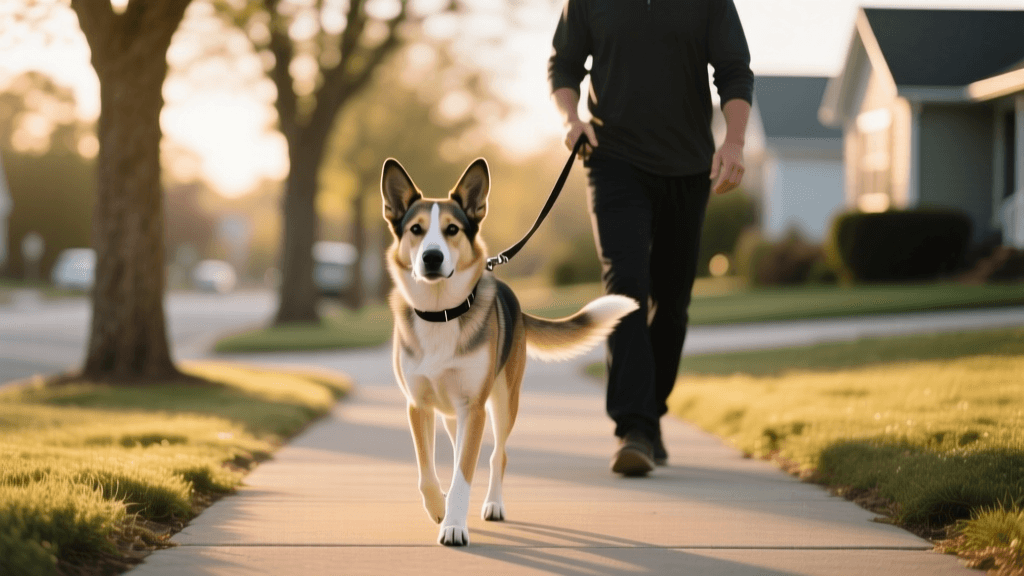
Leash reactivity is one of the most common, yet deeply misunderstood, behavioral challenges faced by dog owners. If your dog lunges, barks, growls, or pulls aggressively when they see other dogs, people, or vehicles while on a walk, you are dealing with reactivity. It is crucial to understand that reactivity is not synonymous with aggression, nor is it a sign of a bad dog. Instead, it is a symptom of an underlying emotional response—typically fear, anxiety, or intense frustration—compounded by the physical restriction of a leash.
When a dog is off-leash in an open environment, they have the autonomy to increase distance from a perceived threat or approach a stimulus at their own pace. A leash removes this choice, creating a feeling of being trapped. According to the ASPCA, many dogs display leash-specific reactive behaviors that completely vanish in off-leash, controlled environments. To solve this problem, we must move beyond simple obedience commands and address the root emotional triggers through systematic desensitization and counterconditioning.
Diagnosing the Root Cause: Fear vs. Frustration
Before implementing a training protocol, you must accurately diagnose the motivation behind your dog's reactivity. Misdiagnosing a frustrated greeter as a fearful dog can lead to training methods that inadvertently increase anxiety. Conversely, treating a fearful dog with frustration-based protocols can push them over their stress threshold. Below is a diagnostic comparison to help you identify your dog's primary driver.
| Behavioral Trait | Fear-Based Reactivity | Frustration-Based Reactivity |
|---|---|---|
| Underlying Emotion | Anxiety, self-preservation, desire to increase distance. | Excitement, arousal, barrier frustration, desire to decrease distance. |
| Body Language | Tucked tail, pinned ears, whale eye, cowering, stiff posture. | Loose but frantic wiggles, play bows, whining, pulling forward. |
| Off-Leash Behavior | Avoidance, hiding, or defensive aggression if cornered. | Overly exuberant greeting, lack of social boundaries, playful. |
| Primary Goal | Make the scary thing go away. | Get to the stimulus to interact or play. |
Understanding this distinction is vital. The American Kennel Club (AKC) emphasizes that while the outward display of barking and lunging looks identical to the untrained eye, the internal emotional state requires entirely different behavioral modification strategies.
Essential Gear for Reactive Dog Training
Attempting to train a reactive dog with inadequate equipment is a recipe for failure and potential injury. You need gear that provides control without causing pain. Avoid prong collars, choke chains, and e-collars. The American Veterinary Society of Animal Behavior (AVSAB) strongly advises against aversive tools, noting they can suppress warning signs and increase underlying anxiety, leading to unpredictable bites.
Recommended Equipment List
- Front-Clip Harness: The Kurgo Tru-Fit Smart Harness (Cost: ~$35) features a reinforced front chest ring. When the dog pulls, the front clip gently redirects their momentum back toward you, breaking their forward focus without choking.
- Fixed-Length Leash: Use a 6-foot leather or biothane leash, such as the Mendota Pets British Bridle Leather Leash (Cost: ~$30). Never use retractable leashes. Retractable leashes maintain constant tension, which naturally triggers the opposition reflex and encourages pulling.
- High-Value Treats: Dry kibble will not cut through the adrenaline of a reactive episode. Use Zuke's Mini Naturals (Cost: ~$8) or boiled chicken breast. Treats should be pea-sized to allow for rapid consumption.
- Treat Pouch: The Doggone Good Rapid Rewards Pouch (Cost: ~$25) features a magnetic closure for split-second access. Fumbling with zippers while a trigger approaches will ruin your training timing.
- Clicker: A Karen Pryor i-Click (Cost: ~$5) provides a consistent, sharp acoustic marker that cuts through environmental noise.
Step-by-Step Solution: The Engage-Disengage Game
Developed by certified dog trainer Leslie McDevitt, the Engage-Disengage game is a cornerstone protocol for treating leash reactivity. It operates on the principles of classical and operant conditioning, teaching the dog that seeing a trigger predicts a reward, rather than a confrontation.
Phase 1: Mark and Reward (Classical Conditioning)
Find your dog's threshold distance. This is the distance at which your dog notices the trigger (e.g., another dog) but remains under their stress threshold—meaning they can still eat treats and respond to cues. For many dogs, this is 50 to 100 feet.
- Stand at the threshold distance with your dog on a loose leash.
- The moment your dog looks at the trigger, click your clicker (or say the word Yes!).
- Immediately deliver a high-value treat. The dog turns away from the trigger to eat.
- Repeat this 10 to 15 times per minute. The goal is to build a positive conditioned emotional response: other dogs equal chicken.
Phase 2: Voluntary Disengagement (Operant Conditioning)
Once your dog reliably looks at you after the click in Phase 1, it is time to delay the marker. When the dog looks at the trigger, wait. Do not click immediately. Wait for your dog to voluntarily turn their head away from the trigger and look up at you. The moment they make eye contact, click and treat. This shifts the dog from a passive recipient of treats to an active participant in their own behavioral modification.
Management Strategies for Daily Walks
Training takes time, and you still need to walk your dog daily. Management prevents rehearsal of the reactive behavior. Every time your dog practices lunging, the neural pathway for that behavior is reinforced.
- The Emergency U-Turn: Teach the Let's Go cue in a distraction-free environment. Say Let's Go, turn 180 degrees, and run three steps away, delivering a treat when the dog catches up. Use this in the real world when a trigger suddenly appears around a blind corner.
- Visual Barriers: Use parked cars, hedges, or fences to block your dog's line of sight to approaching triggers. Out of sight truly helps keep the dog under threshold.
- Time of Day: Walk your dog during off-peak hours, such as early morning or late evening, to minimize unexpected encounters.
Sample Daily Training Schedule
- Morning (15 mins): Decompression sniff-walk in an isolated area (e.g., empty field or quiet industrial park) using a 15-foot biothane long line.
- Afternoon (10 mins): Indoor mental enrichment. Use a Kong stuffed with frozen peanut butter or practice scent work to drain mental energy without triggering reactivity.
- Evening (20 mins): Controlled Engage-Disengage practice at a local park bench, sitting 100 feet away from the main path.
When to Seek Professional Help
While many dogs improve significantly with dedicated owner training, some cases require the intervention of a certified professional. If your dog has a history of biting, if you feel physically unable to hold them, or if their anxiety is so severe they refuse food even at vast distances, it is time to hire a Certified Applied Animal Behaviorist (CAAB) or a veterinary behaviorist. They can create customized desensitization plans and, if necessary, discuss anti-anxiety medications with your veterinarian to lower your dog's baseline arousal levels, making training possible.
Medications such as Fluoxetine or Trazodone are not sedatives that knock your dog out; rather, they balance neurotransmitters like serotonin, allowing the brain to process new learning and form positive associations. Medication combined with behavior modification is widely considered the gold standard for severe anxiety-based reactivity.
Overcoming leash reactivity is a marathon, not a sprint. By accurately diagnosing the root cause, equipping yourself with the right tools, and applying consistent, science-based conditioning protocols, you can transform your walks from a source of dread into a bonding experience.
marcus-aldridge
All our authors care for dogs every day — read more of their work on the authors page.