Stop Leash Reactivity: Diagnosis and Proven Fixes
Discover the root causes of dog leash reactivity and learn proven, step-by-step training solutions to transform your stressful walks into peaceful strolls.
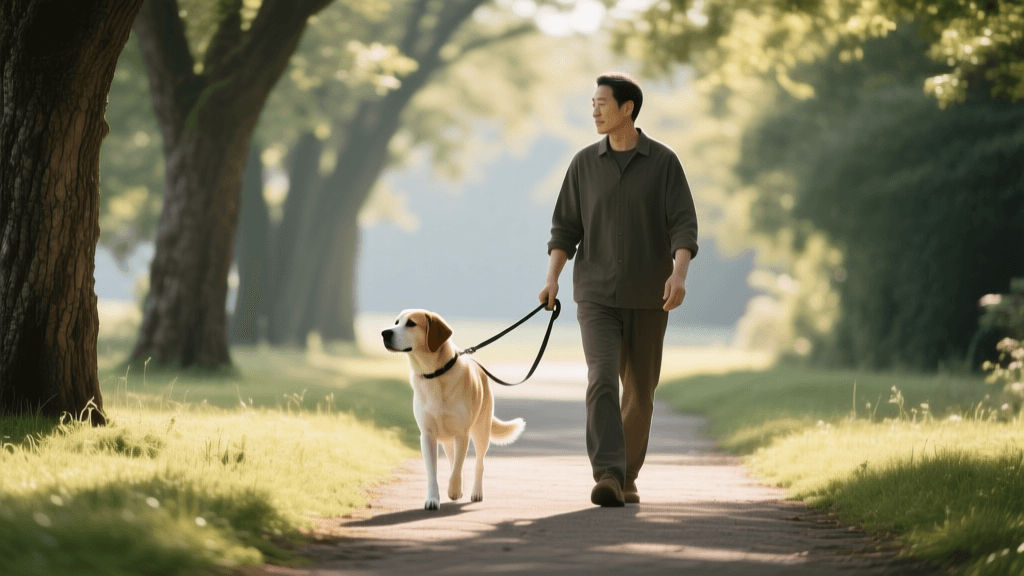
Leash reactivity is one of the most frustrating and emotionally draining behavioral issues a dog owner can face. What begins as a simple walk around the block can quickly devolve into a chaotic tug-of-war, complete with barking, lunging, and growling at other dogs, cyclists, or strangers. However, reactivity is not a sign of a "bad" dog; it is a symptom of an underlying emotional response. By accurately diagnosing the root cause and implementing structured, reward-based solutions, you can rewrite your dog's emotional response to triggers.
Diagnosing the Root Cause: Fear vs. Frustration
Before implementing any training protocol, you must diagnose why your dog is reacting. According to the ASPCA's dog behavior resources, reactivity generally stems from two distinct emotional states: fear or barrier frustration.
1. Fear-Based Reactivity
A fearful dog reacts to create distance between themselves and the trigger. Their body language often includes a tucked tail, pinned-back ears, whale eye (showing the whites of the eyes), and a low, stiff posture. The barking is essentially a defense mechanism that says, "Stay away from me." If the trigger retreats, the dog's behavior is reinforced because the scary thing went away.
2. Barrier Frustration (Leash Frustration)
Conversely, a frustrated dog actually wants to approach the trigger but is prevented by the leash. These dogs often display loose, wiggly body language, play bows, and high-pitched whining when off-leash, but transform into lunging, barking monsters when the leash is clipped on. The leash acts as a physical barrier, causing a buildup of adrenaline and frustration that manifests as reactivity.
Understanding the "Threshold" Concept
The cornerstone of diagnosing and treating reactivity is understanding your dog's "threshold." The threshold is the distance or intensity level at which your dog notices a trigger but remains capable of learning and taking treats.
- Sub-Threshold: Your dog sees the trigger but remains relaxed. Ears are forward, breathing is normal, and they will readily eat treats. This is the only zone where active learning occurs.
- Over-Threshold: Your dog has crossed the line into panic or extreme arousal. They will refuse high-value food, stare intensely, lunge, or bark. Training is impossible in this state; you must manage the environment and increase distance immediately.
Essential Gear for Reactive Dog Training
Having the right equipment is non-negotiable for safety and effective communication. Avoid retractable leashes and aversive tools (like prong or shock collars), as the American Veterinary Society of Animal Behavior (AVSAB) strongly warns that punishment-based tools can increase fear and aggression. Invest in the following:
- Front-Clip Harness: The Ruffwear Front Range Harness (approx. $39.95) features a front chest leash attachment. When the dog pulls, the front clip gently steers them back toward you, neutralizing their physical leverage without causing pain.
- Long Line: A 15-foot Biothane training leash (approx. $35.00). Biothane is waterproof, easy to clean, and provides a secure grip. The 15-foot length allows you to give your dog space to decompress while maintaining control.
- High-Value Treats: Standard kibble will not compete with the adrenaline of a trigger. Use boiled chicken breast, string cheese, or Zuke's Mini Naturals (approx. $7.99 per 6oz bag). Keep them in a dedicated treat pouch like the Ruffwear Treat Trader ($29.95) for rapid delivery.
Step-by-Step Solution: The Engage-Disengage Game
Popularized by Leslie McDevitt in her "Control Unleashed" program, the Engage-Disengage game is a gold-standard classical conditioning exercise. It teaches the dog that seeing a trigger predicts a reward, rather than a confrontation.
Phase 1: Engage (Mark and Reward)
- Stand with your dog at a sub-threshold distance from a trigger (e.g., 50 feet away from a calm, leashed dog).
- The moment your dog looks at the trigger, use a marker word like "Yes!" or click a clicker. Timing is critical: the marker must occur within 1 second of the dog noticing the trigger.
- Immediately deliver a high-value treat. The dog will turn away from the trigger to get the food. Repeat this 10-15 times per session.
Phase 2: Disengage (Voluntary Look-Away)
- Once your dog reliably turns to you after hearing the marker, wait a beat. Let your dog look at the trigger, but do not mark immediately.
- Wait for your dog to voluntarily disengage (look away from the trigger and back up at you).
- The second they make eye contact with you, mark ("Yes!") and reward heavily.
This phase shifts the dog's default behavior from staring at the trigger to checking in with the handler.
Trigger Distance & Reward Value Matrix
Use this structured matrix to diagnose your dog's current state and determine the correct training action and reward tier.
| Trigger Distance | Dog's Emotional State | Recommended Action | Reward Value |
|---|---|---|---|
| Over Threshold (e.g., <20 ft) | Panic, Lunging, Barking, Refusing Food | Emergency U-Turn, Increase Distance, Calm Voice | N/A (Focus on Retreat) |
| Edge of Threshold (20-40 ft) | Alert, Stiff Posture, Whale Eye, Slow Eating | Engage-Disengage Game, LAT (Look At That) | High-Value (Boiled Chicken, Cheese) |
| Sub-Threshold (40+ ft) | Relaxed, Ears Forward, Soft Eyes, Playful | Obedience Cues, Focus Work, Decompression Sniffing | Medium-Value (Kibble, Training Biscuits) |
Management Strategies for Daily Walks
While training rewires the brain, management prevents rehearsing the bad behavior. Every time your dog practices lunging, the neural pathway associated with that reaction grows stronger. The American Kennel Club's training experts emphasize that managing the environment is just as important as the active training sessions.
- Time of Day: Walk your dog during "off-peak" hours, such as early morning (before 7:00 AM) or late evening, to minimize unexpected encounters with other dogs.
- Visual Barriers: Use parked cars, hedges, or fences to block your dog's line of sight to approaching triggers. If a dog is coming down the sidewalk, calmly cross the street or step behind a visual barrier.
- The Emergency U-Turn: Teach a cue like "Let's Go!" in a low-distraction environment. Pair the phrase with a rapid 180-degree turn and a jackpot of treats. When a surprise trigger appears, use this cue to flee the scene before your dog crosses their threshold.
- Advocating for Your Dog: Do not allow strangers or unfamiliar dogs to approach your dog under the guise of "they just want to say hi." It is your responsibility to protect your dog's threshold. Use visual cues like a yellow ribbon on the leash or a "Do Not Pet" patch on the harness to signal to the public that your dog needs space.
The Role of Decompression Walks (Sniffaris)
Training a reactive dog is cognitively exhausting for them. To prevent "trigger stacking"—where a dog's baseline stress hormone levels remain elevated over consecutive days—you must incorporate decompression walks. Also known as "Sniffaris," these outings take place in low-traffic, open areas like rented private fields or quiet nature trails. Using your 15-foot Biothane long line, allow your dog to roam and sniff at their own pace. Sniffing lowers a dog's heart rate and encourages the release of dopamine and endorphins, effectively resetting their nervous system after a challenging training week.
Troubleshooting Common Setbacks
Problem: My dog won't eat treats on walks.
Diagnosis: Your dog is over-threshold. Adrenaline suppresses the digestive system and appetite.
Solution: You are too close to the trigger. Increase your distance by 20 to 30 feet immediately. If your dog still refuses food, end the walk and return home to decompress.
Problem: My dog is fine with dogs, but reactive to skateboards.
Diagnosis: Reactivity is often highly specific to the trigger's movement or sound.
Solution: You must run the Engage-Disengage protocol separately for each specific trigger. Generalization does not happen automatically; a dog who learns to be calm around a Golden Retriever may still panic at a speeding cyclist.
Problem: My dog reacts to people wearing hats or carrying umbrellas.
Diagnosis: This is known as "neophobia" or fear of novel objects. Dogs generalize poorly, so a person with an umbrella looks like a completely different entity than a person without one.
Solution: Perform desensitization exercises at home first. Leave the umbrella or hat on the floor and reward your dog for investigating it voluntarily. Once they are comfortable, have a family member hold the item at a distance while you feed high-value treats, gradually decreasing the distance over multiple sessions.
"Reactivity is a marathon, not a sprint. Celebrate the micro-victories: a momentary glance away from a trigger, a relaxed tail carriage, or a willingness to take a treat. Progress is measured in inches, not miles."
Conclusion
Overcoming leash reactivity requires a blend of astute diagnosis, environmental management, and consistent, positive reinforcement. By respecting your dog's thresholds, utilizing the right gear, and changing their underlying emotional response, you can transform stressful outings into confident, peaceful adventures. Remember, if your dog's reactivity includes biting or severe aggression, consult a certified veterinary behaviorist immediately to ensure the safety of both your dog and the community.
beth-carrasco
All our authors care for dogs every day — read more of their work on the authors page.