Best Dog Breeds for Remote Workers: 2026 Training Guide
Discover how to train the best dog breeds for remote workers in 2026. Master home-office obedience, Zoom-call quietness, and independent play.
The 2026 Remote Work Landscape and Canine Companions
As we navigate the professional landscape of 2026, the home office is no longer just a temporary setup; it is a permanent,2026 fixture for millions of remote and hybrid workers. With this permanent shift, the demand for canine companions that thrive in a work-from-home environment has skyrocketed. However, simply adopting a low-energy breed is not enough to guarantee a peaceful workday. Identifying the best dog breeds for remote workers requires a dedicated, modernized approach to behavioral conditioning, obedience training, and environmental desensitization. In 2026, our homes are filled with smart doorbells, automated delivery drones, and high-definition video conferencing tools. A successful home office dog must be trained to ignore these modern distractions while providing the comforting presence that remote workers crave. According to the American Kennel Club's training resources, a dog's ability to settle in a dynamic environment is a learned skill, not just an innate trait. This comprehensive guide will explore the most suitable breeds for remote workers and provide actionable, step-by-step training protocols to transform your furry friend into the ultimate home office colleague.
Top Dog Breeds for Remote Workers and Their Training Profiles
When selecting a breed for a home office environment, we look for dogs that naturally possess a lower baseline energy level, a high capacity for independent relaxation, and a biddable nature. However, every breed comes with unique training quirks that must be addressed early on.
Cavalier King Charles Spaniel
The Cavalier King Charles Spaniel is widely considered one of the best dog breeds for remote workers due to their intense desire to be near their humans and their naturally calm indoor demeanor. From a training perspective, Cavaliers are highly food-motivated and eager to please, making basic obedience a breeze. The primary training challenge for this breed in a home office setting is preventing separation anxiety and velcro-dog behaviors. Because they want to be on your lap during every waking moment, you must actively train them to be comfortable on their own bed across the room. Training must focus on building their confidence in independent resting, utilizing high-value chew toys and positive reinforcement for staying on their designated mat while you work at your desk.
Greyhound
Often jokingly referred to as 45-mph couch potatoes, retired racing Greyhounds or standard Greyhounds make exceptional home office companions. They require a dedicated morning sprint or long walk, but once their physical exercise needs are met, they are prone to sleeping for up to eighteen hours a day. Training a Greyhound for the home office revolves around teaching the 'settle' command and managing their prey drive. Because they are sighthounds, sudden movements outside your home office window can trigger a barking response. Training must involve heavy window desensitization and teaching a reliable recall away from the window to ensure your afternoon meetings remain uninterrupted.
Basset Hound
Basset Hounds are famously low-energy and incredibly stubborn, which ironically makes them great for remote workers who need a dog that will simply sleep under the desk all day. However, their scent-driven nature means they can become easily distracted by the smell of your lunch or a neighbor walking by. Training a Basset Hound requires immense patience and the use of ultra-high-value treats, as standard kibble will rarely hold their attention. The ASPCA's dog training guidelines emphasize that scent hounds require specialized enrichment to keep their noses busy and their minds tired, which is crucial for preventing them from howling out of boredom while you are on a conference call.
Shiba Inu
For remote workers who prefer a more independent, cat-like companion, the Shiba Inu is a top contender. Shibas are naturally quiet, fastidious, and generally do not suffer from separation anxiety, making them ideal for days when you might need to step away from your home office. The training hurdle with Shibas is their aloofness; they do not obey simply to please you. Training must be gamified and kept in very short, five-minute bursts to maintain their interest. For the home office, the primary training goal is teaching them to respect physical boundaries, ensuring they do not decide to sleep directly on top of your computer tower or keyboard.
Comparative Training Data Table
Understanding the specific training needs and energy profiles of these breeds is crucial for setting realistic expectations in a remote work environment. The table below outlines the key training metrics for the best dog breeds for remote workers in 2026.
| Breed | Energy Level | Trainability Score | Best Training Method | Home Office Quirk |
|---|---|---|---|---|
| Cavalier King Charles | Low to Moderate | 9/10 | Positive Reinforcement | Prone to lap-sleeping; needs mat training |
| Greyhound | Low (Indoors) | 6/10 | Lure and Reward | Visual triggers; needs window desensitization |
| Basset Hound | Very Low | 4/10 | Scent-Based Enrichment | Food-driven; needs strict lunch-boundary rules |
| Shiba Inu | Moderate | 5/10 | Gamified Short Sessions | Highly independent; needs boundary respect |
Core Training Pillar 1: The 'Place' Command for Video Calls
The most critical skill for any home office dog in 2026 is a rock-solid 'Place' or 'Settle' command. This command instructs your dog to go to a specific bed or mat and remain there until released, which is essential for maintaining a professional background during video calls. To train this effectively, follow this progressive four-step protocol:
- Step 1: The Lure and Mark. Start with a high-value treat and a designated office mat. Lure your dog onto the mat. The moment all four paws are on the mat, use a marker word like 'Yes' or a clicker, and reward them directly on the mat. Repeat this until the dog confidently steps onto the mat upon seeing it.
- Step 2: Adding the Cue and Duration. Introduce the verbal cue 'Place' just before luring. Once they are on the mat, delay the reward by one second, then three seconds, then five seconds. You are teaching them that staying on the mat is what generates the reward, not just stepping on it.
- Step 3: Distance and Desk Integration. Move your chair to your desk. Give the 'Place' command from your seated position. Reward the dog for remaining on their mat while you type on your keyboard. Gradually increase the time between rewards, transitioning from continuous reinforcement to a variable schedule of reinforcement.
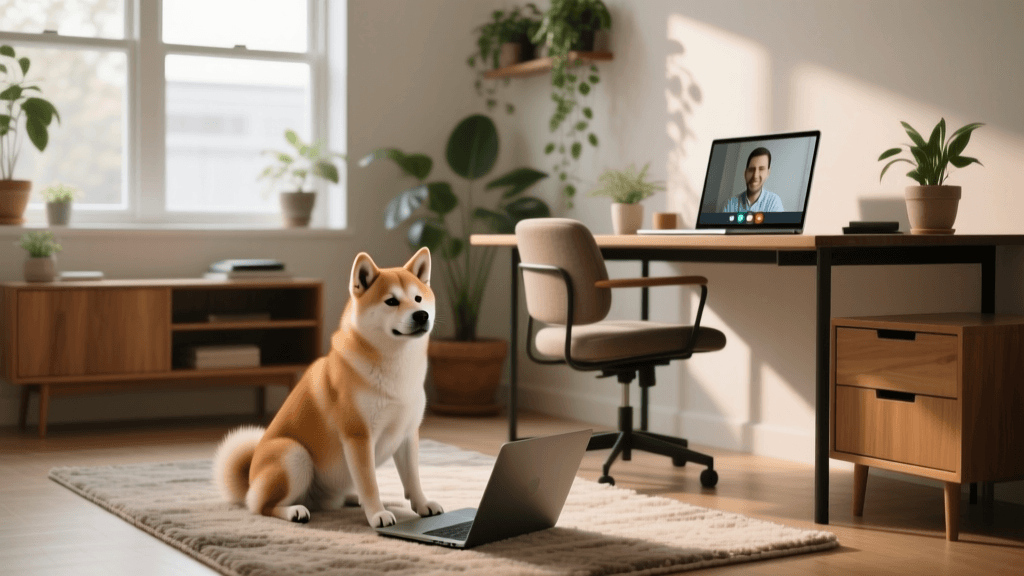
- Step 4: The Zoom Call Simulation. This is the ultimate test. Set up a mock video call with a colleague or record yourself speaking loudly to a camera. Give the 'Place' command. If the dog stays on the mat despite your animated talking and hand gestures, provide a massive jackpot reward, such as a long-lasting chew or a stuffed puzzle toy, to keep them occupied for the duration of the simulated meeting.
Core Training Pillar 2: Audio Desensitization for the Smart Home
The modern 2026 smart home is a minefield of auditory triggers. Smart doorbells chime from smartphones, delivery drones buzz through the neighborhood, and robotic vacuums activate on automated schedules. If your dog reacts to these sounds with barking, your remote work productivity will plummet. Desensitization and counter-conditioning are the only reliable methods to combat this.
Begin by recording the specific sounds that trigger your dog, or find them online. Play the sound at a volume so low that your dog notices it but does not react. The exact millisecond the sound plays, feed your dog a high-value treat. This process, known as classical counter-conditioning, changes the dog's emotional response to the noise from alarm to anticipation of food. Over several weeks, gradually increase the volume. For smart doorbells, you must also train an incompatible behavior. When the doorbell rings, the dog cannot be barking at the door and simultaneously holding a 'Place' command on their office mat. By chaining the doorbell sound to the 'Place' command, you turn a major distraction into a cue for your dog to go to their bed and settle down, ensuring you can answer the door or check the security camera in peace.
Core Training Pillar 3: Fostering Independent Enrichment
Remote workers often make the mistake of interacting with their dogs every time they take a five-minute screen break. While bonding is important, this creates a dog that expects constant entertainment and will whine or paw at you when you are deep in focused work. Fostering independent enrichment is a vital training pillar.
Invest in modern, durable puzzle toys and lick mats. In 2026, there are numerous app-controlled treat dispensers that can be scheduled to release kibble at random intervals, which is excellent for keeping a dog's brain engaged without your direct involvement. However, the foundational training involves teaching the dog how to interact with these toys without frustration. Start by making the puzzle incredibly easy, ensuring the dog succeeds and gets the food reward immediately. Slowly increase the difficulty. Implement a strict rule: when the human is typing, the dog must be engaged with an independent enrichment activity or sleeping. If the dog approaches and paws for attention while you are working, ignore the behavior completely. Only reward and acknowledge the dog when they are resting quietly or playing independently. This behavioral conditioning teaches the dog that calm independence is the most rewarding state of being in the home office.
Conclusion
Selecting one of the best dog breeds for remote workers is only the first step in creating a harmonious home office environment. Whether you choose the affectionate Cavalier, the sleepy Greyhound, the stubborn Basset Hound, or the independent Shiba Inu, success in 2026 relies entirely on proactive, consistent training. By mastering the 'Place' command, systematically desensitizing your dog to the unique sounds of the modern smart home, and fostering independent enrichment, you can ensure that your canine companion remains a comforting, quiet, and supportive presence throughout your workday. Remember that behavioral conditioning is an ongoing process, and investing the time into these specific training protocols will yield years of uninterrupted productivity and profound companionship.
jonas-cole
All our authors care for dogs every day — read more of their work on the authors page.