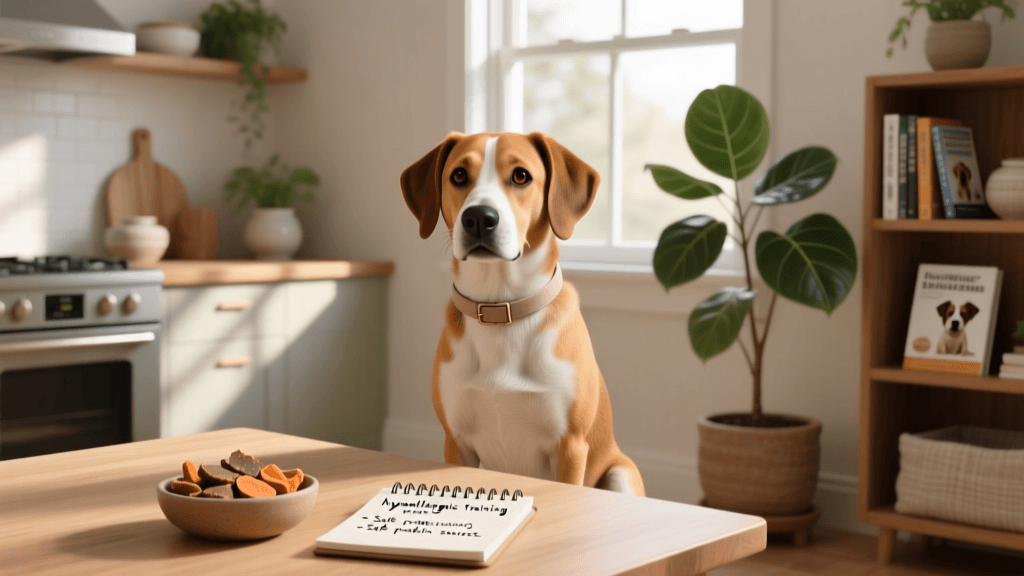
Training Your Dog to Be Safe and Calm Around Toddlers
Learn step-by-step training techniques to help your dog stay calm and safe around toddlers, including boundary setting and desensitization.

Introduction: Navigating the Toddler and Dog Dynamic
Welcoming a toddler into a home with a dog is a beautiful milestone, but it also introduces a unique set of behavioral challenges. Toddlers are unpredictable, loud, and prone to sudden, erratic movements. For a dog, this environment can be highly stimulating or deeply stressful. According to the Centers for Disease Control and Prevention (CDC), children are among the most common victims of dog bites, and these incidents frequently occur during everyday, seemingly benign interactions. Proactive training is not just about teaching cute tricks; it is about establishing a robust framework of safety, mutual respect, and clear communication. This comprehensive guide provides actionable, family-focused training strategies to ensure your dog and toddler can coexist peacefully and safely.
Understanding the Toddler-Dog Dynamic
Dogs rely heavily on body language, predictable routines, and clear boundaries. Toddlers, conversely, are agents of chaos. They stumble, drop food, scream, and frequently invade personal space without warning. The American Society for the Prevention of Cruelty to Animals (ASPCA) emphasizes that managing the environment and teaching your dog coping skills are critical before a child becomes fully mobile. The ultimate goal is to train your dog to make safe choices independently—such as retreating to a designated bed when overwhelmed—rather than relying solely on the parent to intervene and manage every interaction.
Step 1: Mastering the "Place" Command for Instant Boundaries
The "Place" command is arguably the most valuable tool for families with young children. It teaches your dog to go to a specific mat or elevated cot and stay there until formally released. This is essential when a toddler is having a tantrum, eating a messy snack, or when you need to carry the child through a narrow hallway.
Product Recommendation
Invest in an elevated cot like the Coolaroo Elevated Pet Bed (approximately $40, dimensions 35x22 inches). Elevated beds provide a clear visual boundary and keep the dog off the floor, making it easier for the dog to understand exactly where their "safe zone" is. Pair this with a Kong Classic (approx. $15) stuffed with frozen peanut butter to keep them occupied.
Training Protocol
- Phase 1: Lure and Reward. Hold a high-value treat, such as Zuke's Mini Naturals (2.5 calories each, $6 per bag), near your dog's nose and guide them onto the cot. The moment all four paws are on the bed, say "Yes!" and give the treat.
- Phase 2: Adding the Cue. Once the dog reliably follows the lure, point to the bed and say "Place." Reward immediately upon compliance.
- Phase 3: Building Duration. Ask your dog to hold the "Place" for 3 seconds before rewarding. Gradually increase the time by 2-second increments per training session. Keep sessions short—no more than 5 to 10 minutes—to prevent frustration.
- Phase 4: Adding Distance and Distraction. Take one step back while the dog is on the bed. Return and reward. Slowly increase your distance, eventually practicing while a toddler is playing in the same room (with the toddler safely contained in a playpen).
Step 2: The "Leave It" Command for Dropped Snacks and Toys
Toddlers are notorious for dropping food and leaving small toys on the floor. Dropped foods like raisins, grapes, or items containing xylitol are highly toxic to dogs, while small plastic toys pose a severe choking or intestinal blockage hazard. A rock-solid "Leave It" command can prevent emergency veterinary visits.
Training Protocol
Start with two types of treats: a low-value kibble and a high-value treat like boiled chicken or small pieces of cheese. Place the low-value treat in your closed fist and present it to your dog. They will sniff, lick, and paw at your hand. Ignore this behavior. The exact second they pull their nose away or stop trying, mark the behavior with a "Yes!" and reward them with the high-value treat from your other hand. Never give them the treat they were told to leave. Once they master the closed fist, move to an open palm, then to treats on the floor, always covering the floor treat with your hand or foot if they lunge for it. Practice this daily during toddler mealtimes from a safe distance.
Step 3: Desensitizing Your Dog to Erratic Movements and Noises
Toddlers cry, squeal, and run with uncoordinated, jerky movements. If your dog is sound-sensitive, you must desensitize them before these noises trigger a prey drive or fear-based reaction. Utilize classical counter-conditioning to change your dog's emotional response.
Audio Desensitization
Search online for audio tracks of babies crying and toddlers screaming. Play the track at a barely audible volume (around 10% to 20%). While the audio plays, feed your dog high-value treats continuously. When the audio stops, the treats stop. Over several weeks, increase the volume by 10% increments, ensuring your dog remains relaxed and below their stress threshold. If they pant, pace, or refuse treats, the volume is too high.
Visual Desensitization
Enlist a friend or family member to mimic toddler movements—stumbling, crawling, and waving arms—while you feed your dog treats. Keep the dog on a leash at a distance of 10 to 15 feet, gradually closing the gap over multiple sessions as the dog remains calm.
Environmental Management: Gates, Pens, and Crates
Training takes time, and management is the bridge between your dog's current behavior and your ultimate goals. You must prevent your dog from rehearsing unwanted behaviors, like chasing a running toddler. Below is a comparison of essential management tools for families.
| Tool | Recommended Product | Estimated Cost | Best Use Case |
|---|---|---|---|
| Pressure-Mounted Baby Gate | Regalo Easy Step Walk Thru Gate (29" tall) | $40 - $50 | Blocking off kitchens or staircases; keeping dog out of toddler's play areas when unsupervised. |
| Foldable Metal Exercise Pen | Midwest Foldable Metal Exercise Pen (8 panels, 24" high) | $45 - $60 | Creating a temporary, large safe zone for the toddler or the dog in an open-concept living room. |
| Heavy-Duty Wire Crate | Frisco Double Door Dog Crate (36" to 42" depending on breed) | $50 - $80 | Providing a secure, den-like sleeping area for the dog; essential for overnight separation and nap times. |
Creating a Canine "Safe Zone"
Every dog needs a sanctuary where they know they will not be bothered by small hands. This is especially critical when the toddler is learning to walk and explore. Set up a dog-only room or a gated-off corner of the house. Equip this space with an ASPCA-recommended Adaptil Calm Pheromone Diffuser (approx. $25) to reduce anxiety, and a white noise machine (approx. $30) to drown out the sound of toddler tantrums or loud cartoons. Teach your toddler early on that "when the dog is on their bed, we do not touch them." While a toddler may not fully grasp this concept immediately, consistently modeling this behavior for the child while enforcing the dog's boundaries creates a culture of respect in the home.
Conclusion: Patience and Consistency
Training a dog to live safely with a toddler is not a weekend project; it is an ongoing lifestyle adjustment. By mastering the "Place" and "Leave It" commands, systematically desensitizing your dog to chaotic noises, and utilizing physical management tools like gates and pens, you drastically reduce the risk of accidents. Always supervise interactions between dogs and young children, and never hesitate to consult a certified professional dog trainer or a veterinary behaviorist if your dog shows signs of resource guarding, fear, or aggression. With patience, consistency, and the right training framework, your dog and toddler can build a beautiful, safe, and lifelong bond.
beth-carrasco
All our authors care for dogs every day — read more of their work on the authors page.