Top Mobility Assistance Dog Harnesses for 2026: 3 Best Picks
Discover the top mobility assistance dog harnesses for 2026. Compare Ruffwear, Bold Lead, and custom options for balance, pulling, and daily support.
The Evolution of Mobility Assistance Gear in 2026
Sharing your life with a working dog is a profound partnership, especially when your canine companion is a mobility assistance dog. These highly trained dogs provide life-changing support, offering balance, bracing, and pulling assistance to handlers with physical disabilities. As we navigate 2026, the landscape of working dog equipment has seen remarkable advancements. Modern harnesses now utilize aerospace-grade neoprene, lightweight carbon-fiber reinforced handles, and biomechanically engineered straps that distribute weight more evenly than ever before.
Choosing the right mobility harness is not just about handler convenience; it is fundamentally about canine welfare and longevity. A poorly fitted or improperly designed harness can cause severe spinal torque, shoulder chafing, and long-term musculoskeletal injuries. According to the American Veterinary Medical Association (AVMA), ensuring the physical well-being of service animals through proper equipment and task management is a critical component of responsible ownership. In this comprehensive guide, we break down the best mobility assistance dog harnesses for 2026, helping you find the perfect fit for your dog's specific tasks and body type.
Understanding Canine Biomechanics and Task Safety
Before diving into specific brands, it is vital to understand the biomechanics of mobility work. Mobility tasks generally fall into three categories: light balance support, deep bracing, and pulling (such as retrieving a manual wheelchair).
- Light Balance Support: The handler rests a hand on the dog's back or a soft handle to steady themselves while walking. This requires a harness that prevents shifting but does not need rigid structural support.
- Deep Bracing: The handler leans a significant portion of their body weight onto the dog to stand up or stabilize. This requires a rigid, custom-molded handle that transfers the downward force directly to the dog's strong chest and shoulder muscles, bypassing the spine.
- Pulling: The dog pulls a wheelchair or helps a handler up a ramp. This requires a specialized pulling harness with a rigid back plate and a rear attachment point to keep the dog's spine aligned with the direction of force.
The Assistance Dogs International (ADI) emphasizes that dogs must only be asked to perform tasks that are physically appropriate for their size and build, and that equipment must never compromise the dog's natural gait or breathing.
Top 3 Mobility Assistance Dog Harnesses for 2026
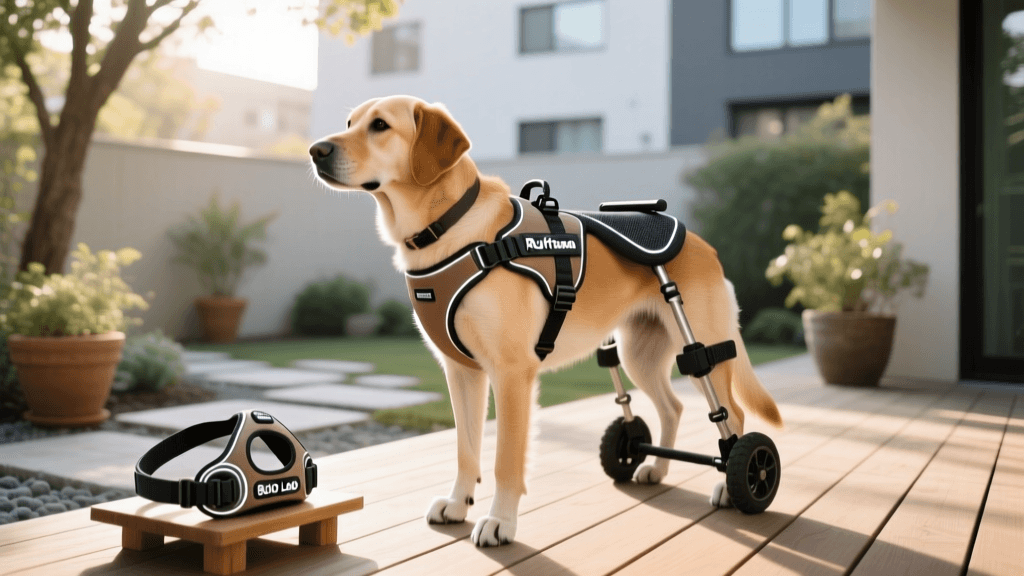
1. Bold Lead Designs Mobility Harness (Best for Heavy Bracing)
Bold Lead Designs has long been considered the gold standard in the service dog community, and their 2026 Mobility Harness continues to set the bar for heavy-duty bracing. Handcrafted in the USA, this harness features a rigid, leather-wrapped handle that is custom-fitted to the handler's height and grip preference.
The 2026 model introduces an updated ultra-plush, breathable sheepskin lining that drastically reduces the risk of axillary (armpit) chafing during long days out. The harness distributes downward bracing weight across the dog's sternum and ribcage, completely protecting the spine. Because it is custom-made, the pricing reflects the bespoke craftsmanship, typically ranging from $385 to $450 in 2026. It is the ultimate choice for handlers who rely on their large-breed dogs (like Golden Retrievers or Labrador Retrievers) for significant weight-bearing support.
2. Ruffwear Web Master Pro (Best for Lightweight Balance)
For handlers who require light to moderate balance support, counter-pressure for proprioception, or assistance with navigating stairs, the Ruffwear Web Master Pro is the standout choice for 2026. Priced accessibly between $95 and $115, this harness is designed for all-day comfort and high mobility.
The 2026 iteration features an improved anatomical strap design that sits further back from the dog's front legs, ensuring zero interference with the shoulder blades during a full range of motion. The padded, reinforced top handle is flexible but sturdy, perfect for a handler to lightly rest their hand upon for spatial awareness and minor stabilization. It also features dual leash attachment points (an aluminum V-ring on the back and a reinforced webbing loop on the chest), making it an excellent dual-purpose harness for both work and general walking.
3. Custom Canine Designs Rigid Mobility Harness (Best for Wheelchair Pulling)
If your primary need involves pulling a manual wheelchair or providing forward momentum assistance, Custom Canine Designs offers a specialized Rigid Mobility Harness that excels in this exact scenario. Priced around $420 to $480, this harness is engineered with a rigid internal frame that prevents the harness from collapsing onto the dog's back when pulling tension is applied.
The 2026 model includes a quick-release rear pulling strap with a heavy-duty carabiner, allowing the handler to attach and detach from the wheelchair in seconds. The chest plate is heavily padded with closed-cell foam, which does not absorb sweat or water, making it highly durable for active handlers who spend a lot of time outdoors.
2026 Comparison Chart: Finding Your Perfect Match
To help you visualize the differences between these top-tier options, here is a structured comparison of their features, ideal use cases, and current pricing.
| Harness Model | Best For | Handle Type | Primary Tasks | 2026 Est. Price |
|---|---|---|---|---|
| Bold Lead Designs Mobility | Heavy Bracing & Support | Rigid Custom Leather | Deep bracing, standing support | $385 - $450 |
| Ruffwear Web Master Pro | Light Balance & Daily Wear | Flexible Padded Nylon | Light balance, stair assistance, guiding | $95 - $115 |
| Custom Canine Rigid Mobility | Pulling & Forward Momentum | Rigid Frame with Pull Strap | Wheelchair pulling, ramp assistance | $420 - $480 |
The Daily Routine: Fitting, Working, and Decompressing
The Two-Finger Rule and Girth Measurements
A mobility harness is only as good as its fit. When measuring your dog, always use a soft fabric measuring tape. The most critical measurement is the girth, taken at the deepest part of the chest, just behind the front legs. In 2026, most premium manufacturers recommend the 'two-finger rule': you should be able to comfortably slide two fingers flat between the harness straps and your dog's skin. Any tighter will restrict breathing and cause friction burns; any looser will cause the harness to shift, rendering the bracing handle unsafe and potentially injuring your dog's spine.
Transitioning from Work to Rest
Life with a service dog requires strict boundaries to protect the dog's mental health. The mobility harness should serve as a clear environmental cue. When the harness is strapped on, the dog is in 'work mode' and should remain focused on the handler's physical needs. When you return home, or enter a safe, private space, removing the harness signals 'off-duty' time. According to the Americans with Disabilities Act (ADA) guidelines, while service dogs are trained to behave impeccably in public, they still require ample time to decompress, play, and engage in natural canine behaviors without the weight and psychological pressure of their working gear.
Harness Care and Maintenance
Given the significant investment in a high-quality mobility harness, proper maintenance is essential to ensure it lasts for years.
- Leather Components: If your harness features a leather handle (like the Bold Lead), condition the leather every three months using a high-quality, non-toxic leather balm to prevent cracking and drying.
- Nylon and Neoprene: For harnesses made of synthetic materials, hand wash them in a basin with cool water and a mild, dog-safe detergent. Never put them in a washing machine or dryer, as the heat can warp the internal rigid frames and weaken the structural webbing.
- Hardware Checks: Once a month, inspect all brass and aluminum hardware. Ensure that quick-release buckles snap cleanly and that D-rings show no signs of metal fatigue or warping from heavy pulling loads.
Final Thoughts on Partnering with Your Dog
Navigating the world with a physical disability is challenging, but a well-trained mobility assistance dog brings independence, confidence, and profound companionship. By investing in a biomechanically sound, properly fitted harness from a reputable manufacturer in 2026, you are protecting your dog's physical health and ensuring they can perform their vital tasks safely for years to come. Always consult with your service dog trainer or a veterinary physical therapist to ensure your chosen harness aligns perfectly with your dog's specific anatomy and your daily mobility needs.
aaron-whyte
All our authors care for dogs every day — read more of their work on the authors page.