2026 Canine OA Treatment: Librela, Home Mods, and Daily Care
Discover the latest 2026 canine OA treatments like Librela, plus essential home modifications and daily routines to keep your senior dog comfortable.
The Evolution of Canine OA Treatment in 2026
Osteoarthritis (OA) is a progressive, degenerative joint disease that affects a significant portion of the senior and large-breed dog population. For years, pet parents relied heavily on daily oral medications to manage their dog's pain, often worrying about long-term gastrointestinal or renal side effects. However, the landscape of veterinary pain management has shifted dramatically. In 2026, managing canine OA is no longer just about masking pain; it is a comprehensive, multimodal approach that combines breakthrough biologic therapies, targeted home environment modifications, and specialized daily routines to preserve mobility and maximize quality of life.
If you are sharing your life with a dog navigating the stiff joints and chronic discomfort of OA, adapting your home and daily schedule is just as critical as the medical treatments prescribed by your veterinarian. This guide explores the 2026 standard of care for canine OA, focusing on how to seamlessly integrate modern treatments into your everyday life.
The 2026 Medical Landscape: Librela vs. Traditional NSAIDs
The most significant advancement in recent years that continues to dominate the 2026 veterinary landscape is the widespread adoption of anti-Nerve Growth Factor (anti-NGF) monoclonal antibodies, most notably Librela (bedinvetmab). Unlike traditional Non-Steroidal Anti-Inflammatory Drugs (NSAIDs) that work systemically to reduce inflammation, Librela specifically targets and neutralizes NGF, a protein that is a key driver of OA pain signaling in the nervous system.
Because Librela is a species-specific canine monoclonal antibody, it is metabolized like a natural protein rather than processed through the liver or kidneys. This makes it a revolutionary option for senior dogs who may already have compromised renal function or who cannot tolerate daily NSAIDs. Administered as a simple monthly subcutaneous injection by your veterinarian, it provides continuous, round-the-clock pain relief without the daily pill fatigue.
Comparing 2026 OA Treatment Options
To understand how your dog's treatment plan fits into your daily routine, it helps to compare the primary medical options available today.
| Treatment Type | Examples | Administration | Pros for Daily Life | Considerations |
|---|---|---|---|---|
| Anti-NGF Monoclonal Antibodies | Librela (bedinvetmab) | Monthly Vet Injection | No daily pills; safe for dogs with liver/kidney issues; continuous pain control. | Requires monthly vet visits; takes up to 2 doses to see full effect. |
| NSAIDs | Carprofen, Meloxicam, Grapiprant | Daily Oral Chew/Pill | Rapid onset of action; highly effective for acute flare-ups and inflammation. | Requires regular bloodwork; potential GI, liver, or kidney side effects. |
| Polysulfated Glycosaminoglycans | Adequan Canine | IM Injections (Series) | Helps protect cartilage and improve joint lubrication; disease-modifying potential. | Requires an initial loading series of injections; often used as an adjunct therapy. |
Adapting Your Home Environment for an Arthritic Dog
Medical management is only half the battle. The physical space your dog navigates every day can either exacerbate their joint stress or provide a supportive sanctuary. In 2026, pet ergonomics is a major focus for owners of arthritic dogs.
Flooring and Traction
Slippery hardwood, tile, and laminate floors are the enemies of arthritic joints. When a dog slips, their stabilizing muscles and compromised joints take the brunt of the force, leading to micro-traumas and severe pain flare-ups.
- Area Rugs and Runners: Cover primary walking paths with low-pile, high-traction area rugs. Ensure they are secured with heavy-duty, non-slip rug gripper pads to prevent the rugs themselves from sliding.
- Interlocking Foam Mats: For play areas or feeding stations, EVA foam interlocking tiles provide excellent shock absorption and grip.
- Canine Toe Grips: If your dog refuses to wear traditional booties, veterinary-grade silicone toe grips that slide over the toenails can provide essential traction on smooth surfaces without altering their natural gait.
Ramps, Stairs, and Furniture Access
Jumping on and off beds, couches, or into vehicles places immense concussive force on the carpal, shoulder, hip, and stifle joints. Eliminating vertical jumps is a non-negotiable aspect of 2026 OA home care.
- Telescoping Aluminum Ramps: For SUVs and trucks, invest in a lightweight, telescoping aluminum ramp with a high-traction grit surface. Look for models that allow you to adjust the incline; a gentler slope (under 18 degrees) is crucial for dogs with severe hip or spinal OA.
- Dog Stairs with High-Density Foam: For couches and beds, use pet stairs featuring high-density foam cores and deep, wide treads. The wide treads allow your dog to place all four paws on a single step if needed, reducing the strain of balancing.
- Furniture Rearrangement: Consider moving your dog's favorite resting spots to the floor level, utilizing elevated, bolstered orthopedic beds so they do not feel left out of family cuddle time.
Orthopedic Bedding Upgrades
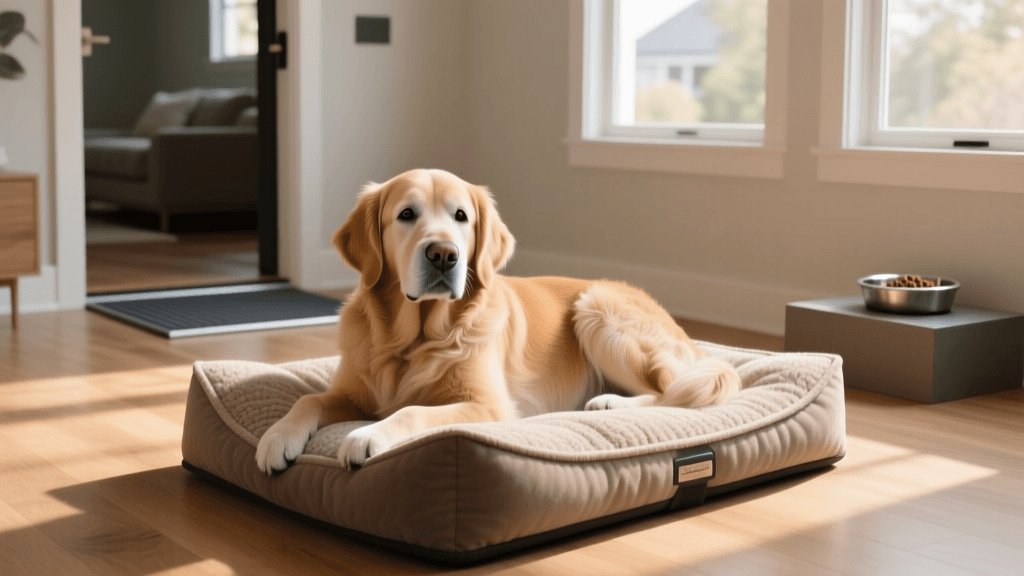
A standard stuffed dog bed offers zero support for a dog with OA. According to the American Kennel Club, proper joint support during sleep is vital for tissue repair and pain reduction. Invest in a bed with a minimum of 4 inches of high-density, medical-grade orthopedic memory foam. Bolstered edges are highly recommended, as they allow your dog to rest their head and limbs in a neutral, supported position, taking the pressure off their spine and hips. Additionally, look for beds with waterproof inner liners and machine-washable covers, as arthritic dogs may occasionally experience incontinence or difficulty getting up to go outside.
Modifying Your Daily Routine and Exercise
Exercise remains a critical component of OA management, as it maintains muscle mass which acts as a shock absorber for the joints. However, the type of exercise must change.
The "Sniffari" and Low-Impact Walks
Replace long, brisk, repetitive walks with "Sniffaris." A Sniffari is a slow, meandering walk where the dog is allowed to stop and sniff the environment as much as they like. Sniffing provides immense mental enrichment, which tires the dog out just as effectively as physical exertion, without the repetitive joint impact. Keep walks to 15-20 minutes, multiple times a day, rather than one long hour-long trek. Avoid walking on uneven, rocky terrain or steep hills, and stick to flat, forgiving surfaces like grass or well-maintained dirt paths.
Canine Massage and Passive Range of Motion (PROM)
Incorporating daily physical therapy techniques into your evening routine can significantly improve your dog's comfort.
- Effleurage Massage: Use long, gentle, sweeping strokes along the muscle groups of the neck, back, and hindquarters. This increases blood flow, reduces muscle spasms (which often occur as the body compensates for painful joints), and promotes relaxation.
- Passive Range of Motion (PROM): With your dog lying comfortably on their side, gently cup their joints (like the knee or elbow) and slowly move the limb through its natural range of motion. Do not force the joint or push past the point of resistance. Perform 10-15 slow repetitions per joint to maintain joint capsule flexibility and synovial fluid circulation.
Weight Management and Joint-Supportive Nutrition
The single most effective home-based treatment for canine OA is maintaining a lean body condition. According to the American College of Veterinary Surgeons, even a few extra pounds can exponentially increase the mechanical load on compromised joints. Your dog should have a visible waist tuck and easily palpable ribs (Body Condition Score of 4 out of 9).
In 2026, veterinary nutritionists heavily emphasize targeted supplementation alongside prescription joint diets. Look for supplements containing:
- High-EPA Omega-3 Fatty Acids: Derived from wild-caught fish oil or green-lipped mussel, EPA (eicosapentaenoic acid) naturally interrupts the inflammatory cascade in the joints. Ensure the supplement provides a therapeutic dose of EPA, not just generic fish oil.
- Curcumin and Boswellia: These botanical extracts have gained massive traction for their potent, natural anti-inflammatory properties, often used to reduce the required dosage of traditional pharmaceuticals.
- Undenatured Type II Collagen (UC-II): This specific form of collagen works with the immune system to prevent the destruction of joint cartilage, offering a different mechanism of action than traditional glucosamine/chondroitin.
Conclusion: A Proactive Approach to Life with OA
Living with a dog suffering from osteoarthritis requires empathy, observation, and a willingness to adapt. The 2026 standard of care proves that an OA diagnosis is not a reason to despair, but rather a cue to evolve how you care for your best friend. By leveraging advanced biologic treatments like Librela, meticulously modifying your home's traction and accessibility, and embracing low-impact, mentally stimulating daily routines, you can ensure your senior dog's golden years are defined by comfort, dignity, and joy. Always work closely with your veterinarian or a certified canine rehabilitation therapist to tailor this multimodal approach to your dog's specific, evolving needs.
marcus-aldridge
All our authors care for dogs every day — read more of their work on the authors page.