Step-by-Step Guide to Teaching Your Dog the Place Command
Learn how to teach your dog the place command with this step-by-step mat training guide. Achieve household harmony and better daily routines today.
Why the 'Place' Command is Essential for Daily Life
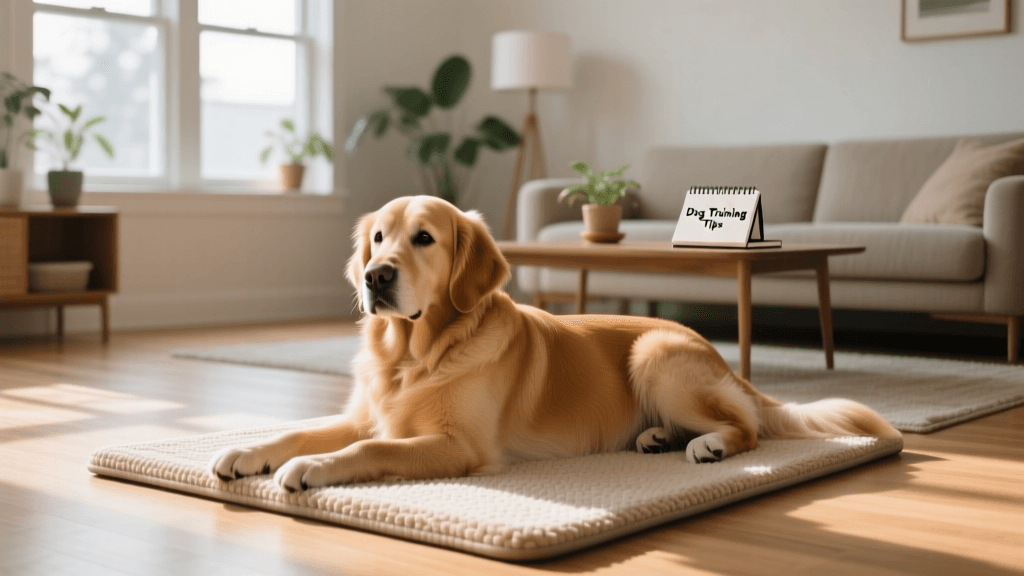
Living with a dog brings immense joy, but it also comes with moments of chaos. Whether you are trying to cook dinner, hosting guests, or simply eating a meal without a wet nose nudging your elbow, managing your dog's energy indoors is a crucial aspect of sharing your home. The 'place' command, also known as mat training, is one of the most versatile and practical skills you can teach your dog. It provides them with a designated safe zone and gives you a reliable way to manage their behavior without resorting to crates or isolation.
According to the American Kennel Club, teaching a settle or place command helps dogs learn impulse control and gives them a clear job to do when the environment becomes overstimulating. Unlike the 'stay' command, which requires a dog to freeze in a specific posture, 'place' simply requires them to remain on a specific boundary, allowing them to stand, sit, lie down, or stretch as long as all four paws remain on the mat.
What You Need: Gear and Treat Recommendations
Before you begin your training sessions, gathering the right equipment will set you and your dog up for success. Here is a breakdown of the essential gear, including estimated costs and specific measurements.
1. The Right Mat or Cot
While you can use any distinct boundary, an elevated cot or a specific textured mat works best because it offers a clear physical contrast to the rest of your flooring. Elevated Cots: Brands like Coolaroo or AmazonBasics offer elevated mesh cots that cost between $30 and $50. These are excellent because the physical edge of the frame makes the boundary obvious to the dog. Flat Mats: If you prefer a flat option, a Snuggle Pad or a dedicated training mat ($15 to $25) with a non-slip rubber bottom is ideal. Ensure the mat is large enough for your dog to lie down fully stretched out—typically 36x24 inches for medium breeds and 42x30 inches for large breeds.
2. High-Value and Low-Value Treats
You will need two tiers of rewards. For initial learning in low-distraction environments, use low-value treats like your dog's daily kibble or inexpensive training bites. For adding distractions or building duration, use high-value treats such as boiled chicken breast, string cheese, or Zuke's Mini Naturals (approximately $6 to $8 per 6oz bag). Crucial Measurement: Cut all treats into tiny, pea-sized cubes (about 1/4 inch). This prevents your dog from getting full too quickly and allows for rapid-fire rewarding.
3. A Marker (Clicker or Verbal)
A clicker, such as the Starmark Pro-Training Clicker ($5), provides a precise, consistent sound to mark the exact moment your dog makes the correct choice. If you prefer not to use a clicker, choose a distinct verbal marker like 'Yes!' and use it consistently.
Step-by-Step Guide to Mat Training
Dedicate 5 to 10 minutes per session, ideally practicing two to three times a day. Keep sessions short to prevent frustration and mental fatigue.
Step 1: Introduction and Luring (Days 1-3)
Place the mat on the floor in a quiet room with minimal distractions. Stand near the mat with your dog and a handful of low-value treats. Toss a treat directly onto the center of the mat. When your dog steps onto the mat to eat it, click your clicker (or say 'Yes!') and immediately toss another treat onto the mat. Repeat this 10 to 15 times. The goal here is not to ask them to stay, but simply to build a positive association. The mat becomes a treat-dispensing zone. Once your dog is eagerly stepping onto the mat anticipating a treat, you can begin luring them into a 'down' position while all four paws are on the boundary.
Step 2: Fading the Lure and Adding the Cue (Days 4-7)
Once your dog reliably steps onto the mat, it is time to introduce the verbal cue. Say 'Place' clearly, then point to the mat. When your dog steps on, mark the behavior with your clicker and reward. At this stage, VCA Animal Hospitals recommends using reward-based methods to fade the physical lure. Stop tossing the treat onto the mat; instead, wait for your dog to offer the behavior of stepping on the mat independently, then mark and reward by handing the treat to them directly on the mat. If they step off, withhold the reward and wait for them to return.
Step 3: Building Duration (Week 2)
Now that your dog understands where to go, you must teach them to stay there. Ask your dog to go to their 'Place.' Once they are on the mat, wait 2 seconds, mark, and reward. Gradually increase the time between the mark and the reward by 2 to 3 seconds each successful repetition. If your dog breaks the boundary before you mark, calmly guide them back without a reward and reset the timer. To build long durations (10+ minutes), transition to 'sustained rewarding.' Give your dog a treat every 15 to 30 seconds while they remain on the mat, eventually spacing the rewards out to every 1 to 2 minutes.
Step 4: Adding Distance and Distractions (Week 3 and Beyond)
Never increase distance and distractions at the same time. First, practice taking one step away from the mat. If your dog stays, return to the mat, mark, and reward. Gradually increase your distance to across the room, and eventually out of sight for a few seconds. Once distance is solid, introduce distractions. Fear Free Pets emphasizes the importance of making the mat a positive zone even when the environment is chaotic. Start with mild distractions like dropping a toy nearby or doing a jumping jack. If your dog stays on the mat, reward heavily with high-value treats like boiled chicken. If they break, the distraction was too high; reduce the intensity and try again.
Mat Training Progression Chart
Use the following structured progression chart to track your dog's training milestones. Do not rush to the next phase until your dog is successful at the current level at least 80% of the time.
| Training Phase | Primary Goal | Target Duration | Handler Distance | Reward Frequency |
|---|---|---|---|---|
| Phase 1 (Days 1-3) | Mat Association & Luring | 1-3 seconds | Right next to mat | Continuous (every step) |
| Phase 2 (Days 4-7) | Fading Lure & Adding Cue | 5-10 seconds | 1-2 steps away | Variable (every 2-3 reps) |
| Phase 3 (Week 2) | Building Duration | 1-5 minutes | Across the room | Sustained (every 30 sec) |
| Phase 4 (Week 3+) | Distraction Proofing | 10-30 minutes | Out of sight / Moving | Intermittent (high value) |
Troubleshooting Common Mat Training Issues
- My dog keeps stepping off the mat with one paw: This usually means the mat is too small for their natural resting posture, or they are anticipating the reward and leaning forward. Upgrade to a larger mat and practice delivering the treat slightly behind their shoulders to encourage them to shift their weight backward.
- My dog falls asleep on the mat: This is actually a massive success! It means your dog views the mat as a safe, relaxing environment. When it is time to end the session, use a specific release word like 'Free' or 'All Done' and toss a treat away from the mat to encourage them to get up.
- My dog breaks the command when the doorbell rings: Doorbells trigger high arousal. You must desensitize this trigger separately. Record the sound of your doorbell on your phone and play it at a very low volume while your dog is on their place. Reward heavily for staying. Gradually increase the volume over several days until you can ring the actual doorbell without your dog breaking their boundary.
Real-Life Applications of the Place Command
Once mastered, the place command seamlessly integrates into your daily routines. Use it during mealtimes to prevent begging and keep your dog safe from dropped foods that might be toxic, such as onions or grapes. Utilize it when guests arrive to prevent jumping and door-dashing. In multi-pet households, sending your dog to their place can provide a necessary cooling-off period if playtime with another dog or cat becomes too rowdy. By investing a few weeks into this step-by-step training guide, you are giving your dog the gift of clarity and giving yourself the gift of a peaceful, well-managed home.
priya-sutaria
All our authors care for dogs every day — read more of their work on the authors page.