How to Stop Dog Resource Guarding in Multi-Pet Homes
Discover how to diagnose and stop dog resource guarding in multi-pet homes. Learn practical solutions, management tools, and training tips for peace.
Understanding Resource Guarding in Multi-Dog Households
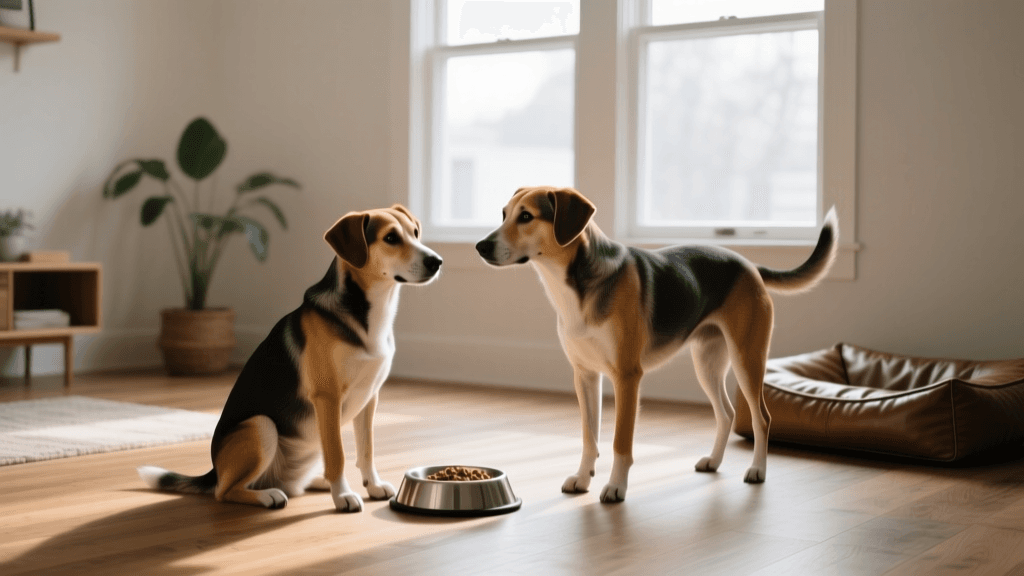
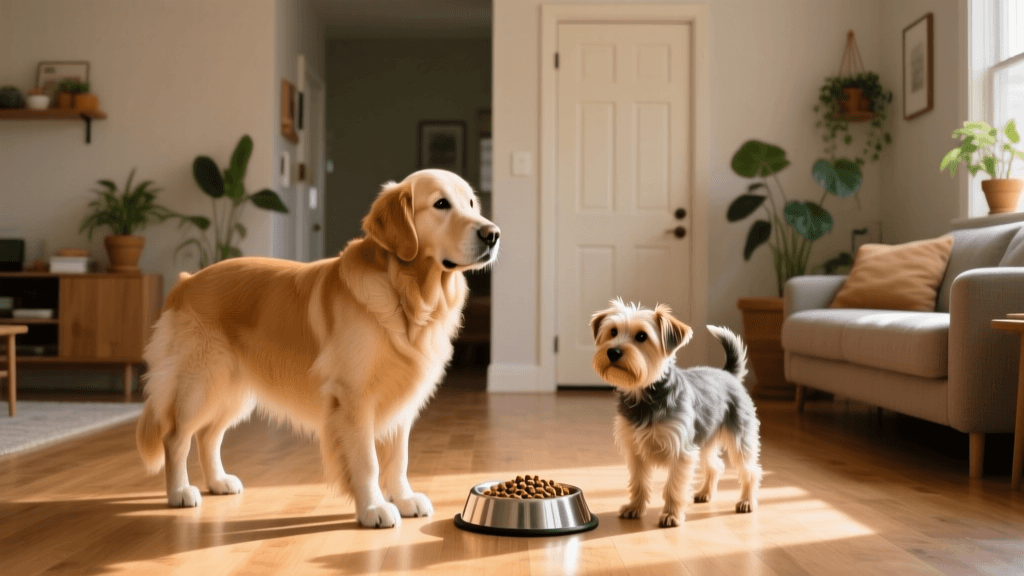
Living with multiple dogs can be a deeply rewarding experience, but it also introduces complex social dynamics. One of the most stressful and dangerous behavioral issues that can arise in a multi-pet household is resource guarding. Resource guarding occurs when a dog exhibits aggressive or defensive behaviors to maintain control over a valued item, space, or person. According to the ASPCA, aggression in dogs is often rooted in fear, anxiety, or the instinctual drive to protect vital resources like food, high-value chews, favorite resting spots, or even their owners.
In a single-dog home, resource guarding might only manifest when a human approaches. However, in a multi-dog home, the stakes are significantly higher. Dog-to-dog resource guarding can escalate rapidly, resulting in severe injuries, chronic household stress, and the potential need to rehome one of the pets. To restore harmony, owners must shift from a reactive mindset to a proactive 'Problem Diagnosis and Solutions' approach. This requires understanding the root triggers, implementing immediate management protocols, and executing long-term behavioral modification.
Diagnosing the Triggers: Reading the Canine Ladder of Aggression
Before you can solve resource guarding, you must accurately diagnose it. Many owners miss the early, subtle signs of guarding, only reacting when the dog escalates to growling or snapping. Dogs communicate their discomfort through a predictable sequence known as the Canine Ladder of Aggression. Recognizing these early rungs is critical for preventing fights.
Early Warning Signs (Distance-Increasing Signals)
- Body Stiffening: The dog freezes completely over the resource when another dog enters the room.
- Whale Eye: The dog turns its head slightly away but keeps its eyes fixed on the approaching dog, exposing the whites of its eyes.
- Lip Licking and Yawning: Out-of-context calming signals that indicate rising internal stress.
- Hovering: Standing rigidly over a food bowl or toy rather than eating or playing.
Escalation Signs (Active Defense)
- Low Growling: A rumbling vocalization meant to warn the other dog to back off.
- Snapping or Lunging: A quick, inhibited bite in the air meant to create distance.
- Biting: The final rung of the ladder, occurring if all previous warnings were ignored.
If you notice your dog exhibiting early warning signs, you have a brief window to intervene before the situation escalates. The VCA Animal Hospitals notes that identifying specific triggers—such as rawhide chews, human food dropped on the floor, or narrow spaces like doorways—is the first step in creating a tailored treatment plan.
Immediate Management Solutions: Stop the Bleeding
Behavioral modification takes weeks or months. In the meantime, you must manage the environment to prevent your dogs from practicing the unwanted behavior. Every time a dog successfully guards a resource and makes the other dog retreat, the guarding behavior is reinforced. Management removes the opportunity for rehearsal.
Essential Management Tools and Costs
| Management Tool | Primary Purpose | Estimated Cost | Pro-Tip for Multi-Dog Homes |
|---|---|---|---|
| Hardware-Mounted Baby Gate | Physical separation during meals | $40 - $90 | Avoid pressure-mounted gates; large dogs can push them over. Screw them into the studs. |
| Heavy-Duty Crate | Safe space for high-value chews | $80 - $150 | Use a double-door crate for flexible room placement and cover it with a sheet to reduce visual triggers. |
| Basket Muzzle (e.g., Baskerville Ultra) | Safety during supervised training | $20 - $40 | Condition the muzzle using peanut butter so the dog views it as a predictor of good things, not a punishment. |
| Enrichment Toys (e.g., KONG Classic) | Mental stimulation without high-guarding risk | $15 - $25 | Stuff with canned food and freeze. Serve to dogs in separate rooms to eliminate competition. |
The 'Pick-Up' Protocol
Until your dogs are fully trained, all high-value items (bully sticks, pig ears, marrow bones, and squeaky toys) must be picked up and stored away when the dogs are roaming freely together. Only distribute these items when the dogs are physically separated by a closed door or a secure gate. For everyday kibble feeding, feed the dogs in completely separate rooms or inside their crates, picking up the bowls immediately after they finish eating.
Long-Term Behavioral Solutions: Desensitization and Counter-Conditioning
Once the environment is safely managed, you can begin changing your dog's emotional response to the presence of the other dog near their resources. The goal is to shift their mindset from 'They are going to take my stuff' to 'Their presence means I get something even better.'
Solution 1: The 'Trade-Up' Game
This exercise teaches your guarding dog that giving up an item results in a massive upgrade, eliminating the fear of loss.
- Start Low-Value: Offer your guarding dog a low-value toy (e.g., a basic rope toy) while the other dog is securely out of the room.
- Present the Trade: Bring out a high-value treat, such as a piece of boiled chicken or a Zuke's Mini Natural (pea-sized). Hold it near the dog's nose.
- The Exchange: The moment your dog drops the toy to eat the chicken, say your marker word ('Yes!') and toss the chicken a few feet away.
- Return the Item: While the dog is eating the chicken, pick up the toy, then immediately give it back to them. This builds trust; the dog learns that giving up the item doesn't mean losing it forever.
- Gradual Progression: Over several weeks, slowly increase the value of the guarded item and practice this game with the second dog present on a leash at a safe distance (10 to 15 feet).
Solution 2: Proximity Feeding (Desensitization)
This protocol is designed for dogs who guard their food bowls from other dogs.
- Place Dog A's empty food bowl in the center of the room.
- Leash Dog B (the non-guarding dog) and stand at a distance where Dog A remains completely relaxed (e.g., 15 feet). This is Dog A's 'threshold distance'.
- As Dog B stands quietly, drop a high-value treat into Dog A's bowl.
- Repeat this 10 times, then end the session. Dog A learns that Dog B's presence predicts high-value treats falling from the sky.
- Over successive sessions, decrease the distance by 1 to 2 feet, provided Dog A shows no signs of stiffening or whale eye. If Dog A tenses up, you have moved too close, too fast. Increase the distance and try again.
Crucial Rule: Never punish a growl. A growl is a vital communication tool that tells you your dog is over threshold. Punishing the growl suppresses the warning system, which can lead to a dog that bites without warning. If your dog growls, calmly increase the distance and reassess your training setup.
Addressing Space and Human Guarding
Resource guarding isn't limited to food and toys. Dogs frequently guard prime sleeping locations (like the owner's bed or a specific sofa cushion) and even their owners. If your dog guards the bed, the immediate solution is to revoke bed privileges entirely. Provide orthopedic dog beds in the same room but on the floor, and reward your dog heavily for choosing their own bed. If your dog guards you from the other dog (often manifesting as blocking, staring, or growling when the other dog approaches you for pets), you must remove the 'resource'—you. Stand up and walk away the moment the guarding behavior begins. This teaches the dog that attempting to hoard the human results in the human leaving.
When to Call a Professional Behaviorist
While mild to moderate resource guarding can often be resolved with dedicated owner training, severe cases require professional intervention. You should immediately seek the help of a Certified Applied Animal Behaviorist (CAAB) or a board-certified veterinary behaviorist if:
- A dog has already inflicted a puncture wound on another dog or human.
- The guarding dog escalates to biting with zero preceding warning signs (suppressed growling).
- The non-guarding dog is developing severe anxiety, hiding constantly, or losing weight due to fear of eating.
- Your household dynamic is causing severe burnout and stress for the human family members.
According to the American Veterinary Medical Association (AVMA), behavioral issues are a leading cause of relinquishment to shelters, but early intervention by a qualified professional can drastically improve the prognosis. Expect to invest between $200 and $400 for an initial comprehensive behavioral consultation, which will provide you with a customized, safe, and scientifically backed modification plan.
Final Thoughts on Multi-Dog Harmony
Solving dog-to-dog resource guarding is not an overnight fix; it is a lifestyle adjustment that requires patience, consistency, and keen observation. By strictly managing the environment to prevent rehearsals of the behavior, and systematically counter-conditioning your dog's emotional responses, you can transform your home from a battleground into a peaceful sanctuary. Remember that your dogs rely on you to be the fair and predictable managers of their environment. With the right tools and a commitment to positive reinforcement, multi-pet harmony is entirely within reach.
hannah-wickes
All our authors care for dogs every day — read more of their work on the authors page.