Solving Resource Guarding in Multi-Dog Households
Learn how to diagnose and stop resource guarding between dogs. Discover practical management tools, training steps, and expert tips for a peaceful home.
Understanding Resource Guarding in Multi-Dog Homes
Sharing your life with multiple dogs can be a deeply rewarding experience, filled with playful wrestling matches and synchronized naps. However, introducing a second or third dog into a home can also unearth complex behavioral challenges. One of the most stressful and potentially dangerous issues multi-dog households face is resource guarding. Resource guarding occurs when a dog exhibits aggressive or defensive behaviors to maintain control over a valued item, space, or person. According to the ASPCA, aggression between dogs in the same household is frequently rooted in competition over resources, making it a critical issue to address before a severe bite incident occurs.
When dogs live together, the stakes for resource guarding are incredibly high. A minor dispute over a dropped piece of cheese can escalate into a full-blown fight, resulting in expensive veterinary bills, emotional trauma for the pets, and a fractured household dynamic. This guide will help you diagnose the root causes of resource guarding, implement immediate management solutions, and execute a long-term behavior modification plan to restore peace to your multi-dog home.
Diagnosing the Triggers: What Are They Guarding?
Before you can solve the problem, you must accurately diagnose what your dog perceives as a "resource." While food bowls are the most obvious culprits, dogs can guard a surprisingly wide array of items. Common triggers include:
- High-Value Edibles: Bully sticks, yak cheese chews, raw meaty bones, pig ears, and even standard kibble if a dog is highly food-motivated.
- Favorite Toys: Squeaky plushies, tennis balls, or tug ropes that hold specific sentimental or prey-drive value.
- Prime Real Estate: The owner's bed, a specific spot on the couch, a favored crate, or even a narrow hallway bottleneck.
- Human Attention: Also known as "owner guarding," where a dog snaps at other dogs when they approach the owner while the guarding dog is receiving pets or cuddles.
Diagnosis also requires reading subtle canine body language. Long before a growl or a snap, a dog will display early warning signs. Look for "whale eye" (showing the whites of the eyes), sudden freezing or stiffening over an item, rapid lip licking, yawning, or a hard, fixed stare directed at the approaching dog. The American Kennel Club (AKC) emphasizes that recognizing these subtle, early stress signals is the key to preventing an aggressive outburst.
Immediate Management Solutions
Behavior modification takes time, often spanning several months. In the interim, you must manage the environment to prevent rehearsing the guarding behavior. Every time a dog successfully guards a resource and makes the other dog back away, the guarding behavior is reinforced. Management tools are your first line of defense.
| Management Tool | Primary Purpose | Estimated Cost | Best Use Case |
|---|---|---|---|
| Carlson Walk-Thru Pet Gate | Spatial separation and visual barriers | $45 - $65 | Separating dogs during meal prep or when giving long-lasting chews in different rooms. |
| MidWest Homes iCrate | Safe, enclosed feeding zone | $50 - $85 | Feeding meals or providing high-value treats to fast eaters or severe guarders. |
| Baskerville Ultra Muzzle | Bite prevention while allowing panting | $18 - $25 | Severe cases where dogs share open spaces, or for safe transport to the vet post-fight. |
| Kong Classic Puzzle Toy | Mental stimulation and prolonged eating | $12 - $18 | Redirecting food motivation into a solitary, calming activity in a separate room. |
Crucial Rule: Never leave high-value chews out in communal areas. If Dog A is given a bully stick, Dog A must be placed in a crate or behind a baby gate. Once the chew is entirely consumed, pick up any fragments before releasing the dog back into the shared space.
Step-by-Step Behavior Modification Plan
Once management is in place, you can begin counter-conditioning and desensitization (CC/DS). The goal is to change the guarding dog's emotional response from "The other dog is coming to steal my food" to "The other dog approaching means I get something even better."
Phase 1: The Distance Trade-Up
Start with low-value items (like standard kibble) and a high-value reward (like boiled chicken breast or Stella & Chewy's freeze-dried liver). Have Dog A on a leash or in a down-stay with their low-value item. Have Dog B on a leash, handled by a second person, at a distance of at least 10 feet—the threshold where Dog A notices Dog B but does not stiffen or freeze.
The moment Dog B takes a step toward Dog A, immediately toss a piece of high-value chicken directly to Dog A. Repeat this 10 to 15 times per session. Over weeks, gradually decrease the distance by one foot per session, provided Dog A remains relaxed. If Dog A shows tension, you have moved too close, too fast; increase the distance immediately.
Phase 2: The Empty Bowl Protocol
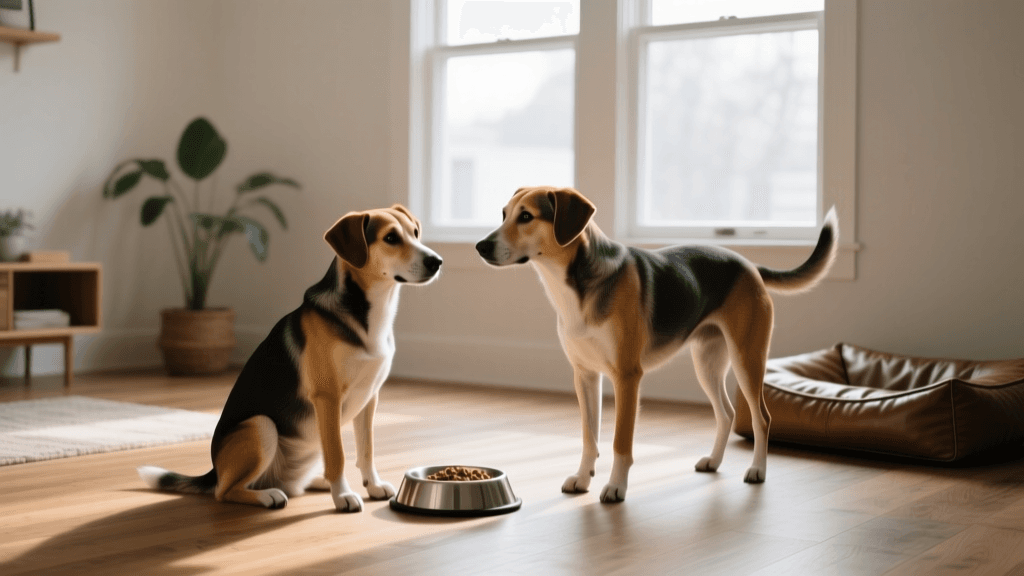
For dogs that guard empty food bowls, place an empty bowl on the floor. Stand between the bowl and the other dog. As the other dog walks by, toss a high-value treat into the guarding dog's empty bowl. This teaches the guarding dog that the presence of the other dog near their bowl predicts the arrival of amazing food, rather than a threat of theft.
"Punishing a growl only suppresses the warning signal; it does not change the underlying emotional response. A dog that learns growling gets them punished may skip the warning and go straight to a bite. Always address the emotion, not just the symptom."
Environmental Adjustments for Long-Term Success
Beyond training sessions, your daily routine must support a peaceful environment. The American Veterinary Society of Animal Behavior (AVSAB) advocates for proactive environmental management to reduce chronic stress in multi-pet homes. Implement the following household rules:
- Pick Up All Toys: Do not leave communal toys scattered around the living room. Bring toys out only for supervised, interactive play sessions, and put them away immediately after.
- Feed in Separate Zones: Even if your dogs currently seem fine eating side-by-side, feed them in separate rooms or crates. This eliminates the low-level anxiety of competition and allows both dogs to digest their food in a relaxed state.
- Manage Human Affection: If you have an owner-guarding dog, do not allow them on your lap when the other dog is in the room. Call both dogs to you, ask for a sit, and reward them both simultaneously with treats, keeping interactions structured and fair.
When to Call a Professional
While mild resource guarding can often be managed with strict environmental protocols and basic counter-conditioning, severe cases require professional intervention. If your dogs have already engaged in a fight resulting in puncture wounds, or if the guarding dog exhibits intense, unyielding aggression, it is time to hire a professional.
Look for a Certified Applied Animal Behaviorist (CAAB) or a veterinarian who specializes in behavior (DACVB). Avoid trainers who rely on "alpha rolls," shock collars, or dominance theory, as these aversive methods will drastically increase a dog's anxiety and make resource guarding significantly worse. Expect to invest between $150 and $300 per hour for a qualified behaviorist, plus the cost of any prescribed anti-anxiety medications if deemed necessary by a veterinarian. This financial investment is minor compared to the cost of emergency veterinary surgery for a bite wound and the emotional toll of a fractured canine relationship.
By combining strict management, empathetic diagnosis, and science-based desensitization, you can help your dogs coexist safely, ensuring your multi-dog home remains a place of joy rather than tension.
beth-carrasco
All our authors care for dogs every day — read more of their work on the authors page.