Stop Leash Reactivity: Diagnosis and Training Fixes
Diagnose why your dog lunges on walks and learn step-by-step training solutions to stop leash reactivity using positive reinforcement techniques.

Understanding Leash Reactivity: Frustration vs. Fear
Leash reactivity is one of the most common, yet deeply misunderstood, behavioral challenges dog owners face. If your dog barks, lunges, or pulls excessively when they see other dogs or strangers on walks, you are likely dealing with leash reactivity. Before attempting to fix the behavior, it is crucial to understand that reactivity is not synonymous with aggression. According to the ASPCA, reactivity is typically an overreaction to a specific trigger, driven by either fear or leash frustration.
Diagnosing the root cause of your dog's lunging is the first step toward a peaceful walk. A fearful dog is trying to increase the distance between themselves and the trigger, while a frustrated dog is trying to decrease the distance to initiate play. Misdiagnosing the motivation can lead to training protocols that inadvertently make the problem worse.
Diagnosing the Root Cause: Fear vs. Frustration
Observing your dog's body language before and after the trigger appears will help you pinpoint the underlying emotion. Below is a comparison chart to help you diagnose your dog's specific type of reactivity.
| Behavioral Metric | Fear-Based Reactivity | Frustration-Based Reactivity |
|---|---|---|
| Body Posture | Stiff, crouching, tail tucked or rigidly high | Loose, wiggly, leaning forward eagerly |
| Vocalization | Deep, rapid barking, growling, snarling | High-pitched whining, sharp barks, panting |
| Trigger Goal | Make the trigger go away (increase distance) | Reach the trigger to interact (decrease distance) |
| Off-Leash Behavior | Avoidance, hiding, or defensive aggression | Appropriate play, friendly greeting, socialization |
| Recovery Time | High; takes minutes to calm down post-trigger | Low; calms quickly once the trigger is gone or engaged |
Essential Gear for Reactive Dog Training
Proper equipment ensures safety and prevents physical strain on both you and your dog. Avoid retractable leashes and choke chains, which can cause injury and increase anxiety. Invest in the following tools (estimated total cost: $60 - $90):
- Front-Clip Harness ($30 - $40): A harness like the 2 Hounds Design Freedom No-Pull Harness features a front martingale loop that gently redirects your dog's momentum toward you when they pull, without causing tracheal damage.
- Fixed-Length Leash ($20 - $30): Use a 6-foot Biothane or leather leash. Biothane is waterproof, easy to clean, and doesn't burn your hands if your dog suddenly lunges. Avoid leashes longer than 6 feet for urban walking, as they reduce your leverage and reaction time.
- High-Value Treats ($5 - $15): Dry kibble will not compete with the dopamine rush of seeing another dog. Use pea-sized, aromatic rewards like Zuke's Mini Naturals, boiled chicken breast, or Stella & Chewy's Meal Mixers. Keep them in an easily accessible treat pouch on your waist.
- Clicker or Marker Word ($2 - $5): A mechanical clicker provides a consistent, distinct sound to mark the exact moment your dog makes the right choice. Alternatively, choose a crisp marker word like 'Yes!'.
Step-by-Step Solutions to Stop Leash Reactivity
Once you have diagnosed the root cause and gathered your gear, you can begin behavioral modification. The goal is to change your dog's emotional response to the trigger through classical and operant conditioning.
Step 1: Identify and Respect the Threshold Distance
Your dog's 'threshold' is the distance at which they notice a trigger but remain under their stress response limit. For some dogs, this is 50 feet; for others, it is a whole city block. If your dog is barking and lunging, you are over threshold, and learning cannot occur. Find a quiet park or an empty parking lot where you can control the distance to triggers (typically 20 to 40 feet away).
Step 2: The Engage and Disengage Game
This game, heavily utilized by modern behaviorists, teaches your dog that looking at a trigger predicts a reward, rather than a reaction.
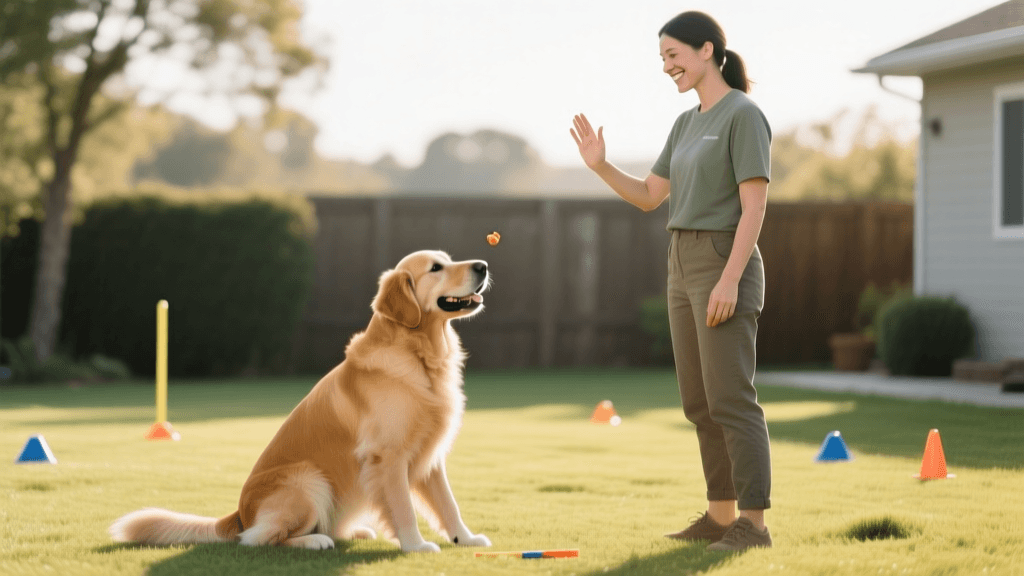
- Engage: The moment your dog looks at the trigger (within 0.5 seconds), mark the behavior with your clicker or the word 'Yes!'.
- Disengage: Wait for your dog to turn their head back toward you to get the treat. Deliver the high-value reward directly to their mouth.
- Repeat: Do this for 10 to 15 minutes. Over time, your dog will begin to voluntarily look at the trigger and immediately look back at you, anticipating the treat. This is known as 'Look at That' (LAT) conditioning.
Step 3: The Emergency U-Turn
Sometimes, a trigger appears unexpectedly, and your dog goes over threshold. You need an escape route. Practice the Emergency U-Turn in your living room first. Say a cue like 'Let's Go!', turn 180 degrees, and run a few steps the opposite way. When your dog follows, mark and reward heavily. On walks, use this maneuver the second you spot an off-leash dog or a sudden trigger, creating immediate distance before your dog can react.
Managing the Environment: Decompression Walks
While active training sessions are vital, your dog also needs time to decompress without the pressure of encountering triggers. A 'decompression walk' or 'sniffari' allows your dog to engage in natural foraging behaviors, which lowers cortisol levels and promotes mental fatigue. Take your dog to a quiet, open field or a secluded trail on a long line (15 to 30 feet) where you are unlikely to encounter off-leash dogs or crowds. Scatter a handful of high-value treats in the grass and let them use their nose for 20 minutes. Sniffing has been proven to lower a dog's heart rate and provide mental enrichment that physical exercise alone cannot achieve. Incorporating two decompression walks per week alongside your structured reactivity training will accelerate your progress and keep your dog's stress baseline low.
Why Aversive Tools Make Reactivity Worse
Many owners mistakenly turn to prong collars, e-collars, or leash corrections to suppress lunging. While these tools may temporarily stop the outward behavior through pain or fear, they do not change the underlying emotional response. In fact, they often exacerbate it. If a dog is lunging out of fear, and they receive a painful collar correction every time they see another dog, they will begin to associate the presence of other dogs with pain. This classical conditioning turns leash frustration into genuine aggression.
The American Veterinary Society of Animal Behavior (AVSAB) explicitly advises against the use of punishment and aversive tools, noting that they can cause increased fear, anxiety, and aggression, while damaging the human-animal bond. Furthermore, the AVSAB's Position Statements consistently reinforce that positive reinforcement and desensitization are the safest, most effective methods for treating behavioral issues.
Consistency and Patience Are Key
Rewiring a dog's emotional response takes time. You may see setbacks on high-stress days or when your dog is tired or hungry. Keep training sessions short (10 to 15 minutes), end on a positive note, and manage your environment to prevent rehearsing the reactive behavior. If your dog's reactivity includes biting, severe resource guarding, or extreme panic, consult a certified professional dog trainer (CPDT-KA) or a veterinary behaviorist for a tailored desensitization and counter-conditioning (DS/CC) protocol.
By diagnosing the true cause of the reactivity, utilizing the right equipment, and committing to positive reinforcement, you can transform your stressful walks into enjoyable bonding experiences.
jonas-cole
All our authors care for dogs every day — read more of their work on the authors page.