How to Stop Your Dog From Pulling on the Leash Guide
Discover answers to Google's most-asked questions about stopping dog leash pulling. Learn harness picks, training timelines, and step-by-step methods.
Introduction to Leash Pulling
If you have ever finished a dog walk with an aching shoulder, a tangled leash, and a sense of deep frustration, you are certainly not alone. Leash pulling is consistently one of the most searched canine behavioral issues on the internet. When you type 'how to stop my dog from pulling' into a search engine, you are met with thousands of conflicting opinions, gadget recommendations, and training philosophies. As a senior dog behavior specialist for Paws-Tales, I have analyzed Google's most-asked questions regarding leash manners to bring you a definitive, science-backed guide. Whether you are dealing with an exuberant Golden Retriever puppy or a stubborn rescue Greyhound, understanding the mechanics of leash tension is the first step toward peaceful, enjoyable strolls.
Why Does My Dog Pull on the Leash?
Before fixing the behavior, we must understand its root cause. Dogs do not pull on the leash to assert dominance, challenge your authority, or spite you; they pull simply because it works. When a dog pulls forward and the owner follows, the dog learns that tension on the leash equals forward movement. Furthermore, dogs naturally walk at a pace of about 4 to 5 miles per hour, while humans average a much slower 2 to 3 miles per hour. Your dog is quite literally slowing down for you, and the sights and smells of the neighborhood are incredibly stimulating.
Additionally, dogs possess a physiological trait known as the 'opposition reflex.' If you pull back on a leash, a dog's natural, hardwired instinct is to lean into that pressure. This means that physically wrestling with your dog or yanking the leash backward will often cause them to pull even harder, making the problem significantly worse over time.
What Is the Best Harness to Stop Pulling?
Google's algorithm frequently highlights queries about the best anti-pull gear. The pet market is flooded with gadgets, but veterinary behaviorists generally recommend front-clip harnesses or head halters over traditional back-clip harnesses. A back-clip harness actually encourages pulling, as it distributes pressure across the dog's chest and shoulders—much like a sled dog harness designed for hauling weight. Below is a comprehensive comparison chart of the most effective tools to help you make an informed, budget-friendly purchase.
| Equipment Type | Mechanism of Action | Top Product Recommendation | Average Cost |
|---|---|---|---|
| Front-Clip Harness | Redirects the dog's momentum toward the owner when tension is applied to the chest ring. | PetSafe Easy Walk No-Pull Harness | $20 - $30 |
| Head Halter | Controls the dog's head, gently steering the body in the direction the owner faces. | PetSafe Gentle Leader Headcollar | $15 - $25 |
| Back-Clip Harness | Distributes pressure evenly across the chest and back. (Not recommended for pullers). | Rabbitgoo No Pull Dog Harness | $25 - $35 |
| Standard Flat Collar | Applies pressure directly to the trachea; highly dangerous for dogs that lunge. | Any standard nylon or leather collar | $10 - $20 |
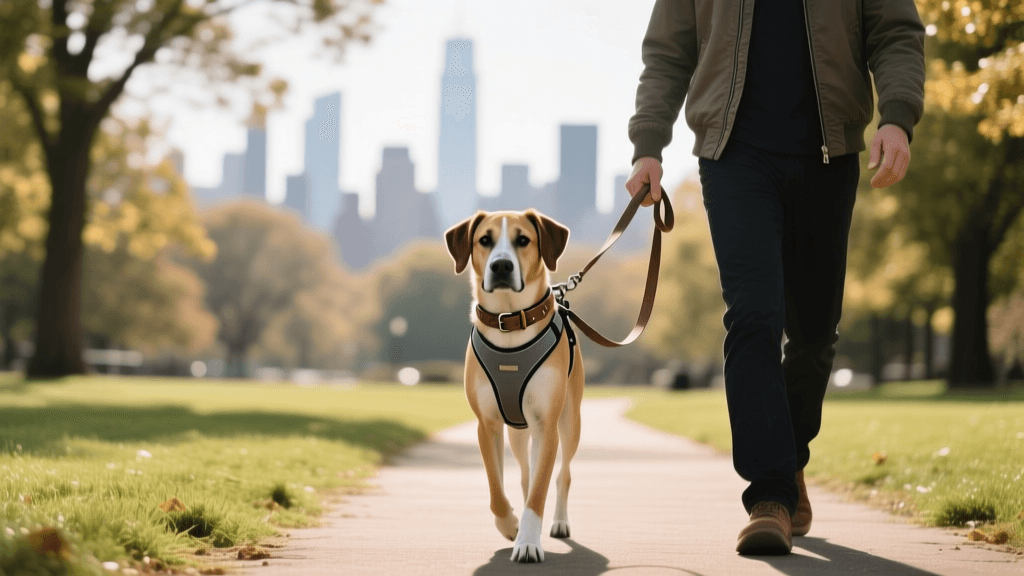
According to the ASPCA, front-clip harnesses are highly effective because they safely redirect the dog's forward motion without causing pain or tracheal damage. When the dog lunges toward a squirrel, the front chest ring gently spins the dog back toward the handler, breaking their focus and physical momentum.
How Do I Train My Dog to Stop Pulling? (Step-by-Step)
Gear alone will not train your dog; it only manages the behavior while you teach them what you want. The most universally recommended technique by positive reinforcement trainers is the 'Be a Tree' method combined with directional changes. Here is your actionable, step-by-step training protocol.
- Step 1: Equip your dog with a front-clip harness and a standard 4-to-6-foot non-retractable leash. Retractable leaches teach dogs that pulling extends the leash, which reinforces the exact behavior you want to stop.
- Step 2: Stock up on high-value, low-calorie treats. Zuke's Mini Naturals or boiled chicken breast cut into pea-sized pieces work exceptionally well. You need a high rate of reinforcement in the beginning.
- Step 3: Begin walking in a low-distraction environment like your living room or hallway. The absolute second the leash goes slack, mark the behavior with a verbal 'Yes!' or a clicker, and deliver a treat right at the seam of your pants. This teaches the dog that the 'sweet spot' for rewards is right next to your leg.
- Step 4: If the dog surges ahead and the leash goes tight, immediately stop walking. 'Be a tree.' Do not yank the leash back; simply stand completely still and wait.
- Step 5: The moment your dog turns their head to look at you or takes a single step backward to relieve the tension, mark with 'Yes!', reward, and resume walking.
- Step 6: If your dog is heavily distracted by an environmental trigger (like another dog), perform an 'Emergency U-Turn.' Say 'Let's go!', turn 180 degrees, and run a few steps the other way, rewarding heavily when your dog catches up to you.
The Importance of Environment Scaling
One of the most common mistakes owners make is taking a newly trained dog directly to a busy park. Dogs do not generalize well. A dog that walks perfectly in your living room may completely fall apart on a busy sidewalk. You must scale your training environments gradually: Living Room > Backyard > Quiet Driveway > Empty Street > Busy Park. Only move to the next level of distraction when your dog is successful at the current level.
How Long Does It Take to Leash Train a Dog?
Another top Google query revolves around timelines. The frustrating truth is that leash training is not a weekend fix. It requires rewiring a deeply ingrained habit. For a young puppy (8 to 16 weeks old) who is just learning how the world works, you can expect to see reliable loose-leash walking within 2 to 4 weeks of daily, consistent 10-minute sessions. However, for an adult rescue dog who has spent years practicing the habit of pulling, it may take 4 to 8 weeks of dedicated training.
Understanding the 'Extinction Burst'
Around week two of training, you may notice your dog's pulling actually gets worse before it gets better. In behavioral psychology, this is called an 'extinction burst.' When a behavior that used to work (pulling to get to the tree) suddenly stops working (you stop walking), the dog will try harder, pulling with more force or whining, to see if they can force the old result. This is a critical juncture. If you give in and follow the dog during an extinction burst, you have taught them that pulling harder is the new key to success. Hold your ground, remain a tree, and the burst will pass.
Should I Use a Prong, Choke, or Shock Collar for Pulling?
When owners become frustrated, they often search for 'quick fixes,' leading them to aversive tools like prong collars, choke chains, or electronic shock collars. While these tools may suppress the physical act of pulling through the application of pain or fear, they do not teach the dog what to do instead. More concerningly, they often create negative associations with the environment. A dog that is shocked or pinched when they see another dog will begin to associate the sight of other dogs with pain, which can rapidly escalate into leash reactivity, lunging, and aggression.
The American Veterinary Society of Animal Behavior (AVSAB) strongly advises against the use of aversive training methods. Their comprehensive position statement highlights that reward-based training is highly effective and carries a significantly lower risk of inducing fear, anxiety, and aggression. Furthermore, the American Kennel Club (AKC) notes that harnesses are generally superior to collars for walking, as they prevent severe neck injuries and tracheal collapse, especially in smaller breeds or dogs with respiratory issues like pugs and bulldogs.
Pro Tip: Never use a retractable leash for training. The internal spring mechanism creates constant, light tension on the leash, which inadvertently teaches your dog that tension is the normal state of walking. Stick to a standard 4-to-6-foot leather or biothane leash for maximum control and clear communication.
Final Thoughts on Loose-Leash Walking
Mastering loose-leash walking is a marathon, not a sprint. By combining the right management equipment, like a front-clip harness, with consistent positive reinforcement techniques, you can transform your daily walks from a stressful tug-of-war into a bonding experience. Remember to keep your training sessions short (10 to 15 minutes), your treats high-value, and your patience deep. Every single step your dog takes with a slack leash is a victory worth celebrating. Stay consistent, trust the science of behavioral conditioning, and enjoy the journey with your canine companion.
anouk-beaumont
All our authors care for dogs every day — read more of their work on the authors page.