Dog Training Myths Debunked: The Alpha Roll and Dominance
Discover the truth behind common dog training myths. We debunk dominance theory and alpha rolls, offering science-backed positive reinforcement tips.

The Persistence of the 'Alpha' Myth in Dog Training
For decades, dog owners have been bombarded with advice centered around a single, pervasive concept: dominance. Popularized by reality television shows and outdated training manuals from the mid-20th century, the idea that you must assert yourself as the 'alpha' or 'pack leader' has deeply infiltrated dog culture. According to this philosophy, every behavioral issue—from jumping on guests to pulling on the leash—is framed as a deliberate attempt by your dog to overthrow the household hierarchy. However, modern veterinary behaviorists and certified animal trainers have thoroughly debunked these claims. Understanding the difference between outdated myths and science-based facts is crucial for building a trusting, cooperative relationship with your canine companion.
Myth 1: You Must Be the 'Pack Leader' to Gain Respect
The foundational myth of dominance-based training is that dogs view their human families as a wolf pack and are constantly vying for the top spot. Trainers operating under this paradigm often suggest that you must eat before your dog, walk through doorways first, and never allow your dog on the furniture, lest they assume a dominant status.
The Fact: Dogs do not view humans as other dogs, nor do they form rigid, hierarchical wolf packs with humans. In fact, the very scientist who popularized the term 'alpha wolf,' wildlife biologist L. David Mech, has spent years trying to correct the record. Mech's subsequent research revealed that wild wolf packs are actually family units led by parents, not unrelated wolves fighting for dominance. Applying this flawed, captive-wolf hierarchy to domestic dogs is scientifically inaccurate. As noted by the Association of Professional Dog Trainers (APDT), dogs are opportunistic learners. They repeat behaviors that are reinforced and abandon those that are not. If your dog pushes through the door first, it is not a coup d'état; it simply means they are excited to go outside and walking fast has been historically rewarded.
Myth 2: The 'Alpha Roll' Teaches Submission and Cures Aggression
Perhaps the most dangerous myth in dog training is the 'alpha roll'—the practice of forcibly pinning a dog on its back to assert dominance and force submission. Proponents claim this mimics natural canine correction and instantly cures aggressive or defiant behaviors.
The Fact: Forcibly rolling a dog onto its back does not teach respect; it induces sheer terror. When a dog is pinned down, they are not experiencing a profound realization of your leadership. Instead, they are experiencing a fight-or-flight response. While some dogs may freeze or go limp (a state known as learned helplessness or tonic immobility), others will bite in self-defense. The American Veterinary Society of Animal Behavior (AVSAB) explicitly warns against using dominance theory and aversive physical handling, noting that these methods significantly increase the risk of fear, anxiety, and owner-directed aggression.
AVSAB Position: 'The AVSAB recommends that veterinarians not refer clients to trainers or behavior consultants who coach and advocate dominance hierarchy theory and the subsequent confrontational training methods associated with it.'
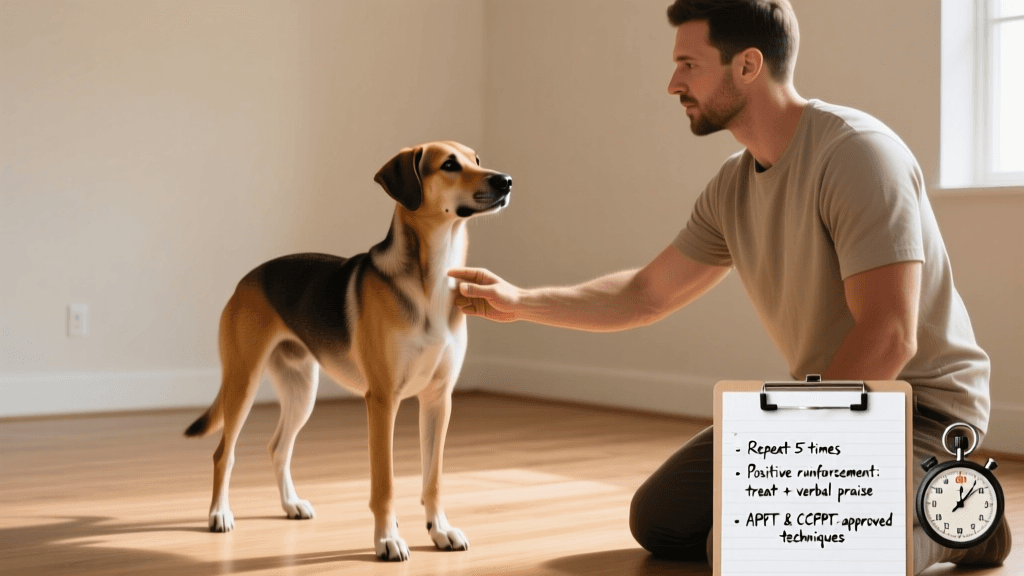
Instead of forcing submission, modern trainers use shaping and positive reinforcement to teach a dog to voluntarily roll over for belly rubs, turning a vulnerable position into a positive, trust-building exercise.
Myth 3: Leash Pulling and Resource Guarding are Bids for Dominance
When a dog pulls on the leash or growls over a bone, dominance theorists label the dog as 'bossy' or 'in charge.' The prescribed remedies often involve leash pops, alpha rolls, or taking the food bowl away mid-meal to 'show the dog who owns the resources.'
The Fact: Leash pulling is a self-rewarding behavior. Dogs have a natural opposition reflex and a faster walking pace than humans; they pull because it successfully gets them to the tree they want to sniff. Resource guarding is an emotional response rooted in anxiety and the fear of losing a valuable item, not a calculated move to dominate the owner. Punishing a growl (a vital warning signal) does not cure the anxiety; it simply suppresses the warning, leading to a dog that bites without notice.
Comparison Chart: Outdated Myths vs. Science-Based Facts
| Outdated Myth | Scientific Fact | Modern Alternative |
|---|---|---|
| Dogs try to dominate humans to become 'alpha' | Dogs repeat behaviors that are historically reinforced | Manage the environment and reward desired behaviors |
| Alpha rolls teach submission and respect | Forced rolling causes fear, stress, and defensive aggression | Teach a voluntary 'roll over' trick using high-value treats |
| Pulling on the leash means they are the boss | Dogs pull because moving forward is naturally rewarding | Use a front-clip harness and reinforce loose-leash walking |
| Taking food away prevents resource guarding | Stealing food increases anxiety and worsens guarding | Play the 'Trade' game to build positive associations |
Actionable Steps: Transitioning to Science-Based Positive Reinforcement
Ditching dominance theory does not mean letting your dog run wild. In fact, positive reinforcement requires more structure, timing, and consistency than simply bullying a dog into submission. Here is how to implement modern, science-backed training techniques in your daily routine.
1. Ditch the Aversive Tools and Upgrade Your Gear
Throw away the prong collars, choke chains, and retractable leashes. Retractable leashes teach dogs that pulling creates more slack, reinforcing the exact behavior you want to stop. Instead, invest in a front-clip no-pull harness, such as the Freedom No-Pull Harness (typically costing between $25 and $30). Pair this with a sturdy 6-foot Biothane or leather leash ($20 to $35). The 6-foot measurement is critical: it provides enough slack to reward your dog for staying near you, but is short enough to prevent them from building the momentum required to pull you off your feet.
2. Master the Timing of Rewards
In operant conditioning, timing is everything. To effectively mark and reward a behavior (like sitting calmly instead of jumping), you must deliver your marker word (e.g., 'Yes!') or clicker sound within one second of the behavior occurring, followed immediately by a treat. Use high-value, pea-sized treats that your dog can consume quickly without interrupting the training flow. Zuke's Mini Naturals or Freshpet training treats (around $6 to $8 per bag) are excellent choices because they are soft, aromatic, and low in calories, allowing for repetitive training sessions without causing weight gain.
3. Implement the 'Trade' Game for Resource Guarding
If your dog guards toys or food, stop confiscating items to 'prove a point.' Instead, play the Trade Game to change their emotional response. When your dog has a low-value toy, approach calmly and toss a high-value treat (like a piece of boiled chicken or freeze-dried liver) near their nose. When they drop the toy to eat the chicken, pick up the toy, wait a few seconds, and then give the toy back. This teaches the dog that your approach predicts good things, not the loss of their prized possession. Over weeks of consistent practice, you can introduce a verbal cue like 'Drop it' or 'Trade.' For independent enrichment that doesn't trigger guarding, use a Kong Classic ($15) stuffed with soaked kibble and frozen peanut butter, which satisfies their natural chewing instincts in a controlled manner.
4. Embrace the LIMA Protocol
Professional behaviorists adhere to the LIMA protocol: Least Intrusive, Minimally Aversive. Before considering any form of punishment, ensure you have addressed the dog's physical health, environmental enrichment, and basic training needs. Often, 'bad' behavior is simply a symptom of a bored, under-exercised, or confused dog. By providing adequate mental stimulation (such as 15 minutes of daily scent work or puzzle toys) and clear, reward-based communication, you will see a drastic reduction in unwanted behaviors.
Final Thoughts
The dog training industry is slowly but surely moving away from the archaic, fear-based methods of the past. As highlighted by the American Kennel Club (AKC) and leading veterinary behaviorists, building a bond based on mutual trust and clear communication yields a happier, more confident, and safer dog. By debunking the myths of dominance and the alpha roll, you empower yourself to become a true partner to your dog, guiding them through the human world with patience, science, and compassion.
anouk-beaumont
All our authors care for dogs every day — read more of their work on the authors page.