How Dogs Perceive Time When Left Alone
Learn about how dogs perceive time when left alone with expert tips and data-backed advice.
The Dog Left Behind: What Happens in the Mind and Body
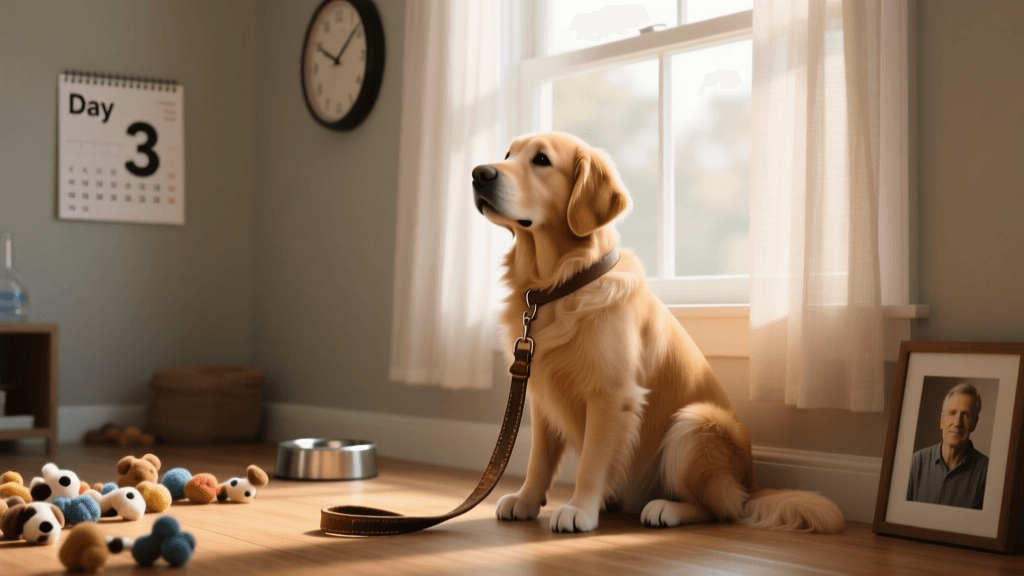
Every morning, millions of dogs watch their owners leave through the front door. The door closes. The house goes quiet. And then — what? From the human side, it is easy to assume the dog simply waits, perhaps napping, perhaps chewing something it shouldn't. But decades of ethological research suggest the reality is far more complex. Dogs experience time, stress, and anticipation in ways that are measurable, physiologically real, and deeply tied to their evolutionary history as social animals.
Understanding how dogs perceive the passage of time during solitary confinement is not merely an academic exercise. It has direct implications for how we structure our dogs' days, how we interpret their behaviour when we return, and how we design interventions for separation-related distress — one of the most commonly reported behavioural problems in companion dogs worldwide.
Do Dogs Have a Sense of Time?
The question sounds almost philosophical, but it has a concrete neurological basis. Dogs possess a circadian rhythm regulated by the suprachiasmatic nucleus, the same brain structure that governs biological clocks in humans. This internal clock responds to light cycles, feeding schedules, and social cues, allowing dogs to anticipate predictable events with remarkable accuracy.
A landmark study conducted at the Clever Dog Lab at the University of Vienna found that dogs showed measurably more enthusiastic greeting behaviour — including tail wagging rate, physical contact-seeking, and vocalisation — after being separated from their owners for 2 hours compared to 30 minutes. Separations of 4 hours produced responses statistically similar to the 2-hour condition, suggesting that the emotional intensity of reunion does not scale linearly with duration beyond a certain threshold.
This finding points to something important: dogs likely do not experience time as a continuous, clock-like progression. Instead, they appear to operate on a system of episodic-like memory and anticipatory arousal — they know something is different, they register that time has passed, but their distress response is not simply proportional to the number of hours elapsed.
Episodic-Like Memory and the Waiting Dog
Research from the Department of Ethology at Eötvös Loránd University in Budapest has demonstrated that dogs possess what scientists call "episodic-like memory" — the ability to recall specific past events rather than just learned associations. In a 2016 study published in Current Biology, dogs were trained to imitate human actions and then tested on their ability to recall those actions after delays of 1 minute and 1 hour. Dogs successfully reproduced the actions after both intervals, indicating a form of declarative memory previously thought to be uniquely human or primate.
This capacity means that when a dog is left alone, it is not simply experiencing a blank interval. It retains a memory of the owner's departure — the sounds, the smells, the routine cues — and holds that memory in a way that shapes its emotional state throughout the separation period.
The Role of Olfactory Time-Keeping
Dogs may also use scent as a temporal cue. A dog's olfactory system is estimated to be 10,000 to 100,000 times more sensitive than a human's, and scent concentration degrades predictably over time. Researchers at Alexandra Horowitz's Dog Cognition Lab at Barnard College in New York have proposed that dogs may effectively "smell time" — detecting the fading concentration of an owner's scent in the home as a proxy for how long that person has been absent. As the scent weakens, the dog's anticipatory arousal may increase, priming it for the owner's return.
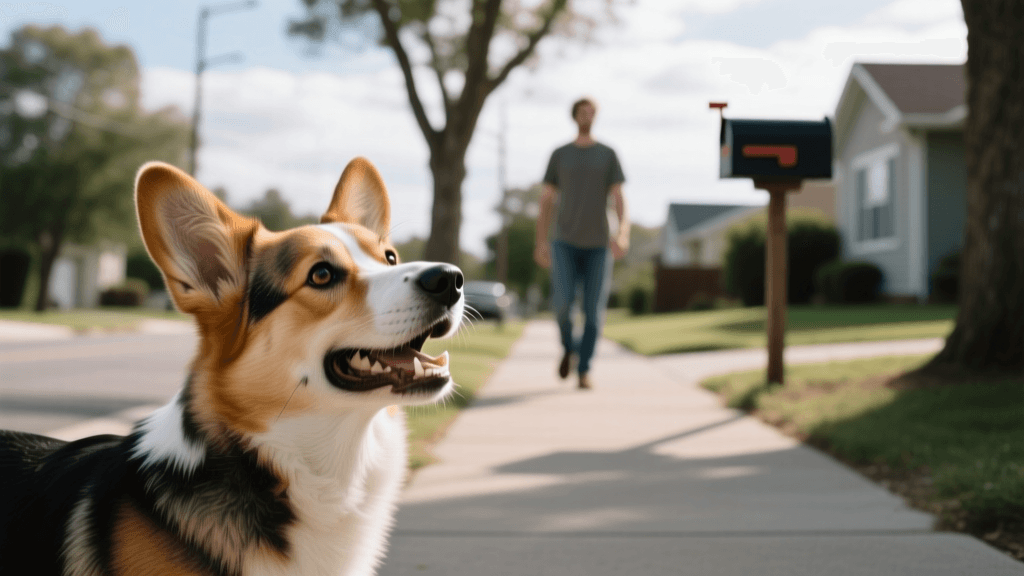
This hypothesis aligns with anecdotal observations of dogs positioning themselves near doors or windows as the expected return time approaches — behaviour that appears to be cue-driven rather than random.
Physiological Markers of Separation Stress
Behavioural observation alone cannot fully capture what a dog experiences during solitude. Physiological measurements provide a more objective window into the animal's internal state. Several key biomarkers have been studied in the context of canine separation.
| Biomarker | Change During Separation | Notes |
|---|---|---|
| Cortisol (saliva) | Increases 30–60% above baseline within 30 minutes | Stress hormone; returns to baseline within 60–90 min in non-anxious dogs |
| Heart rate | Elevated by 15–40 bpm in first 10 minutes | Varies significantly by individual temperament |
| Respiratory rate | Increases during vocalisation bouts | Often normalises between episodes |
| Skin temperature (infrared) | Nasal temperature drops during acute stress | Used as non-invasive stress indicator in field studies |
A study published in Applied Animal Behaviour Science (Palestrini et al., 2010) used continuous video monitoring combined with salivary cortisol sampling to track 20 dogs over 4-hour separation periods. The researchers found that cortisol levels peaked within the first 30 minutes for 17 of the 20 subjects, then gradually declined — even though the separation continued. This suggests that many dogs habituate physiologically to the absence of their owner within a single session, even if behavioural signs of distress persist intermittently.
The First 30 Minutes: A Critical Window
The data consistently point to the first 30 minutes of separation as the period of highest physiological and behavioural activation. During this window, dogs are most likely to:
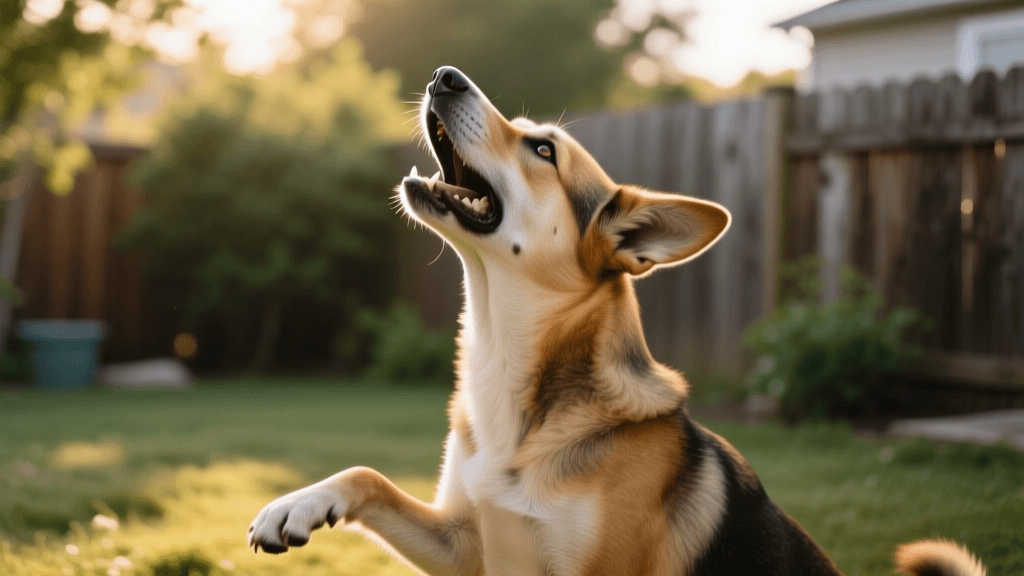
- Vocalise — barking, whining, or howling in attempts to re-establish contact
- Engage in destructive behaviour near exit points such as doors and windows
- Pace or circle, reflecting locomotor agitation
- Eliminate indoors, even in house-trained dogs, due to autonomic nervous system activation
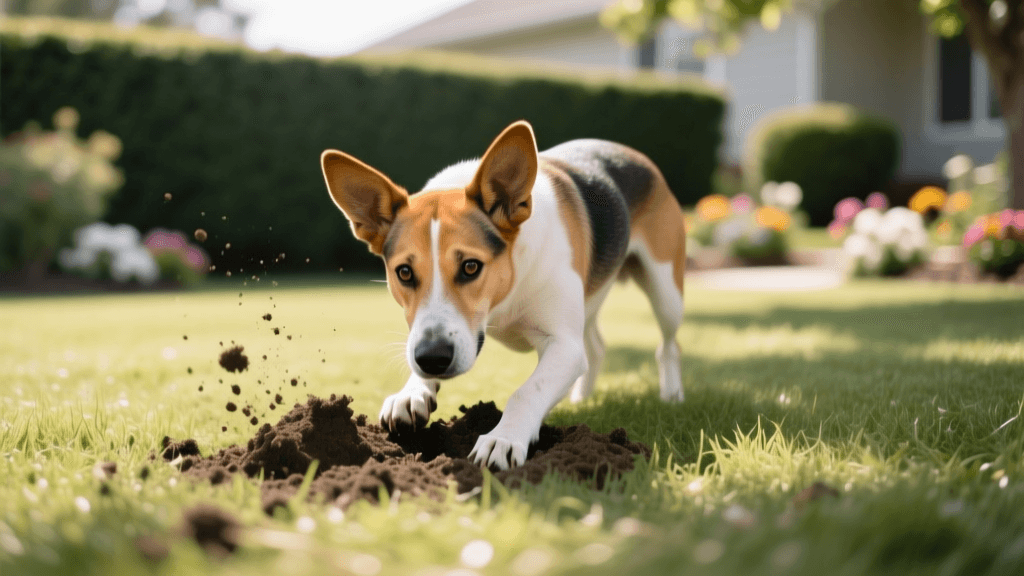
- Attempt escape behaviours including scratching, digging, and jumping
After this initial peak, most dogs without clinical separation anxiety settle into a lower-arousal state. They may sleep, engage in self-directed behaviours, or simply rest. The transition from high arousal to rest is not a sign that the dog is "fine" with being alone — it is a coping response, a form of behavioural shutdown that conserves energy when social contact cannot be achieved.
Separation Anxiety Versus Normal Separation Distress
It is important to distinguish between the normal stress response described above and clinical separation anxiety, which affects an estimated 14–20% of the domestic dog population according to data compiled by the American Veterinary Medical Association. In dogs with separation anxiety, the physiological and behavioural activation does not subside after the initial 30-minute window. Instead, it persists or escalates throughout the entire separation period.
These dogs show a qualitatively different relationship with time. Because their stress response does not habituate, every minute of absence is experienced at a high level of arousal. The cumulative physiological cost — sustained cortisol elevation, chronic sympathetic nervous system activation — can contribute to long-term health consequences including immune suppression and gastrointestinal disturbance.
Diagnosis of separation anxiety requires systematic behavioural assessment, typically involving video recording of the dog during absences. Clinicians look for specific behavioural signatures:
- Distress behaviours that begin within 5 minutes of owner departure and do not resolve
- Behaviours that occur exclusively or predominantly in the owner's absence
- A pattern of hyper-attachment — the dog shadows the owner, becomes distressed when the owner is in a different room, and shows exaggerated greeting responses
- No improvement with environmental enrichment alone
The distinction matters because the treatment protocols differ substantially. Normal separation distress responds well to gradual desensitisation, predictable routines, and enrichment. Clinical separation anxiety typically requires a combination of behaviour modification, environmental management, and in many cases, pharmacological support under veterinary guidance.
How Dogs Anticipate the Owner's Return
One of the most striking demonstrations of canine time perception comes from studies of anticipatory behaviour. Rupert Sheldrake, a biologist who conducted observational studies in the 1990s and 2000s, documented cases of dogs appearing to wait at windows or doors at the time their owners began travelling home — even when the return time varied. While Sheldrake's methodology attracted criticism, the phenomenon he described prompted more controlled investigations.
"Dogs are exquisitely sensitive to routine and to the subtle environmental cues that precede predictable events. Whether they are tracking time directly or responding to a cascade of sensory signals — light levels, ambient sounds, the fading of scent — the result is functionally equivalent to time awareness."
— Dr. Alexandra Horowitz, Inside of a Dog, Scribner, 2009
More controlled work has focused on the role of routine. Dogs whose owners return at consistent times show anticipatory positioning behaviour — moving toward the door, increased alertness, reduced sleep — beginning approximately 10 to 15 minutes before the expected arrival. When owners deliberately varied their return times, this anticipatory window became less precise but did not disappear entirely, suggesting that both learned temporal cues and real-time environmental signals contribute to the dog's expectation.
The practical implication is significant: dogs are not passive recipients of time. They actively construct expectations about when social contact will resume, and those expectations shape their emotional state throughout the separation. A dog that has learned its owner returns at 5:30 PM may experience a qualitatively different afternoon than a dog whose owner's schedule is entirely unpredictable.
What Owners Can Do With This Knowledge
Understanding the temporal experience of a dog left alone shifts the framing of separation from a logistical inconvenience to a welfare consideration. Several evidence-based strategies follow directly from the research.
Predictable departure and return routines reduce anticipatory anxiety by giving the dog a reliable temporal framework. When the schedule is consistent, the dog's internal clock and learned associations work together to create a manageable waiting period rather than an open-ended state of uncertainty.
Addressing the first 30 minutes specifically — the period of highest activation — is more effective than trying to manage the entire separation period uniformly. Providing a high-value food puzzle or chew item at the moment of departure occupies the dog during peak arousal and creates a positive association with the owner's exit. Studies using food-dispensing toys have shown reductions in vocalisation and locomotor agitation during the critical first window.
For dogs showing signs of clinical separation anxiety, the goal is not to distract but to systematically change the emotional response to departure cues. This involves desensitisation protocols in which the owner performs departure-associated behaviours — picking up keys, putting on a coat — without actually leaving, gradually reducing the predictive value of those cues and the anxiety they trigger.
The science of how dogs experience time alone is still developing, but its core message is already clear: the dog waiting at home is not simply passing time. It is navigating a complex internal landscape of memory, anticipation, stress, and coping — shaped by millions of years of evolution as a species that was never meant to be alone.
Anouk Beaumont
All our authors care for dogs every day — read more of their work on the authors page.