The Step-by-Step Puppy Potty Training and Bell Guide
Master puppy potty training with our step-by-step guide. Learn crate schedules, bell training techniques, and accident cleanup tips for success.
Mastering Puppy Potty Training: A Step-by-Step Guide
Bringing a new puppy home is an exciting milestone, but it quickly becomes clear that potty training is one of the most challenging hurdles for new pet parents. Without a structured approach, accidents can cause frustration and damage your home. Fortunately, by combining crate training, a strict schedule, and bell training, you can communicate your expectations clearly to your puppy. According to the American Kennel Club (AKC), consistency and positive reinforcement are the foundational pillars of successful house training. This comprehensive, step-by-step guide will walk you through the exact methods, supplies, and schedules you need to potty train your puppy efficiently.
Essential Potty Training Supplies and Estimated Costs
Before you begin, gathering the right tools is crucial. Investing in high-quality supplies prevents setbacks and makes the process smoother for both you and your dog.
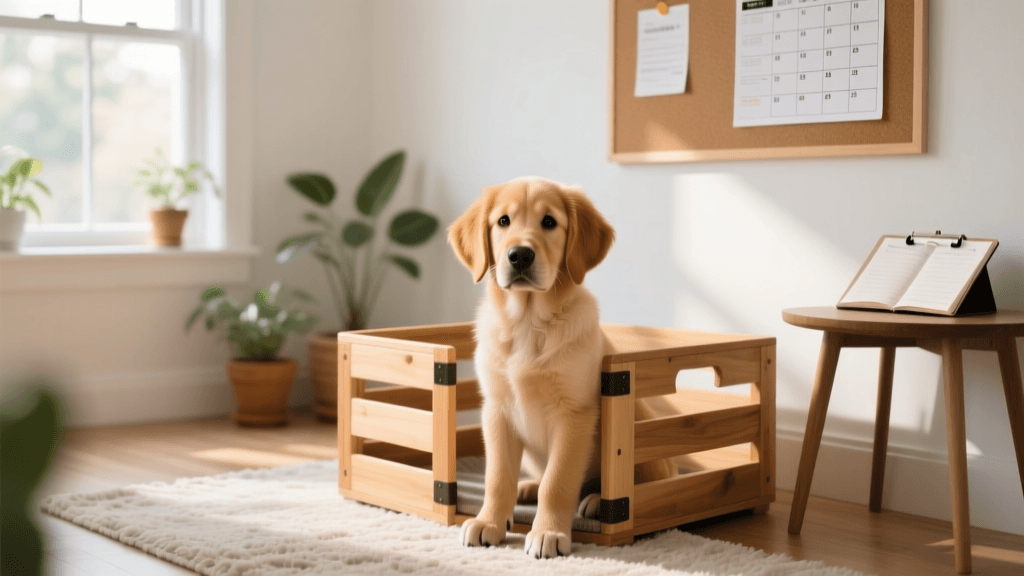
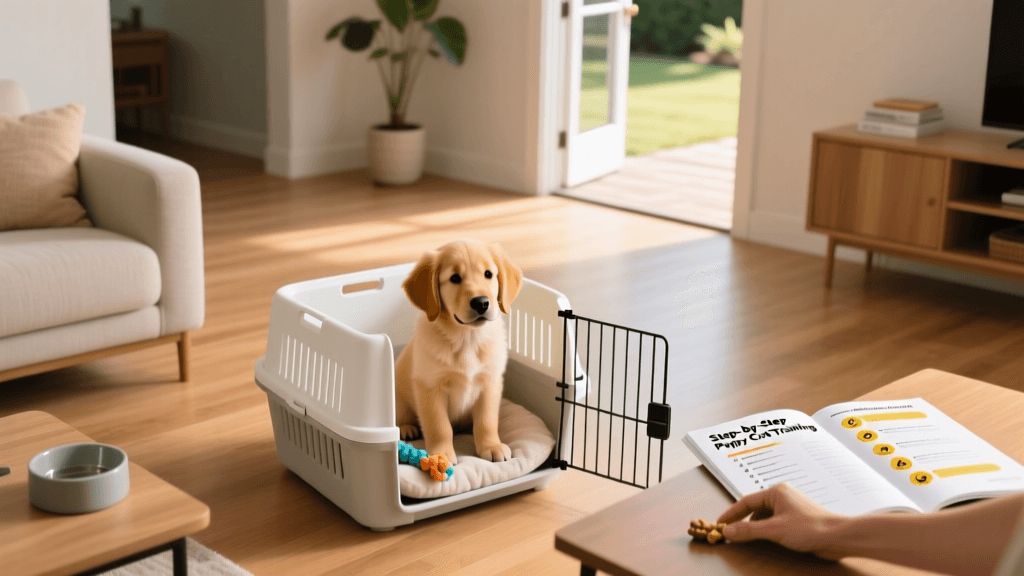
- Puppy Crate: A wire or plastic crate is essential for den training. Puppies instinctively avoid soiling their sleeping area. Choose a crate that allows your puppy to stand, turn around, and lie down comfortably, but not so large that they can potty in one corner and sleep in the other. For medium breeds, a 30-inch crate (approx. $45-$60) with a divider panel is ideal.
- Enzymatic Cleaner: Standard household cleaners do not break down uric acid crystals. You must use an enzymatic cleaner like Nature's Miracle or Rocco & Roxie (approx. $15-$20). Ammonia-based cleaners should be strictly avoided, as ammonia smells like urine to dogs and encourages repeat offenses.
- Potty Bells: A set of jingle bells on a strap (approx. $10) or an electronic wireless bell system like the Mighty Paw Smart Bell (approx. $25).
- High-Value Training Treats: Soft, pea-sized treats like Zuke's Mini Naturals or boiled chicken breast. You need treats that can be consumed in under two seconds to maintain the association between pottying outside and the reward.
The Puppy Potty Schedule: Age and Bladder Capacity
A common mistake new owners make is expecting a young puppy to hold their bladder for a full workday. A general veterinary rule of thumb is that a puppy can hold their bladder for one hour per month of age, up to about eight hours. However, during active play or right after meals, this capacity decreases significantly. The ASPCA recommends taking puppies out immediately after waking up, after playing, and within 15 to 30 minutes after eating.
| Puppy Age | Max Bladder Capacity | Potty Break Frequency |
|---|---|---|
| 2 Months | 2 Hours | Every 1-2 Hours |
| 3 Months | 3 Hours | Every 2-3 Hours |
| 4 Months | 4 Hours | Every 3-4 Hours |
| 6 Months | 6 Hours | Every 4-6 Hours |
Consistency is the cornerstone of potty training. Puppies thrive on predictable routines and clear communication.
Step-by-Step Guide to Bell Training Your Puppy
Bell training is a highly effective way to give your puppy a voice, allowing them to signal when they need to go outside rather than whining or having an accident. Here is how to teach the behavior in four distinct phases.
Step 1: Introduce the Bell
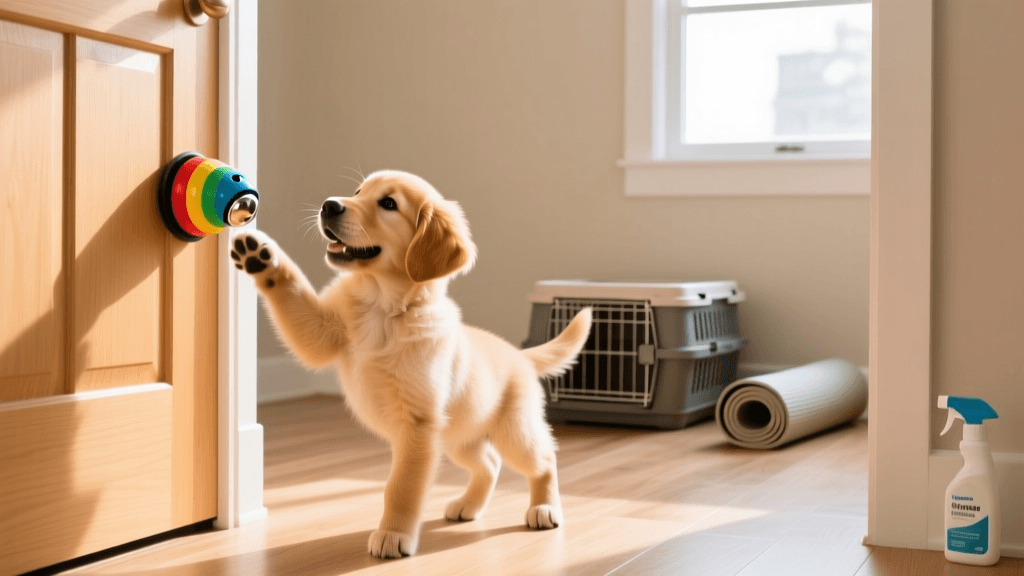
Hang the bells on the door handle you will consistently use for potty breaks. Let your puppy sniff the bells. The moment their nose touches the bell, mark the behavior with a clicker or a verbal 'Yes!' and give a treat. Repeat this 10 to 15 times per session until the puppy intentionally boops the bell for a treat.
Step 2: Teach the 'Touch' Command
Once they understand that nose-to-bell equals a reward, add a verbal cue. Say 'Touch' or 'Ring' right before they interact with the bell. This builds a cognitive link between the command, the action, and the reward.
Step 3: Pair the Bell with the Door Opening
Stop giving treats just for ringing the bell. Now, the reward for ringing the bell is the door opening. When your puppy rings the bell, immediately open the door and step outside with them. If they ring it and you do not open the door, the behavior will extinguish. The Humane Society of the United States emphasizes that immediate consequences are vital for canine learning.
Step 4: The Potty Reward
Once outside, stand in the designated potty spot on a leash. Wait quietly. The moment your puppy eliminates, praise them calmly and offer a high-value treat immediately. Do not wait until you go back inside to give the treat, or the puppy will associate the reward with coming indoors, not with eliminating outside.
The Importance of Supervision and Tethering
When your puppy is not in their crate, they must be 100% supervised. A puppy wandering into another room is a puppy preparing to have an accident. If you cannot keep your eyes on them, use a technique called 'umbilical cord training.' This involves attaching your puppy's leash to your belt loop or a sturdy piece of furniture near you. This physical tether prevents them from sneaking off to soil a rug or hide behind a sofa. By keeping the puppy in your immediate vicinity, you can easily observe their pre-potty signals, such as sniffing the ground intensely, circling, or sudden restlessness. Catching these subtle cues and immediately directing them to the potty bells reinforces the entire training loop and drastically reduces indoor accidents.
Managing and Cleaning Up Potty Accidents
Accidents are an inevitable part of the potty training process. How you handle them dictates how quickly your puppy learns. If you catch your puppy in the act, clap your hands loudly to interrupt the behavior, scoop them up, and carry them outside to finish. Never rub a puppy's nose in their waste or yell at them. Dogs do not possess the cognitive ability to connect past actions with present punishment; they will only learn to fear you and hide behind furniture to eliminate.
Cleaning the accident site properly is equally critical. Blot up as much liquid as possible with paper towels. Then, saturate the area with your enzymatic cleaner. The enzymes need time to break down the proteins, so allow the cleaner to sit for 10 to 15 minutes before blotting it dry. For carpeted areas, you may need to use a wet vac to extract the cleaner from the carpet pad, as lingering uric acid will act as a beacon for future accidents.
Sample Daily Potty Training Schedule
To illustrate how this works in practice, here is a sample schedule for a 3-month-old puppy. This routine integrates crate time, potty breaks, and bell training.
- 6:30 AM: Wake up, immediately carry puppy outside to the potty spot. Reward heavily.
- 7:00 AM: Breakfast.
- 7:20 AM: Bell training practice and outdoor potty break.
- 7:45 AM: Supervised indoor playtime.
- 8:30 AM: Crate time for a morning nap.
- 10:30 AM: Wake from crate, immediate potty break outside.
Final Thoughts on Consistency
Potty training is not an overnight process. It requires patience, vigilance, and an unwavering commitment to your schedule. By utilizing a properly sized crate, enzymatic cleaners, and a structured bell-training protocol, you set your puppy up for lifelong success. Remember that every trip outside is a learning opportunity, and celebrating the small victories will build a confident, well-adjusted dog. Stick to the steps, trust the process, and enjoy the journey of raising your new companion.
beth-carrasco
All our authors care for dogs every day — read more of their work on the authors page.