First-Time Owner Guide To Puppy Potty And Crate Training
Master puppy potty and crate training with our first-time owner guide. Learn schedules, crate sizing, and actionable tips for a stress-free start.
Welcome to Puppy Parenthood: Setting Up for Success
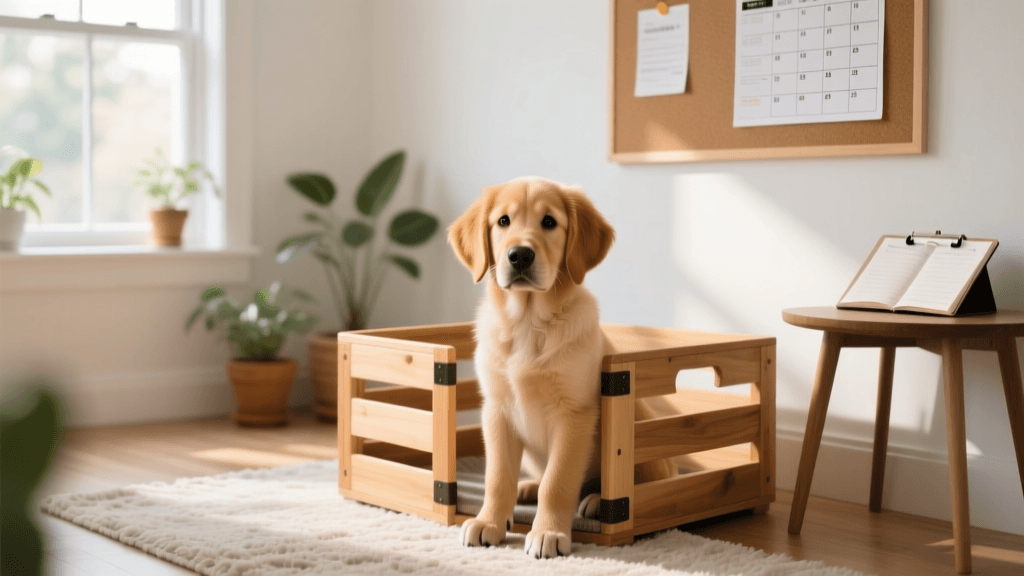
Bringing a new puppy home is one of the most exciting milestones in life, but it can quickly become overwhelming for first-time owners. Between the endless chewing, the midnight whimpers, and the seemingly random puddles on your favorite rug, the first few weeks test your patience. However, establishing a solid foundation for potty and crate training during the first critical months is the single most important thing you can do for your dog's long-term behavioral health. According to the ASPCA, consistency, supervision, and positive reinforcement are the three pillars of successful housebreaking. This comprehensive guide will walk you through exact schedules, product recommendations, and troubleshooting tips to help you navigate the first year with confidence.
The Science of Puppy Bladders: Timing is Everything
To set realistic expectations, you must understand the biological limitations of a puppy's developing bladder. A general rule of thumb endorsed by veterinarians is that a puppy can hold their bladder for one hour per month of age, up to a maximum of about eight hours. However, this rule applies to resting or sleeping puppies. Active puppies, or those who have just eaten or drank water, will need to eliminate much more frequently. First-time owners often make the mistake of waiting for the puppy to 'tell' them they need to go out. Puppies rarely give clear signals until it is too late. Instead, you must operate on a proactive schedule.
Age-Based Potty Training Schedule
| Puppy Age | Max Hold Time (Day) | Max Hold Time (Night) | Outing Frequency |
|---|---|---|---|
| 8-10 Weeks | 1-2 Hours | 3-4 Hours | Every 1-2 Hours |
| 11-14 Weeks | 2-3 Hours | 4-5 Hours | Every 2-3 Hours |
| 15-16 Weeks | 3-4 Hours | 5-6 Hours | Every 3-4 Hours |
| 4-6 Months | 4-5 Hours | 6-8 Hours | Every 4-5 Hours |
Keep a dedicated notebook or use a pet tracking app to log your puppy's elimination times. This data will quickly reveal their natural biological rhythm, allowing you to anticipate their needs before an accident occurs.
Crate Training: Your Puppy's Safe Haven
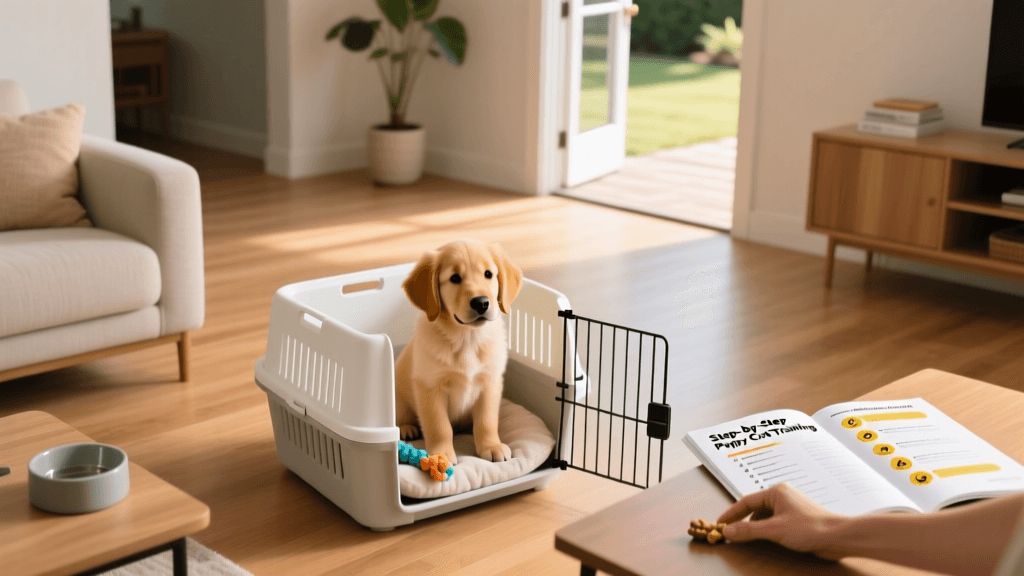
Crate training is not about locking your dog away; it is about tapping into their natural denning instinct. Dogs are inherently reluctant to soil the area where they sleep. When introduced correctly, a crate becomes your puppy's favorite sanctuary and your most powerful potty training tool. The American Kennel Club (AKC) emphasizes that a crate should always be associated with positive experiences, never used as a place of punishment.
Choosing the Right Crate: Measurements and Costs
For a growing puppy, purchase a wire or heavy-duty plastic crate that will accommodate their estimated adult size, but use a built-in divider panel to restrict the space. If a puppy has too much room, they will designate one corner for sleeping and another for eliminating, completely defeating the purpose of the crate.
- Small Breeds (Under 25 lbs): 24-inch crate (e.g., MidWest Homes for Pets iCrate). Cost: $40 - $55.
- Medium Breeds (25-50 lbs): 30-inch to 36-inch crate. Cost: $50 - $75.
- Large Breeds (50-90 lbs): 42-inch crate. Cost: $70 - $100.
- Giant Breeds (90+ lbs): 48-inch to 54-inch crate. Cost: $100 - $150.
Always measure your puppy from the tip of their nose to the base of their tail, and add two to four inches for comfort. They should be able to stand up, turn around, and lie down without touching the top or sides.
Step-by-Step Potty Training Routine
A successful routine relies on triggering the puppy's digestive system and immediately rewarding the desired behavior. Here is the exact protocol to follow every single time you take your puppy outside.
Step 1: The Leash and The Spot. Always take your puppy out on a leash, even if you have a fenced yard. This prevents them from playing and ensures they stay in one designated 'potty spot.' The scent of previous eliminations will trigger the urge to go.
Step 2: The Command. Use a consistent verbal cue such as 'Go potty' or 'Do your business' in a calm, encouraging tone. Do not use a harsh or commanding voice, as this may cause the puppy to hold it in out of fear.
Step 3: The Immediate Reward. The exact second your puppy finishes eliminating, praise them enthusiastically and offer a high-value treat. Products like Zuke's Mini Naturals (under 3 calories per treat) are excellent because they are small, soft, and can be consumed quickly without breaking the puppy's focus. Consistency in your treat delivery is vital. Keep a treat pouch on your waist or in your pocket whenever you take the puppy out. If you forget the treats and go back inside to get them, the puppy will associate the reward with coming inside, not with the act of eliminating outdoors.
Nighttime Survival Guide for First-Time Owners
Nighttime is when most first-time owners struggle. Puppies will inevitably wake up and cry. The Humane Society of the United States advises owners to place the crate in or near their bedroom for the first few weeks. Your presence and scent provide comfort. If the puppy whines at 2:00 AM, wait a few moments to see if they settle. If the crying persists, they likely need to eliminate.
Carry or leash them outside immediately, keep the lights low, and do not engage in play. Once they eliminate, return them directly to the crate. To soothe a lonely puppy, consider investing in a Snuggle Puppy Behavioral Aid (approx. $35-$40). This plush toy includes a battery-operated heartbeat and a heat pack, simulating the presence of littermates and drastically reducing nighttime anxiety.
Handling Accidents and Essential Cleaning Products
Accidents will happen. How you react dictates how quickly your puppy learns. If you catch your puppy in the act, clap your hands loudly to interrupt the behavior, scoop them up, and carry them outside to finish. Never rub a puppy's nose in their mess or yell at them after the fact. Dogs do not associate past actions with present punishment; they will only learn to fear you and begin hiding their waste behind furniture.
Cleaning the accident site properly is non-negotiable. Standard household cleaners and ammonia-based products will not break down the uric acid crystals in dog urine. In fact, ammonia smells like urine to a dog, encouraging them to remark the spot. You must use an enzymatic cleaner. Nature's Miracle Advanced Stain and Odor Eliminator (approx. $12-$15) is an industry standard. Saturate the area, let it sit for 10 to 15 minutes to penetrate the carpet pad, and blot it dry. For hard floors, ensure the enzymatic solution sits long enough to break down the proteins entirely. Additionally, if your puppy is having frequent accidents despite a strict schedule, consult your veterinarian. Issues like urinary tract infections (UTIs) or intestinal parasites are common in young puppies and can make physical control impossible regardless of your training efforts.
Final Thoughts on Consistency
Puppy potty and crate training is a marathon, not a sprint. There will be days when you feel like you are taking steps backward, especially during teething or periods of rapid growth. Stick to your schedule, manage their environment to prevent unsupervised mistakes, and celebrate the small victories. By investing time and patience during your puppy's first year, you are building a foundation of trust and communication that will last a lifetime.
tom-renshaw
All our authors care for dogs every day — read more of their work on the authors page.