First-Time Owner Guide to Puppy Potty Training Schedules
Master puppy potty training with our first-time owner guide. Learn crate training, hourly schedules, and accident cleanup tips for a stress-free start.
Welcome to Puppy Parenthood: The Potty Training Reality
Bringing a new puppy home is an exhilarating experience, but it quickly becomes clear that the first major hurdle for any first-time dog owner is potty training. Without a proper strategy, your home can quickly turn into a minefield of unexpected puddles. The good news? Puppies thrive on routine, and with the right schedule, patience, and tools, you can successfully housebreak your furry friend. According to the American Kennel Club (AKC), consistency is the single most critical factor in successful housetraining. This comprehensive guide will walk you through the science of puppy bladders, essential supplies, and a foolproof daily schedule designed specifically for first-time owners.
The Science of Puppy Bladders
Before setting expectations, it is crucial to understand the biological limitations of your puppy. A common mistake first-time owners make is expecting a young puppy to hold it for an eight-hour workday. Puppies simply lack the sphincter muscle control and bladder capacity to do so. As a general rule of thumb, a puppy can hold their bladder for roughly one hour for every month of age, up to a maximum of about eight hours once they reach adulthood.
Puppy Bladder Capacity Chart
| Puppy Age | Maximum Hold Time (Daytime) | Expected Nighttime Wakeups |
|---|---|---|
| 2 Months | 2 Hours | 2-3 Times |
| 3 Months | 3 Hours | 1-2 Times |
| 4 Months | 4 Hours | 1 Time |
| 5 Months | 5 Hours | 0-1 Time |
| 6+ Months | 6-8 Hours | 0 Times |
Essential Potty Training Supplies (and Costs)
Setting yourself up for success requires a modest investment in the right tools. Here is a breakdown of what you need, including estimated costs and specific product recommendations that professional trainers swear by.
- Enzymatic Cleaner ($15 - $20): Standard household cleaners do not break down the uric acid in dog urine. You need an enzymatic cleaner like Nature's Miracle Advanced Stain and Odor Eliminator. If a puppy can still smell their previous accident, they will return to the same spot.
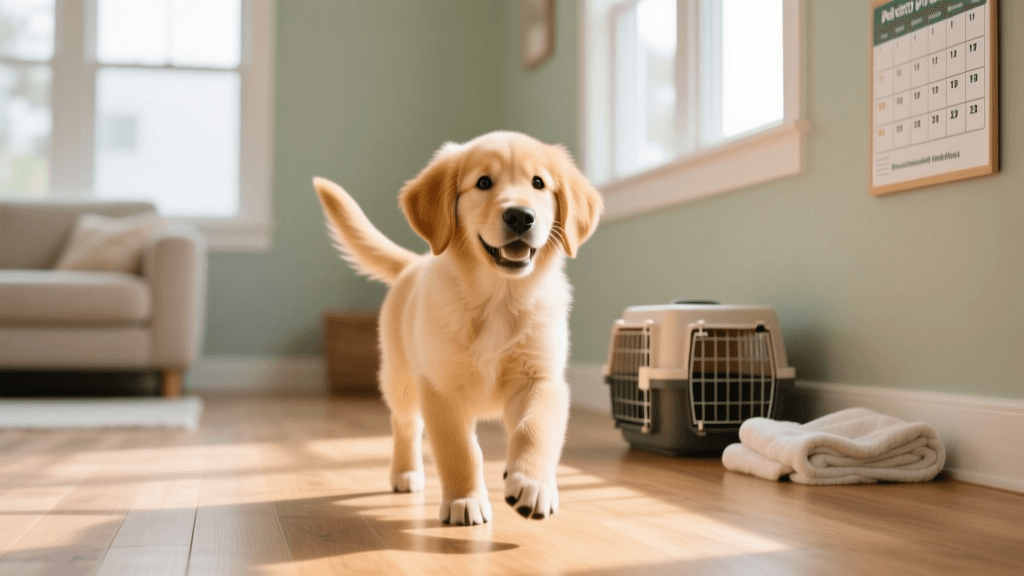
- Properly Sized Crate ($50 - $90): A wire crate like the MidWest Homes for Pets iCrate is ideal. It should be large enough for the puppy to stand, turn around, and lie down, but no larger. Use the included divider panel to shrink the space as they grow. Dogs naturally avoid soiling their sleeping area, making the crate an invaluable training tool.
- High-Value Training Treats ($8 - $12): Reserve a specific, smelly treat exclusively for potty success. Zuke's Mini Naturals or small pieces of boiled chicken work perfectly. You need to reward the exact second they finish eliminating outdoors.
- Long Training Lead ($15 - $25): A 15-foot lightweight nylon lead allows your puppy to sniff and find their preferred spot without feeling restricted, while keeping you in control.
The Ultimate First-Time Owner Potty Schedule
Puppies are creatures of habit. By controlling their input (food and water) and output (potty breaks), you can predict when they need to go. Below is a sample weekend schedule for a 3-month-old puppy. If you work from home or have a pet sitter, replicate this timing during the workweek.
- 6:30 AM - Wake Up & Immediate Potty Break: Carry your puppy outside the second they wake up. Do not let their paws touch the indoor floor. Use a consistent cue word like 'Go Potty'.
- 7:00 AM - Breakfast: Feed a measured portion of high-quality puppy food. Remove the bowl after 15 minutes to establish a strict eating schedule.
- 7:45 AM - Post-Meal Potty Break: Puppies typically need to eliminate 20 to 30 minutes after eating.
- 8:30 AM - Playtime & Training: Engage in short, 10-minute training sessions. Mental stimulation tires them out faster than physical play.
- 9:30 AM - Potty Break & Crate Nap: After playing, take them out, then place them in their crate for a morning nap.
- 12:30 PM - Midday Potty Break & Lunch: Take them out immediately upon waking, feed lunch, and take them out again 30 minutes later.
- 3:30 PM - Afternoon Potty Break & Play: Another cycle of outdoor potty, followed by supervised free-roaming or play.
- 6:00 PM - Dinner: Feed the final meal of the day. Pro Tip: Pick up the water bowl two hours before bedtime to reduce nighttime wakeups.
- 8:30 PM - Final Evening Potty: A calm, leashed potty break. Keep the lights low and avoid play to signal that it is time to wind down.
- 9:00 PM - Bedtime: Crate the puppy for the night. Set an alarm for 2:00 AM for a quiet, boring nighttime potty break.
Crate Training: Your Secret Weapon
Many first-time owners feel guilty about using a crate, viewing it as a cage. However, when introduced correctly, a crate becomes a puppy's safe den. The ASPCA emphasizes that crate training is one of the most effective methods for housetraining because it leverages a dog's natural instinct to keep their sleeping area clean. If the crate is too large, the puppy will designate one corner as a bedroom and the opposite corner as a bathroom, completely defeating the purpose of the den instinct. Always use the adjustable divider panel that comes with most wire crates to ensure the space is perfectly sized. To introduce the crate, start by feeding all meals inside it with the door open. Toss high-value treats into the back of the crate and praise them when they enter. Never use the crate as a punishment.
Socialization During Potty Breaks
The first year of a puppy's life is critical for early socialization. Potty breaks are not just biological necessities; they are prime opportunities to expose your puppy to the sights, sounds, and smells of the outside world. During the first 16 weeks, carry your puppy to different surfaces like grass, gravel, and mulch. Let them hear distant traffic, rustling leaves, and neighborhood chatter. Positive exposure to novel environments during these early potty trips builds confidence and reduces future anxiety. Just ensure your puppy has completed their initial vaccination series before letting their paws touch public ground where unvaccinated dogs may have walked.
Handling Accidents Like a Pro
Despite your best efforts, accidents will happen. How you react will determine how quickly your puppy learns. The Humane Society of the United States strongly advises against punishing a puppy for housetraining accidents. Rubbing a puppy's nose in it or yelling only teaches them to fear you, and often results in the puppy learning to hide behind furniture to eliminate where you cannot see them. If you catch your puppy in the act, clap your hands loudly once to interrupt the behavior, immediately scoop them up, and carry them outside to finish. Praise lavishly and offer a treat if they finish outdoors. If you find an accident after the fact, simply clean it up thoroughly with your enzymatic cleaner. The puppy cannot connect your anger to an action they took an hour ago.
When to Suspect a Medical Issue
If your puppy is suddenly having frequent accidents, straining to urinate, or licking their genitals excessively, potty training is no longer the issue—it is a medical one. Urinary Tract Infections (UTIs) are relatively common in young puppies and make it physically impossible for them to hold their bladder. If you notice blood in the urine or signs of distress, contact your veterinarian immediately for a urinalysis.
Final Thoughts for First-Time Owners
Potty training is a marathon, not a sprint. There will be days when you feel like you are taking a step backward, especially during developmental leaps or teething phases. Stick to your schedule, manage their environment using a crate or a playpen, and celebrate the small victories. With consistency, patience, and plenty of enzymatic cleaner on hand, your puppy will master this essential life skill, paving the way for a lifetime of trust and companionship.
beth-carrasco
All our authors care for dogs every day — read more of their work on the authors page.