The Ultimate Step-by-Step Guide to Puppy Crate Training
Learn how to crate train your puppy with our step-by-step guide. Discover timelines, crate sizes, and positive reinforcement techniques for success.
The Foundation of a Well-Behaved Dog
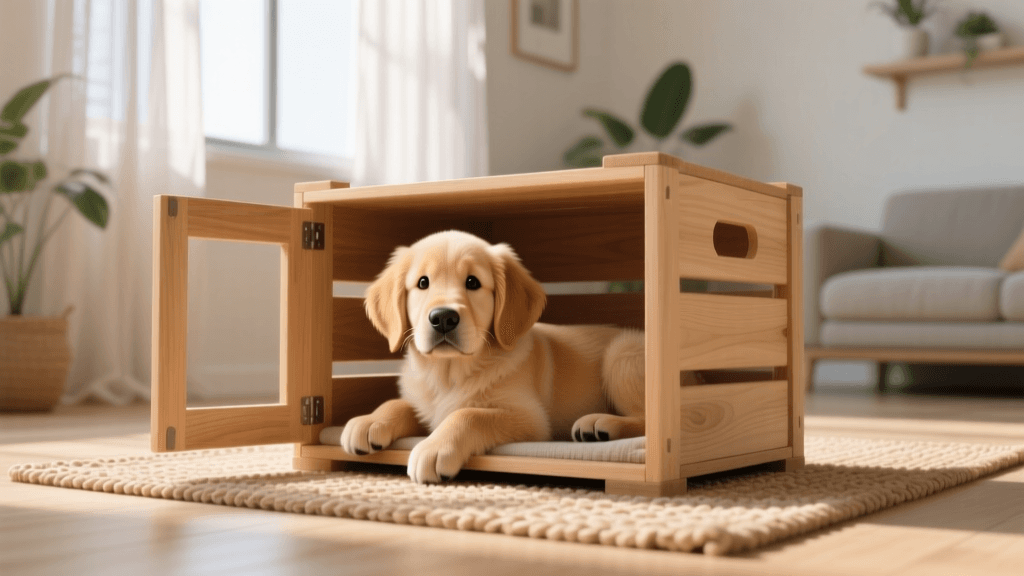
Crate training is one of the most valuable investments you can make in your puppy's behavioral development. Far from being a form of confinement, a properly introduced crate serves as a secure, den-like sanctuary where your dog can retreat when feeling overwhelmed, tired, or anxious. According to the ASPCA, dogs are den animals by nature, and they instinctively seek out small, enclosed spaces for comfort and security. When utilized correctly, the crate becomes an indispensable tool for housebreaking, preventing destructive chewing, and establishing a predictable daily routine.
However, success does not happen overnight. It requires patience, positive reinforcement, and a structured methodology. In this comprehensive guide from Paws-Tales, we will walk you through a precise, step-by-step training protocol designed to transform the crate from a scary metal box into your puppy's favorite room in the house.
Selecting the Perfect Crate: Sizes, Types, and Costs
Before beginning the conditioning process, you must select the appropriate crate. A crate that is too large will allow your puppy to eliminate in one corner and sleep in the other, completely defeating the purpose of housebreaking. A crate that is too small will cause physical discomfort and anxiety. The general rule of thumb is that your puppy should be able to stand up without hitting their head, turn around comfortably, and lie down stretched out.
| Adult Dog Weight | Crate Dimensions (L x W x H) | Recommended Model | Estimated Cost |
|---|---|---|---|
| 11 - 25 lbs | 24 x 18 x 19 inches | MidWest iCrate (Small) | $35 - $45 |
| 26 - 40 lbs | 30 x 19 x 21 inches | MidWest iCrate (Medium) | $45 - $60 |
| 41 - 70 lbs | 36 x 23 x 25 inches | MidWest iCrate (Large) | $55 - $75 |
| 71 - 90 lbs | 42 x 28 x 30 inches | MidWest iCrate (XL) | $70 - $95 |
Note: For growing puppies, purchase a wire crate sized for their estimated adult weight and use the included wire divider panel to adjust the interior space as they grow. This prevents the need to buy multiple crates and maintains proper potty-training boundaries.
Crate Placement and Environment Setup
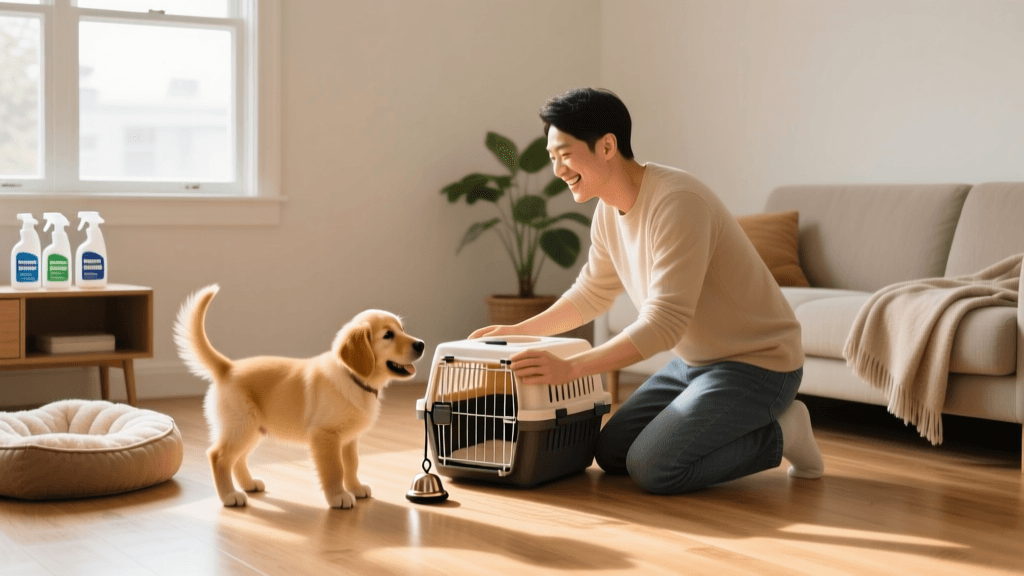
Where you place the crate is just as critical as the crate itself. Dogs are highly social animals and want to be near their family. Place the crate in a high-traffic area during the day, such as the living room or kitchen, so your puppy does not feel isolated. At night, move the crate to your bedroom or just outside your door. Hearing your breathing and smelling your scent will significantly reduce nighttime anxiety and whining. Ensure the crate is kept away from direct sunlight, heating vents, and drafty windows to maintain a comfortable ambient temperature.
Step-by-Step Puppy Crate Training Guide
Step 1: Creating a Positive Association (Days 1-3)
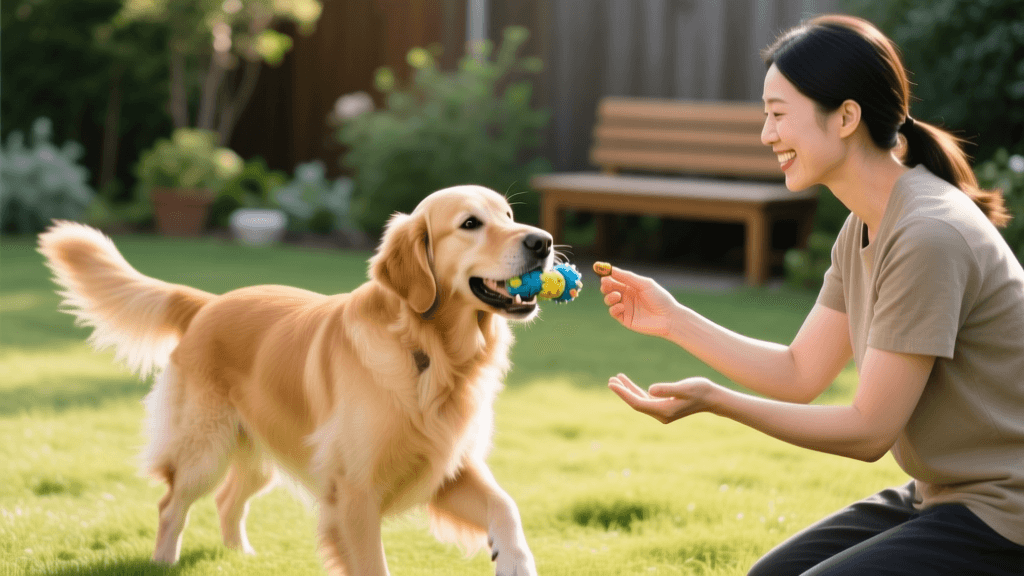
Your initial goal is to teach your puppy that the crate is a source of incredible rewards. Leave the crate door open and secured so it does not swing and startle them. Use high-value, low-calorie training treats like Zuke's Mini Naturals (approximately $6 per 16oz bag, under 3 calories each). Toss a treat just inside the door. When the puppy enters to eat it, praise them calmly. Gradually toss the treats further into the back of the crate. Do this for 10-minute sessions, three times a day. Never force the puppy inside or close the door during this phase.
Step 2: Mealtime Integration (Days 4-6)
Once your puppy is willingly entering the crate for treats, begin feeding their regular meals inside. On day four, place the food bowl just inside the threshold. On day five, move it to the middle of the crate. By day six, place the bowl all the way at the back. If the puppy shows hesitation, pull the bowl back an inch to a zone where they feel comfortable. This step leverages their natural hunger drive to build a strong, positive emotional response to the crate environment.
Step 3: Closing the Door and Duration Building (Days 7-10)
Now it is time to close the door. During their meal, gently close the crate door and latch it. Open it immediately when they finish eating. Over the next few days, begin leaving the door closed for 1 to 5 minutes after the meal while you sit nearby. To extend the duration, introduce a KONG Classic Dog Toy ($15-$20). Stuff the KONG with a mixture of plain pumpkin puree, plain Greek yogurt, and kibble, then freeze it overnight. Give the frozen KONG to your puppy inside the crate with the door closed. This provides mental stimulation and creates a positive association with longer confinement periods, easily keeping them occupied for 20 to 30 minutes.
Step 4: Departure Training and Absence (Days 11-14)
The Humane Society of the United States emphasizes keeping departures low-key to prevent separation anxiety. Once your puppy can comfortably stay in the crate for 30 minutes while you are home, begin leaving the room. Start with 1-minute absences, gradually building up to 15, then 30, and eventually 60 minutes. Do not make a big fuss when you leave or return. Ignore the puppy for the first 3 minutes upon your return to teach them that your comings and goings are entirely uneventful.
Step 5: Overnight Crate Training (Ongoing)
Nighttime crate training relies on a strict potty schedule. A general veterinary rule of thumb for bladder control is the puppy's age in months plus one equals the maximum number of hours they can hold it (e.g., a 2-month-old puppy can hold it for roughly 3 hours). Set an alarm to take your puppy out at 2:00 AM and 5:00 AM. Carry them outside to prevent them from waking up fully or having an accident on the way. Keep the lights dim and interaction to an absolute minimum during these midnight potty breaks.
Essential Gear for Crate Training Success
- MidWest Homes for Pets iCrate: A durable, foldable wire crate with a divider panel. (Cost: $35 - $95 depending on size).
- KONG Classic Dog Toy: The red rubber version is perfect for puppies. Essential for long-duration crate stays. (Cost: $15 - $20).
- Zuke's Mini Naturals: Small, soft, low-calorie treats ideal for repetitive reward-based conditioning. (Cost: $6 per bag).
- Snuggle Puppy with Heartbeat: A plush toy that mimics the warmth and heartbeat of a littermate, highly recommended for the first two weeks of nighttime crate training. (Cost: $35 - $45).
- Nature's Miracle Enzymatic Cleaner: Crucial for breaking down uric acid crystals if an accident occurs inside or near the crate. (Cost: $12 - $15).
Troubleshooting Common Behavioral Hurdles
Whining and Crying: If your puppy whines at night, you must determine if they need to eliminate or if they are simply protesting. If they have been out recently, ignore the whining. Yielding to the noise teaches the puppy that vocalization results in freedom. If the whining persists for more than 15 minutes, take them out on a leash for a boring potty break, then return them immediately to the crate.
Barking: If your puppy barks aggressively when you walk away, you have likely increased the duration too quickly. Return to a shorter time frame where they were successful and build up in smaller increments (e.g., adding just 30 seconds at a time). Covering the wire crate with a breathable blanket can also reduce visual stimuli that trigger barking.
Accidents in the Crate: If your puppy soils the crate, you are leaving them in for too long, or the crate is too large. Clean the crate thoroughly with an enzymatic cleaner like Nature's Miracle to completely eradicate the scent, preventing them from returning to the same spot.
Final Thoughts on Canine Conditioning
Crate training is a marathon, not a sprint. By following this step-by-step guide, utilizing high-value rewards, and respecting your puppy's emotional threshold, you will build a lifelong foundation of trust and security. Remember that the crate should never be used as a punishment; it must always remain a positive, safe haven for your dog.
hannah-wickes
All our authors care for dogs every day — read more of their work on the authors page.