First-Time Owner Guide to Puppy Potty Training Success
Master puppy potty training with our first-time owner guide. Learn crate schedules, bell training, and top enzyme products for stress-free housebreaking.
Welcome to Puppy Parenthood: The Potty Training Reality
Bringing home a new puppy is an exhilarating milestone, but the first few weeks can quickly become overwhelming when potty training enters the picture. For first-time dog owners, housebreaking often feels like a confusing puzzle. Why does your puppy pee outside, only to have an accident on the rug five minutes later? The secret to success lies not in the puppy's intelligence, but in the owner's consistency, routine, and understanding of canine biology. This comprehensive guide will walk you through the exact steps, schedules, and products you need to potty train your puppy efficiently and humanely.
Understanding Puppy Bladder Biology
Before setting expectations, first-time owners must understand the physical limitations of a young dog. Puppies under the age of 12 weeks simply lack the neuromuscular control required to hold their bladder for extended periods. Expecting a two-month-old puppy to hold it for four hours is biologically impossible and sets both of you up for frustration.
A general veterinary rule of thumb is that a puppy can hold their bladder for one hour per month of age, plus one. Therefore, a three-month-old puppy can comfortably hold it for a maximum of four hours. However, this is the absolute maximum limit. During active play or immediately after meals, their digestive and urinary systems kick into high gear, necessitating much more frequent trips outdoors.
The Essential Potty Training Shopping List
Success requires the right tools. Budget approximately $75 to $130 for these foundational potty training supplies:
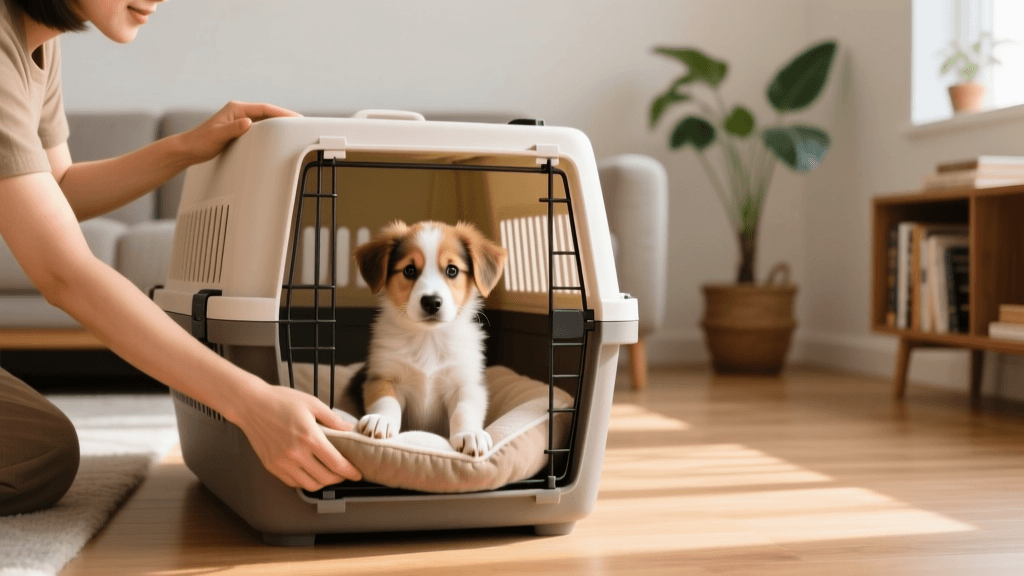
- Wire Crate with Divider (Approx. $45 - $70): A crate like the MidWest iCrate is essential. The divider panel allows you to adjust the space as your puppy grows. Dogs naturally avoid soiling their sleeping area, making a properly sized crate your greatest housebreaking ally.
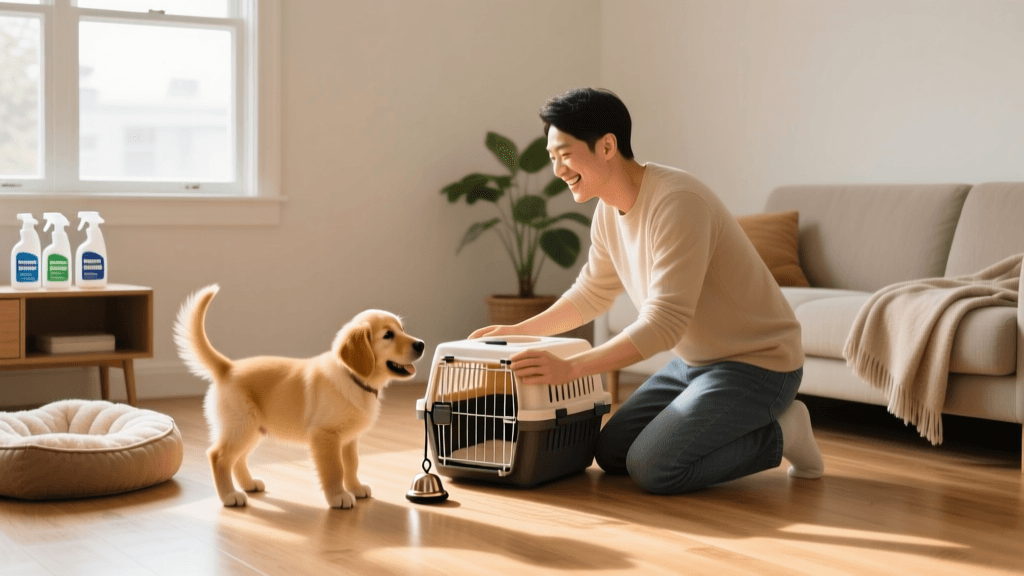
- Enzymatic Cleaner (Approx. $15 - $25): Products like Nature's Miracle or Rocco & Roxie Professional Strength Stain & Odor Remover are non-negotiable. Standard household cleaners do not break down uric acid crystals, meaning your puppy will still smell the urine and return to the same spot.
- High-Value Training Treats (Approx. $8 - $15): Keep a dedicated stash of soft, smelly treats near the door. Zuke's Mini Naturals or small pieces of boiled chicken work perfectly for immediate positive reinforcement.
- Potty Training Bells (Approx. $10 - $15): A bell system, such as the Mighty Paw Smart Bell or traditional jingle bells hung on a strap, provides a clear communication tool for your puppy to signal they need to go out.
Puppy Bladder Capacity and Potty Break Schedule
Establishing a rigid schedule removes the guesswork. Use the data table below to plan your daily routine based on your puppy's current age.
| Puppy Age | Max Hold Time (Resting) | Daytime Break Frequency | Nighttime Break Frequency |
|---|---|---|---|
| 8 - 10 Weeks | 1 - 2 Hours | Every 30 - 45 Mins | Every 2 - 3 Hours |
| 11 - 14 Weeks | 2 - 3 Hours | Every 1 Hour | Every 3 - 4 Hours |
| 15 - 18 Weeks | 3 - 4 Hours | Every 1.5 - 2 Hours | Every 4 - 6 Hours |
| 19+ Weeks | 4 - 5 Hours | Every 2 - 3 Hours | Usually 1 Break or None |
Note: Always take your puppy out immediately after they wake up, within 15 minutes of eating or drinking, and right after a vigorous play session.
Step-by-Step Crate Training for Potty Success
The ASPCA highlights that crate training is one of the most effective methods for housebreaking, provided the crate is introduced as a safe den, not a punishment zone. Here is how to execute it:
- Size it Right: The crate should be just large enough for your puppy to stand up, turn around, and lie down comfortably. If it is too large, they will designate one corner as a bathroom and the other as a bedroom.
- Supervise or Confine: When you are not actively watching your puppy with your eyes on them, they must be in the crate or a small puppy-proofed pen. Unsupervised roaming is the number one cause of potty training regression.
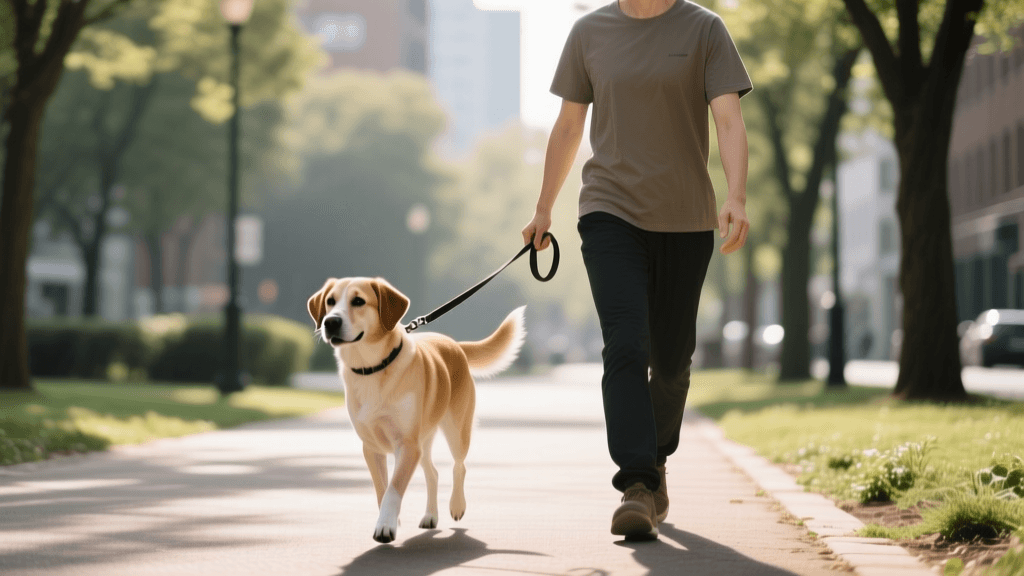
- The 15-Minute Rule: Take your puppy out to their designated potty spot on a leash. Stand completely still and boring for up to 15 minutes. If they eliminate, immediately praise them and offer a high-value treat. If they do not go after 15 minutes, bring them back inside, place them in their crate for 10 minutes, and try again.
Teaching the Potty Bell
Bell training bridges the communication gap between you and your dog. To teach this, hang the bells on the door handle you always use for potty breaks. Every single time you take the puppy outside, gently guide their nose or paw to ring the bell before opening the door. Within a few weeks, the puppy will associate the sound of the bell with the door opening. Be warned: puppies may ring the bell to go outside and play, not just to potty. If they ring the bell, take them out on a leash, stand in the potty spot for five minutes, and if they do not eliminate, bring them right back inside and place them in the crate for a brief timeout. This teaches them the bell is strictly for bathroom business.
Handling Accidents and Enzyme Cleaning
Accidents will happen. How you react dictates how quickly your puppy learns. If you catch your puppy in the act, clap your hands loudly once to startle and interrupt them, then immediately scoop them up and carry them outside to finish. Never rub their nose in it or yell; this only teaches the puppy to hide from you when they need to eliminate.
Cleaning the accident site properly is critical. According to the Humane Society of the United States, you must avoid ammonia-based cleaners, as ammonia smells like urine to dogs and can actually encourage them to re-soil the area. Instead, saturate the spot with a high-quality enzymatic cleaner. Let it sit for the exact time specified on the bottle (usually 10 to 15 minutes) so the enzymes can break down the organic proteins, then blot it dry.
Troubleshooting Common First-Time Mistakes
First-time owners often fall into a few common traps that prolong the potty training process. Avoid these pitfalls:
- Punishing After the Fact: If you find a puddle five minutes after it happened, your puppy has already forgotten what they did. Punishing them now only creates fear and confusion.
- Using Potty Pads Indefinitely: While puppy pads can be useful for high-rise apartment dwellers, they teach the dog that it is acceptable to eliminate indoors on soft, absorbent surfaces. This often leads to dogs peeing on rugs and bathmats. Transition to outdoor elimination as quickly as possible.
- Letting the Puppy Roam: Giving a 10-week-old puppy free roam of the living room is a recipe for disaster. Freedom is a privilege earned through months of reliable housebreaking, not a right given on day one.
Final Thoughts on Patience and Consistency
Potty training is a marathon, not a sprint. As noted by the American Kennel Club (AKC), patience and consistency are the most critical factors in successful housebreaking. Keep a log of your puppy's bathroom habits to identify patterns, stick rigidly to your feeding and walking schedule, and celebrate the small victories. With the right biological understanding, the proper enzymatic cleaners, and a structured crate routine, your puppy will be fully housebroken before you know it, paving the way for a lifetime of trust and companionship.
marcus-aldridge
All our authors care for dogs every day — read more of their work on the authors page.