Step-by-Step Mat Training for Canine Impulse Control
Learn the psychology behind canine arousal and follow our step-by-step mat training guide to build impulse control and calm your dog.

Teaching your dog to go to a mat or bed is often viewed as a simple parlor trick. However, from a behavioral psychology perspective, mat training is one of the most powerful tools for managing canine arousal, building impulse control, and reducing anxiety. By creating a designated 'safe zone,' you are essentially teaching your dog how to manually down-regulate their nervous system. This guide explores the psychological foundations of canine arousal and provides a step-by-step training protocol to help your dog master the art of settling.
The Psychology of Canine Arousal and Thresholds
To understand why mat training is so effective, we must first understand the canine nervous system. When a dog encounters a trigger—such as a doorbell ringing or a stranger approaching—their sympathetic nervous system activates, releasing cortisol and adrenaline. This 'fight or flight' response is essential for survival but detrimental to household harmony when triggered unnecessarily.
Mat training leverages classical and operant conditioning to shift the dog into their parasympathetic nervous system, which governs 'rest and digest' functions. By consistently pairing the physical boundary of the mat with high-value rewards and calm behavior, the mat itself becomes a conditioned stimulus for relaxation. According to the American Veterinary Medical Association (AVMA), providing dogs with predictable routines and designated safe spaces significantly reduces chronic stress and behavioral issues.
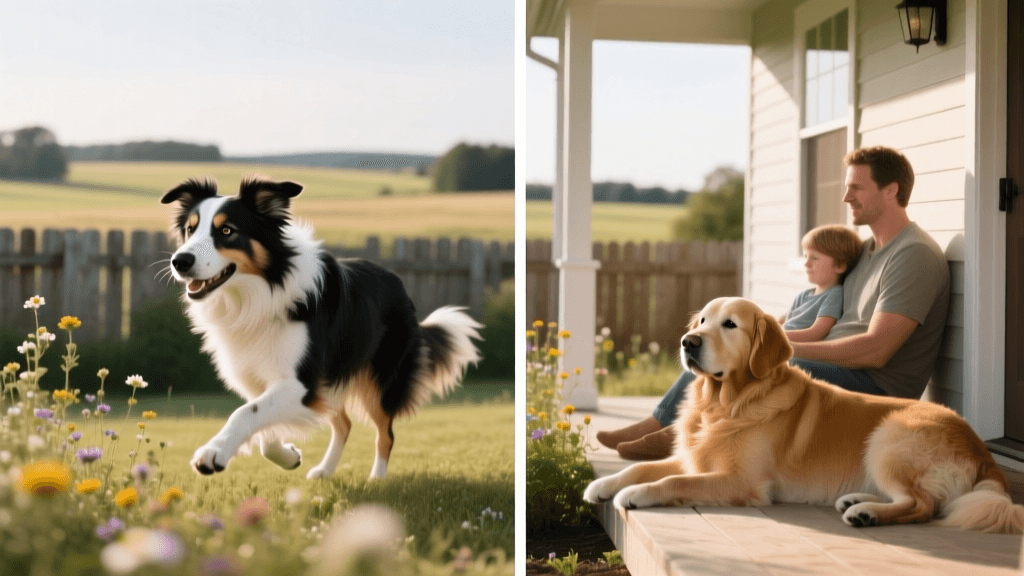
Breed instincts also play a massive role in arousal levels. Herding breeds, like Border Collies, are genetically wired for motion sensitivity and high arousal, making impulse control difficult but necessary. Conversely, guarding breeds may experience territorial arousal when guests arrive. The mat acts as an 'off-switch' and a designated 'job' (e.g., 'your job is to watch the door from your bed'), which satisfies their instinctual need for purpose without allowing them to rehearse frantic or aggressive behaviors.
Recognizing Stress Signals During Training
Before beginning any step-by-step training, you must learn to read your dog's body language. Pushing a dog past their stress threshold will result in 'trigger stacking,' where cortisol levels compound, making learning impossible. The ASPCA's guide on canine body language highlights several subtle displacement behaviors that indicate a dog is struggling to cope with arousal:
- Whale Eye: Showing the whites of the eyes while keeping the head turned away.
- Lip Licking and Yawning: When not related to food or tiredness, these are classic calming signals indicating internal stress.
- Shaking Off: A dog shaking as if wet when they are actually dry is attempting to physically 'shake off' adrenaline after a stressful encounter.
- Pacing or Panting: In a cool room, sudden panting indicates an emotional spike rather than thermoregulation.
If you observe these signals during mat training, you have pushed too far, too fast. Lower your criteria, increase your distance from the trigger, and reward for simple engagement.
Essential Gear for Success
Setting up the right environment is crucial for clear communication. Dogs rely heavily on tactile and spatial boundaries to understand expectations.
- The Mat: A raised cot, such as the Kuranda PVC Chewproof Bed (approx. $130), is highly recommended for dogs with spatial awareness issues or high arousal. The raised edges provide a distinct physical boundary that a flat mat lacks. For smaller or older dogs, a 36x24 inch, 1/2-inch thick fleece mat (approx. $25) works well.
- High-Value Treats: Use low-calorie, high-smell treats like Zuke's Mini Naturals ($8 for a 16oz bag). You will be dispensing many treats, and you want to avoid gastrointestinal upset or rapid satiation.
- Clicker or Marker Word: A standard i-Click clicker ($5) provides precise acoustic feedback to mark the exact millisecond your dog makes a relaxed choice.
- Calming Aids (Optional): For highly anxious dogs, placing a SmartPetLove Snuggle Puppy ($45) with a simulated heartbeat on the mat can encourage the parasympathetic shift through tactile comfort.
Step-by-Step Guide to Teaching 'Place'
Step 1: Shaping the Approach (Days 1-3)
Place the mat in a low-distraction area. Do not use a verbal command yet. Wait for your dog to investigate the mat. The moment one paw touches the surface, click and toss a treat off the mat. This resets the dog and encourages them to choose to return to the mat. Repeat this 15-20 times in 5-minute sessions. You are building a psychological magnetism to the bed.
Step 2: Four Paws and the Down (Days 4-7)
Once your dog is eagerly stepping onto the mat, withhold the click until all four paws are on the boundary. Next, wait for them to offer a sit or a down. A down position is biomechanically more relaxing and signals a deeper level of psychological submission and comfort. Click and deliver the treat directly to their mouth while they are in the down position to reinforce staying on the bed.
Step 3: Duration and the Parasympathetic Shift (Days 8-14)
This is where the true behavioral modification occurs. Instead of clicking for simply being on the mat, wait for a 'settle' cue. Look for a deep exhale, a 'hip drop' (where the dog rolls onto one hip), or softening of the facial muscles. Mark these specific physiological relaxations with a soft 'yes' and deliver a treat gently. According to the American Kennel Club (AKC), rewarding the state of calmness, rather than just the physical location, is what solidifies the 'Place' command as an emotional regulation tool.
Step 4: Adding the 3 Ds - Distance, Duration, Distraction (Weeks 3+)
Only introduce one 'D' at a time. If you increase distance (you walking away), keep duration short and distractions low. Use the '3-second rule': deliver a treat every 3 seconds for calm behavior, gradually stretching this to 10 seconds, then 30 seconds, as the dog's impulse control strengthens.
Troubleshooting Common Behavioral Roadblocks
Even with a solid understanding of canine psychology, you will encounter roadblocks. Below is a troubleshooting chart to help you diagnose and fix common issues.
| Roadblock | Underlying Psychology | Step-by-Step Fix |
|---|---|---|
| Dog breaks the stay the moment you move. | Spatial pressure sensitivity; the dog feels abandoned or is triggered by your motion (common in herding breeds). | Use micro-movements. Shift your weight, click, and treat. Build distance by inches, not feet. Teach the dog that your movement predicts a reward, not an end to the exercise. |
| Dog paces, whines, or scratches on the mat. | Frustration or over-arousal; the dog lacks the coping skills to self-soothe and views the mat as a restriction rather than a retreat. | Lower your criteria. Reward heavily for a deep exhale or a chin rest. Scatter feed on the mat to encourage sniffing, which naturally lowers a dog's heart rate. |
| Dog avoids the mat entirely or sits just off the edge. | Negative association (e.g., mat was used for isolation/punishment) or lack of clear tactile boundary. | Never use the mat as a time-out. Switch to a raised cot to provide a definitive physical boundary that the dog can clearly feel and understand. |
Real-World Application and Generalization
Once your dog has mastered the mat in a quiet room, you must generalize the behavior to real-world triggers. This is where impulse control is truly tested. Start by moving the mat closer to the front door. When the doorbell rings, your dog's arousal will spike. Do not yell or correct; this only adds to the environmental chaos.
Instead, calmly point to the mat. If your dog goes to the mat, deliver a high-value reward like a stuffed Kong or a long-lasting chew. The act of chewing releases endorphins, further aiding the parasympathetic shift. Over time, the sound of the doorbell will transform from a trigger for frantic barking into a cue to run to the mat and settle. By understanding the 'why' behind your dog's behavior and applying this structured, step-by-step approach, you empower your dog to navigate a stimulating world with confidence and calm.
priya-sutaria
All our authors care for dogs every day — read more of their work on the authors page.