Diagnosing and Solving Nighttime Crate Crying in New Puppies
Stop nighttime puppy crying with our expert diagnostic guide. Learn why your new puppy cries in the crate and actionable solutions for peaceful nights.
The Exhausting Reality of Nighttime Puppy Crying
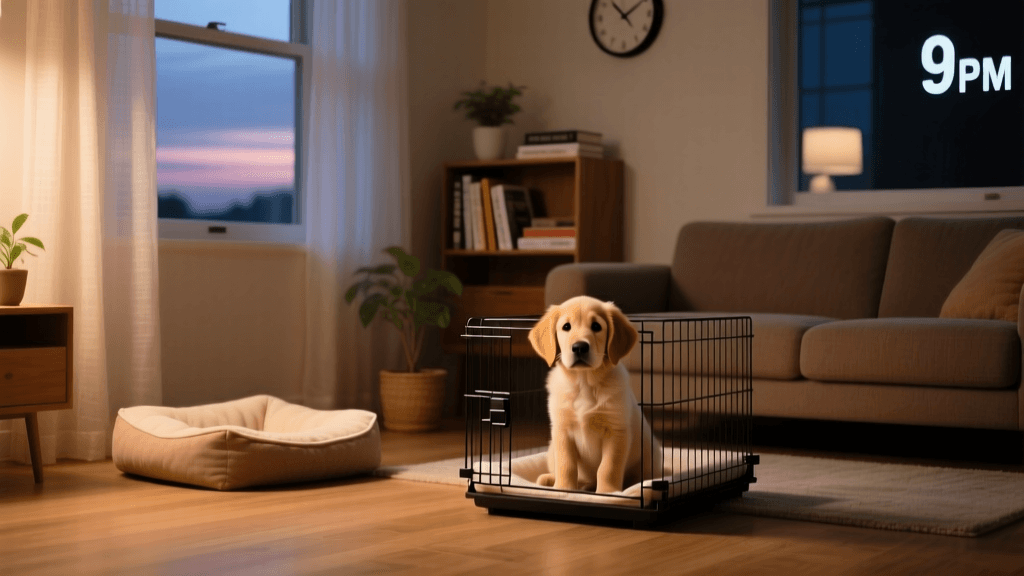
Bringing a new puppy home is a joyous milestone, but the first week often brings a harsh reality check: severe sleep deprivation. Nighttime crate crying is universally the number one complaint among new dog owners. You are exhausted, your puppy is distressed, and the constant whining can quickly turn the excitement of dog ownership into a stressful ordeal. According to the Humane Society of the United States, the initial adjustment period is highly stressful for dogs, and nighttime isolation often amplifies their anxiety.
However, simply letting the puppy out of the crate to stop the noise creates a destructive behavioral loop. To solve the problem permanently, we must shift our mindset from merely reacting to the noise to actively diagnosing the root cause. By understanding the biological, emotional, and environmental triggers behind the crying, you can implement targeted solutions that foster independence and guarantee a good night's sleep for the entire household.
Diagnosing the Root Cause of Crate Crying
Before implementing a solution, you must accurately diagnose why the puppy is crying. A puppy's vocalization is a symptom, not the disease itself. Here are the four primary diagnostic categories for nighttime crate distress.
1. The Biological Need (Potty Urgency)
Puppies have remarkably small bladders and underdeveloped sphincter muscles. The general veterinary rule of thumb is that a puppy can hold their bladder for one hour per month of age, plus one. Therefore, a two-month-old puppy can realistically hold it for about three hours. If your puppy cries two hours after their last bathroom break, it is highly likely a biological need. Conversely, if they cry merely forty-five minutes after a successful outdoor potty trip, biology is not the culprit, and you must look to emotional or environmental factors.
2. The Emotional Need (Isolation Distress)
For the first eight weeks of life, your puppy slept in a warm, breathing pile of littermates. Suddenly being placed in a wire or plastic box in a dark, quiet room triggers profound isolation distress. The American Kennel Club (AKC) notes that puppies cry at night primarily because they are lonely and miss the physical contact of their pack. This type of crying usually starts the moment the lights go out and the owner leaves the room.
3. The Environmental Factor (Temperature and Comfort)
Puppies cannot regulate their body temperature as efficiently as adult dogs. If the room is too cold, or if a draft is hitting the crate, the puppy will cry from physical discomfort. Furthermore, hard plastic crate pans offer no orthopedic support and can cause joint aches, especially in medium-to-large breed puppies experiencing rapid growth spurts.
4. The Energy Imbalance (Overtired vs. Undertired)
Just like human toddlers, puppies can become 'overtired.' When a puppy misses their daytime nap windows, their body produces excess cortisol and adrenaline, making it physically impossible for them to settle down at night. Alternatively, an undertired puppy who hasn't had adequate mental enrichment and physical exercise will cry out of sheer boredom and pent-up energy.
The Diagnostic Table: Decoding Your Puppy's Midnight Cries
Use this diagnostic matrix to determine the exact cause of your puppy's nighttime vocalizations and respond appropriately.
| Time Since Last Potty | Cry Pitch and Pattern | Likely Diagnosis | Immediate Action Plan |
|---|---|---|---|
| Less than 2 hours | High-pitched, frantic, accompanied by scratching at the door | Isolation Distress / Separation Anxiety | Ignore the crying. Wait for a 10-second pause before offering quiet verbal reassurance. Do not open the crate. |
| 3 to 4 hours | Intermittent whining, pacing, sniffing the crate floor | Biological Need (Potty) | Take the puppy outside immediately on a leash. Keep lights low and interaction minimal. Return to crate immediately after. |
| Variable | Shivering, curled tightly in a ball, soft whimpering | Environmental (Cold / Draft) | Check room temperature (ideal is 68°F-72°F). Add a fleece blanket or move the crate away from windows and AC vents. |
| Less than 1 hour | Play bowing, barking sharply, chewing crate bars | Energy Imbalance (Undertired) | Do not reward with play. Cover the crate completely with a breathable blanket to remove visual stimulation and force settling. |
Proven Solutions for Peaceful Nights
Once you have identified the potential triggers, it is time to implement a structured, proactive protocol. The ASPCA's guidelines on crate training emphasize that the crate must become a sanctuary, not a prison. Here is how to achieve that transformation.
Step 1: Optimize the Crate Environment
Transform the crate into a den-like sanctuary. Invest in a heartbeat toy, such as the Snuggle Puppy (typically costing between $35 and $45). These toys feature a battery-operated simulated heartbeat and a heat pack, which brilliantly mimic the feeling of sleeping against a mother or littermate, drastically reducing isolation distress. Ensure the room temperature is maintained between 68°F and 72°F. Use a breathable crate cover to block out visual stimuli; seeing you walk past the crate or seeing shadows can trigger a puppy to cry for attention.
Step 2: Implement a Strict Bedtime Routine
Puppies thrive on predictability. Implement a strict evening timeline to manage their biological needs and energy levels. Serve the final meal of the day at 5:00 PM to allow ample time for digestion. Remove the water bowl at 7:00 PM to prevent bladder overfilling during the night. Engage in a 20-minute mental enrichment session (like snuffle mats or frozen Kongs) at 8:30 PM to drain their cognitive energy. Finally, take them out for a boring, on-leash potty break at 10:30 PM before placing them in the crate for the night.
Step 3: The 'Wait and Listen' Protocol
When the puppy inevitably cries after being put to bed, you must employ the 'Wait and Listen' protocol. Set a timer for 15 minutes. If the puppy is simply fussing, whining, or barking for attention, you must completely ignore them. Do not yell, do not tap the crate, and do not make eye contact. Any attention, even negative attention, reinforces the crying. Only intervene if the crying escalates to the frantic, scratching panic that indicates a genuine potty emergency, or wait until the puppy stops crying for at least 10 seconds before quietly praising them.
Consistency is the cornerstone of crate training. Yielding to a crying puppy by letting them out or bringing them into your bed teaches them that vocalization is the key to freedom. You must outlast their tantrum to build true independence.
Common Mistakes to Avoid
Even well-meaning owners can accidentally sabotage their puppy's crate training. Avoid these critical errors:
- Using the Crate as Punishment: Never send your puppy to the crate when you are angry. The crate must always be associated with positive experiences, treats, and safety.
- Leaving the Puppy in the Crate Too Long: Puppies under four months should not be crated for more than 3-4 hours at a time during the day. Over-crating leads to severe psychological distress and soiling.
- Skipping Daytime Crate Training: If your puppy only sees the crate at night when they are isolated, they will resent it. Feed them their meals in the crate during the day and leave the door open so they can nap inside voluntarily.
- Inconsistent Potty Trips: If you take the puppy out every time they whimper, they will learn to cry to get a walk. Only take them out when the diagnostic table indicates a genuine biological need.
When to Seek Professional Help
While most puppies adjust to their crates within two to three weeks of consistent routine, some may exhibit severe distress. If your puppy is breaking teeth on the crate bars, tearing out their own nails, or exhibiting signs of extreme panic (such as excessive drooling, vomiting, or self-mutilation), they may be suffering from clinical separation anxiety rather than standard puppy adjustment issues. In these cases, stop the crate training immediately and consult a certified veterinary behaviorist. They can provide tailored desensitization protocols and, if necessary, short-term anti-anxiety medications to help your puppy build confidence without trauma. By carefully diagnosing the root cause of the crying and applying these targeted, empathetic solutions, you will guide your new puppy through the adjustment period and lay the foundation for a lifetime of secure, peaceful rest.
hannah-wickes
All our authors care for dogs every day — read more of their work on the authors page.