The Ultimate New Puppy Starter Kit: Essential Gear Guide
Discover the ultimate new puppy starter kit. Our buyer's guide reviews essential gear, from crates to chew toys, to prepare your home for day one.
Welcome Home: Why the Right Gear Matters
Bringing a new puppy home is one of life’s most exciting milestones. However, the transition from the breeder or shelter to your living room can be overwhelming for both you and your new furry friend. Preparing your home with the right equipment is not just about convenience; it is a critical step in ensuring your puppy’s safety, accelerating training, and preventing destructive behaviors. According to the American Kennel Club (AKC), having a structured environment and the proper supplies ready before your puppy’s paws touch your floorboards drastically reduces stress and sets the foundation for a well-adjusted adult dog. In this comprehensive buyer's guide, we review the essential gear you need for your new puppy starter kit, breaking down costs, measurements, and top product recommendations to help you make informed purchasing decisions.
The Essential New Puppy Starter Kit Checklist
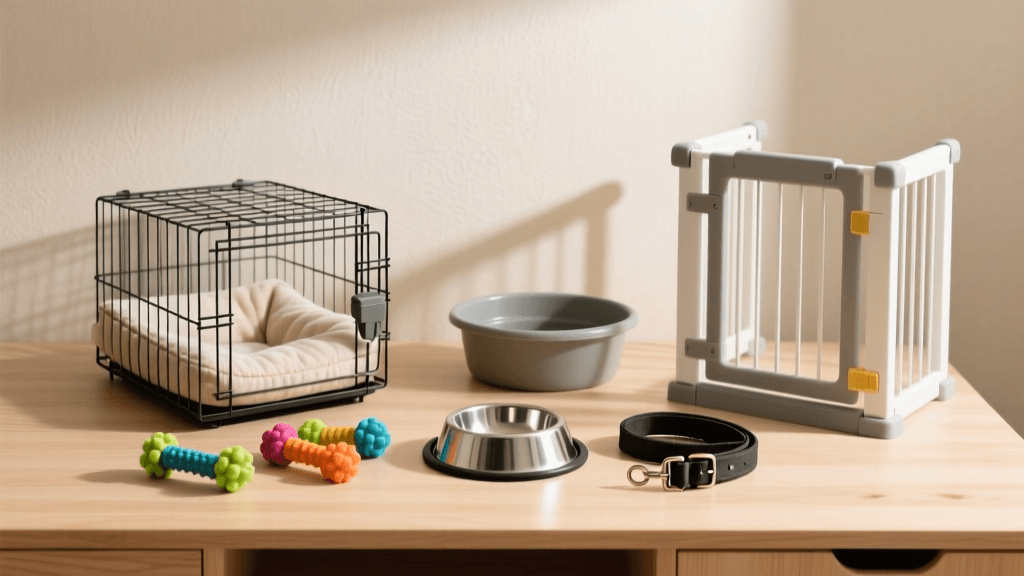
Before diving into specific product reviews, here is a quick-reference table outlining the core categories of your puppy starter kit, estimated costs, and priority levels.
| Category | Essential Item | Estimated Cost | Priority Level |
|---|---|---|---|
| Housing | Adjustable Wire Crate | $50 - $80 | Critical |
| Walking | Y-Shaped Harness & 6ft Leash | $30 - $50 | Critical |
| Dining | Stainless Steel Bowls | $15 - $25 | Critical |
| Enrichment | Stuffable Rubber Chew Toy | $10 - $15 | High |
| Cleanup | Enzymatic Cleaner | $12 - $18 | Critical |
| Grooming | Slicker Brush & Nail Clippers | $15 - $25 | Medium |
Crates and Bedding: Creating a Safe Haven
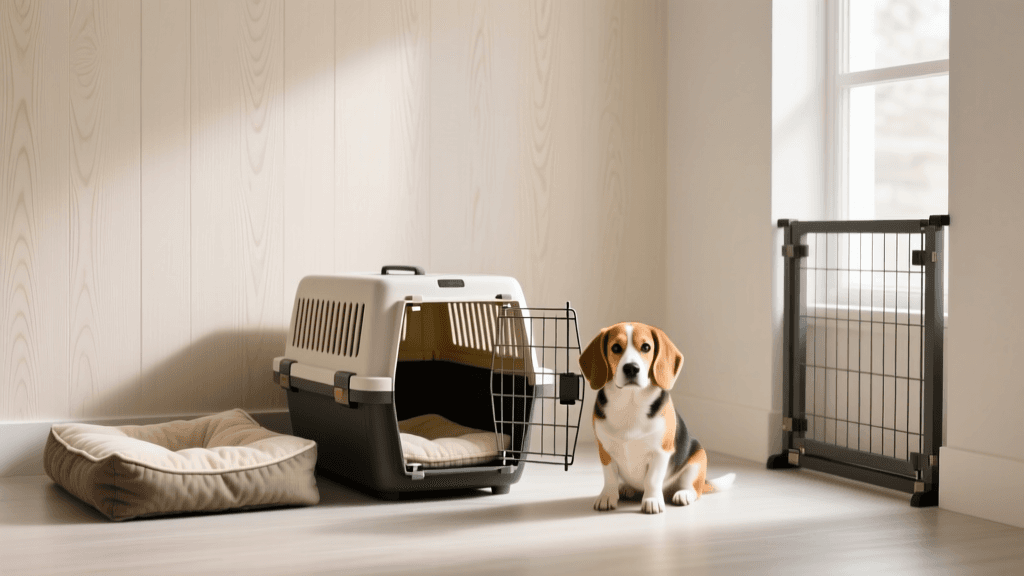
Crate training is widely recommended by veterinarians and behaviorists. A crate mimics a den, providing a secure space where your puppy can retreat when overwhelmed and sleep safely at night. The AKC's Crate Training Guide emphasizes that a crate should be large enough for the dog to stand up, turn around, and lie down comfortably, but not so large that they can eliminate in one corner and sleep in another.
Top Pick: MidWest Homes for Pets iCrate
For growing puppies, an adjustable wire crate is the most economical and practical choice. The MidWest Homes for Pets iCrate (priced between $50 and $80 depending on size) includes a heavy-duty divider panel. This allows you to buy a crate sized for your dog’s estimated adult dimensions and adjust the interior space as they grow.
Measurement Tip: To find the right size, measure your puppy’s expected adult length from the tip of the nose to the base of the tail, and add 2 to 4 inches. For height, measure from the top of the head to the ground and add 2 to 4 inches. Avoid soft-sided crates for the first six months, as teething puppies will easily chew through the mesh, creating a choking hazard and an expensive replacement cycle. Pair the wire crate with a washable, chew-resistant bed like the K9 Ballistics Tough Rip-Stop Dog Bed ($120-$150), which features a 120-day chew-proof guarantee.
Collars, Harnesses, and Leashes
While a flat collar is necessary for holding ID tags, it should not be used for walking a young puppy. Puppies have fragile tracheas, and pulling on a collar can cause long-term respiratory damage. A well-fitted harness distributes pressure across the chest and shoulders.
Top Pick: Kurgo Tru-Fit Smart Harness
The Kurgo Tru-Fit Smart Harness ($25-$35) is an exceptional entry-level option. It features a Y-shaped front and back design that avoids restricting the puppy’s shoulder joints, which is crucial for proper musculoskeletal development. It also includes a front D-ring attachment point, which gently redirects a pulling puppy toward you, making loose-leash training significantly easier.
When selecting a leash, avoid retractable models. Retractable leashes teach puppies that pulling yields more freedom, which directly contradicts loose-leash training. Instead, invest in a standard 4-to-6-foot nylon or leather leash ($15-$25). This length provides enough slack for sniffing and exploring while keeping your puppy close enough to protect them from traffic, wildlife, or eating toxic items off the sidewalk.
Food and Water Bowls
The material of your puppy’s bowls matters more than most new owners realize. Plastic bowls are porous; they harbor microscopic scratches that trap bacteria and can cause puppy acne on your dog's chin. Ceramic bowls are a better alternative, but low-quality glazes can sometimes contain trace amounts of lead.
Top Recommendation: Stick to high-quality, dishwasher-safe stainless steel bowls ($15-$25 for a set). Brands like Basis or PetFusion offer stainless steel bowls with silicone non-slip rings on the bottom, preventing the bowl from sliding across the kitchen floor while your enthusiastic puppy eats.
If you are adopting a breed prone to rapid eating and subsequent bloat or regurgitation (such as Labrador Retrievers or Beagles), incorporate a slow feeder. The Outward Hound Fun Feeder Slo Bowl ($10-$15) uses maze-like ridges to force your puppy to forage for their kibble, slowing down meal times by up to tenfold and promoting better digestion.
Chew Toys and Teething Relief
Between the ages of 3 and 6 months, your puppy will lose their baby teeth and grow their adult set. This teething phase causes significant gum discomfort, driving puppies to chew on baseboards, shoes, and furniture. Providing appropriate, textured outlets for this natural behavior is non-negotiable.
Top Pick: KONG Classic Puppy Toy
The KONG Classic Puppy Toy ($10-$15) is formulated with a softer, pink or blue rubber compound specifically designed for developing teeth and gums. The unpredictable bounce keeps puppies mentally stimulated, while the hollow center can be stuffed with puppy-safe peanut butter (always verify that the ingredients do not contain xylitol, which is highly toxic to dogs) or plain Greek yogurt. Freezing the stuffed KONG for two hours provides a soothing, cold compress for inflamed gums.
For heavy chewers, supplement the KONG with a Nylabone Puppy Chew ($8-$12). These nylon bones feature raised bristles that help clean teeth and massage gums as the puppy gnaws. Always supervise your puppy with any chew toy and discard it once it becomes small enough to pose a choking hazard or begins to splinter.
Potty Training and Cleanup Essentials
Accidents are an inevitable part of the house-training process. A puppy’s bladder control develops at a rate of roughly one hour per month of age. Therefore, a two-month-old puppy can only hold it for about two hours.
When accidents happen, standard household cleaners are insufficient. Dogs possess an incredibly sensitive olfactory system, and if they can smell the faint trace of urine, they will return to the same spot to eliminate again. You must use an enzymatic cleaner that breaks down the uric acid crystals at a molecular level.
Top Pick: Nature’s Miracle Advanced Stain & Odor Eliminator
Priced around $12-$15 per bottle, Nature’s Miracle is a staple in the dog training community. Spray the affected area generously, allow it to soak into the carpet pad or wood grain for 10 to 15 minutes, and blot it dry. Avoid using steam cleaners on urine stains, as the high heat will permanently bond the proteins to synthetic carpet fibers.
Budgeting for Your First Year
Acquiring the initial starter kit is just the beginning of your financial commitment. According to the ASPCA's Pet Ownership Costs report, new dog owners should expect to spend between $1,500 and $2,000 during the first year of a dog's life. This figure encompasses the initial gear, spay/neuter surgery, initial vaccination series, microchipping, and preventative medications.
To mitigate unexpected veterinary emergencies, which can easily cost thousands of dollars, consider enrolling your puppy in a comprehensive pet insurance policy like Trupanion or Healthy Paws while they are young and before any pre-existing conditions develop. Budgeting accurately and investing in high-quality, durable gear from day one will save you money, time, and frustration, allowing you to focus entirely on bonding with your new best friend.
aaron-whyte
All our authors care for dogs every day — read more of their work on the authors page.