Puppy Proofing Your Home: Diagnosing Hazards & Smart Solutions
Discover how to diagnose hidden household hazards and implement effective puppy-proofing solutions to keep your new dog safe and your home intact.
Introduction: The Reality of Bringing a New Dog Home
Bringing a new dog or puppy into your home is an exhilarating milestone filled with wagging tails, first cuddles, and exciting new routines. However, the transition from a controlled shelter or breeder environment to your living room often reveals a harsh reality: modern homes are fraught with hidden hazards. Within the first 48 hours, many new owners face their first crisis, whether it is a destroyed pair of designer shoes, a chewed electrical cord, or an emergency vet visit due to toxin ingestion. According to the American Kennel Club (AKC), proactive puppy-proofing is not just about hiding valuables; it is about structurally managing your environment to ensure your dog's safety and your peace of mind.
Rather than reacting to disasters as they happen, successful dog owners adopt a "Problem Diagnosis & Solutions" framework. By diagnosing the root causes of destructive or dangerous behaviors, you can implement targeted, practical solutions that protect both your pet and your property.
Diagnosing the Root Cause of Household Destruction
Before purchasing gates and sprays, it is crucial to diagnose why a dog is targeting specific areas of your home. Destructive behavior is rarely malicious; it is usually a symptom of an unmet need or an environmental trigger.
- Teething and Oral Exploration: Puppies between 12 and 24 weeks of age experience intense gum discomfort. They chew on baseboards and furniture legs to relieve pressure.
- Scavenging Instincts: Dogs are natural opportunistic feeders. If a trash can is accessible, their instinct dictates that they should investigate it for high-value calories.
- Boredom and Separation Anxiety: An under-stimulated adult dog or a puppy left alone for too long will create their own entertainment, often resulting in shredded drywall or dismantled blinds.
Understanding these triggers allows you to move beyond generic "puppy-proofing" and apply specific behavioral and environmental solutions.
Problem 1: The Indiscriminate Chewer (Baseboards, Cords, and Shoes)
The Diagnosis: You notice chew marks on the corners of your walls, frayed phone chargers, and destroyed footwear left near the entryway. This is a combination of teething pain (in puppies) and scent-seeking behavior (dogs love the concentrated scent of their owners on shoes).
The Solutions:
- Physical Barriers: Block access to high-risk rooms using a pressure-mounted gate. The Regalo Easy Step Walk Thru Gate (approx. $40) is ideal for standard doorways measuring 29 to 34 inches wide. It features a one-touch release safety lock that is easy for adults but impossible for paws.
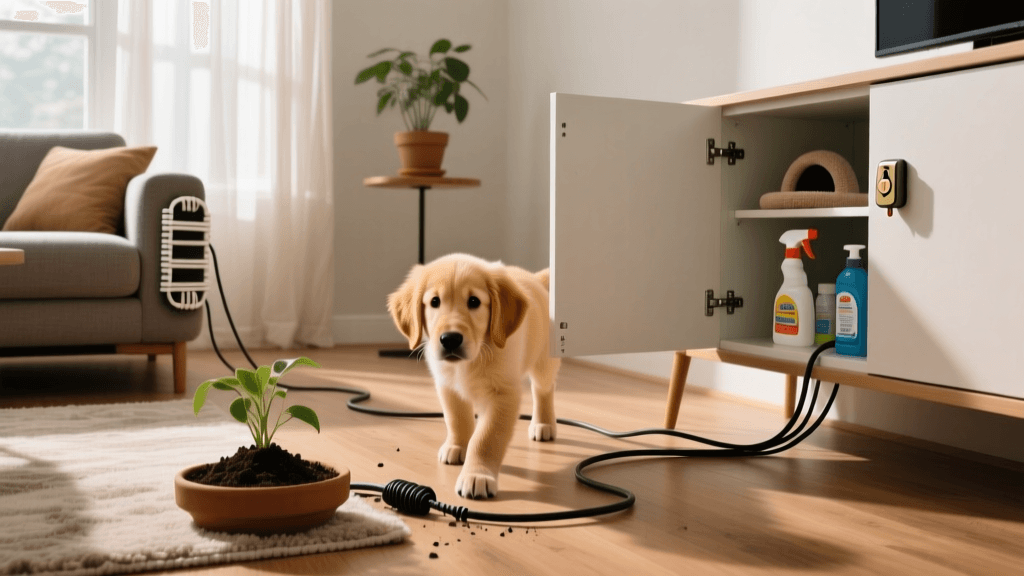
- Cord Concealment: Exposed wires are a lethal electrocution hazard. Use split-loom tubing or cable management sleeves (like the JOTO Cable Management Sleeve, approx. $15 for 10 feet) to encase TV and computer cords. For baseboards, apply a bitter taste deterrent like Grannick's Bitter Apple Spray ($12). Reapply every 24 hours for the first two weeks to condition the dog that the baseboard tastes foul.
- Redirection: Provide appropriate chewing alternatives. The KONG Classic (Red or Black, depending on chew strength, approx. $18) stuffed with frozen peanut butter provides hours of soothing, safe chewing that redirects their focus away from your furniture.
"Destructive chewing is a normal behavior for dogs, but it must be directed toward appropriate items. Management of the environment is the first line of defense." - The Humane Society of the United States
Problem 2: The Kitchen Scavenger and Toxin Risk
The Diagnosis: Your dog is counter-surfing, raiding the trash, or licking up dropped food. The kitchen is the most dangerous room in the house due to the presence of xylitol (a toxic artificial sweetener found in sugar-free gum and some peanut butters), chocolate, grapes, onions, and toxic cleaning supplies.
The Solutions:
- Cabinet Security: Standard child-proof latches are often insufficient for intelligent breeds like Retrievers or Shepherds. Install Safety 1st Magnetic Locking System latches (approx. $25 for a 12-pack) on all lower cabinets containing cleaning chemicals. These require a magnetic key to open, rendering them completely dog-proof.
- Trash Containment: Ditch the open-top or swing-lid bins. Invest in a heavy, locking stainless steel bin like the simplehuman 50L Semi-Round Kitchen Step Trash Can with Lock (approx. $120). The locking mechanism prevents the dog from stepping on the pedal or prying the lid open with their snout.
- Countertop Management: Never leave food unattended. If your dog is a persistent jumper, use scat mats (plastic mats with harmless, uncomfortable spikes) on the edges of the counters to create a negative association with jumping up.
According to the ASPCA Animal Poison Control Center, ingestion of human foods and household chemicals remains one of the top reasons for emergency veterinary calls. Securing the kitchen is a non-negotiable step in getting a dog.
Problem 3: The Stairway Tumbler and Fall Risks
The Diagnosis: Puppies, senior dogs, and long-backed breeds (like Dachshunds and Corgis) are highly susceptible to joint injuries, herniated discs, and fractures from falling down stairs or repeatedly jumping off high furniture.
The Solutions:
- Hardware-Mounted Gates: Never use a pressure-mounted gate at the top of a staircase; a determined dog can push it over and fall. Install a hardware-mounted gate, such as the Evenflo Secure Step Top of Stairs Gate (approx. $45), which screws directly into the wall studs or banister.
- Furniture Ramps: To protect your dog's spine from jumping off sofas or beds, provide a pet ramp. The PetSafe CozyUp Folding Pet Ramp (approx. $40, supports up to 150 lbs) features a high-traction surface that prevents slipping and folds away when not in use.
Problem 4: The Yard Escape Artist
The Diagnosis: Your dog is digging under the fence, squeezing through gaps in the wood, or attempting to scale the barrier to chase squirrels or neighboring dogs.
The Solutions:
- The L-Footer Method: To stop diggers, bury chicken wire or hardware cloth in an "L" shape. Dig a trench 12 inches deep and 12 inches wide along the inside perimeter of your fence. Lay the wire so it forms an L pointing back toward the yard, then cover it with dirt or mulch. When the dog digs, they hit the wire and stop, rather than escaping.
- Gap Sealers: For wooden fences that have warped over time, use flexible fence gap sealers or attach overlapping wooden battens to the inside of the fence panels to close gaps wider than 2 inches.
- Coyote Rollers: For dogs that attempt to climb or jump a 6-foot fence, install aluminum coyote rollers along the top of the fence line. These spinning bars prevent the dog from getting the leverage needed to pull themselves over.
Puppy-Proofing Gear: Cost and Application Guide
To help you budget and prioritize your home preparation, refer to the diagnostic gear table below:
| Hazard Area | Recommended Product / Solution | Estimated Cost | Best For / Application |
|---|---|---|---|
| Doorways & Hallways | Regalo Easy Step Walk Thru Gate | $40.00 | Standard doorways (29-34"); blocking off carpeted rooms. |
| Top of Stairs | Evenflo Secure Step Hardware Gate | $45.00 | Preventing catastrophic falls; requires wall mounting. |
| Lower Cabinets | Safety 1st Magnetic Locking System | $25.00 (12-pack) | Securing bleach, detergents, and xylitol products. |
| Kitchen Trash | simplehuman 50L Step Can with Lock | $120.00 | Preventing scavenging of toxic foods (grapes, onions). |
| Baseboards & Wood | Grannick's Bitter Apple Spray | $12.00 | Deterring teething puppies from chewing trim and doors. |
| Electrical Cords | JOTO Split-Loom Cable Sleeves | $15.00 | Preventing electrocution from chewed TV and PC wires. |
Establishing a Long-Term Management Strategy
Puppy-proofing is not a one-time event; it is an ongoing management strategy that evolves as your dog grows and their mobility increases. A puppy that could not reach the kitchen counter at 10 weeks old will easily clear it by 6 months.
The ultimate solution to household hazards is the establishment of a "Safe Zone." Utilize a heavy-duty exercise pen, such as the MidWest Homes for Pets 36x36 Inch Foldable Metal Exercise Pen (approx. $60), to create a secure play area when you cannot actively supervise your dog. Pair this with rigorous crate training and a strict schedule of physical exercise and mental enrichment (like snuffle mats and puzzle toys). When a dog's physical and mental needs are met, their desire to dismantle your home plummets.
By diagnosing the specific risks in your home and applying these targeted, actionable solutions, you transform your living space from a hazard zone into a sanctuary. This proactive approach ensures that the joy of getting a new dog is never overshadowed by preventable accidents or destroyed property.
marcus-aldridge
All our authors care for dogs every day — read more of their work on the authors page.