Solving First-Week Puppy Adjustment Problems Fast
Struggling with a new puppy? Diagnose and solve common first-week adjustment problems like crying, potty accidents, and biting with our expert guide.
The Reality Check: Diagnosing First-Week Puppy Struggles
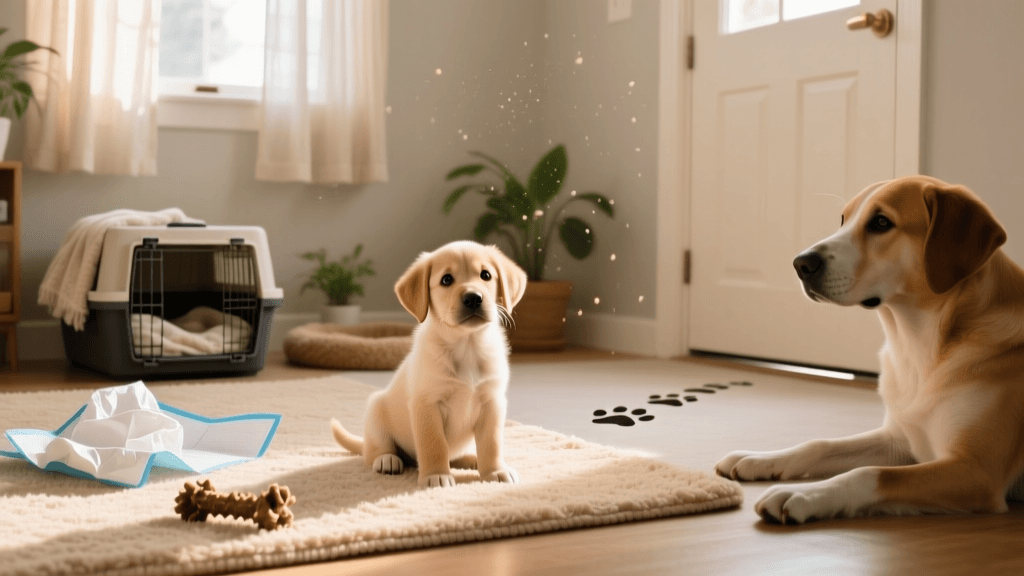
Bringing a new puppy home is often romanticized as a seamless transition into cuddles and play. In reality, the first week is a massive physiological and psychological shock for a young dog. Separated from their littermates, thrust into an unfamiliar environment, and bombarded by new scents and sounds, puppies frequently exhibit stress responses that new owners misinterpret as bad behavior. The key to surviving the first week is shifting your mindset from frustration to problem diagnosis. By identifying the root cause of your puppy's distress, you can implement targeted, actionable solutions that save your sanity and build a foundation of trust.
In this guide, we will diagnose the three most common first-week puppy adjustment problems—nighttime crying, frequent potty accidents, and destructive biting—and provide exact, actionable solutions complete with product recommendations, timing schedules, and cost estimates.
Problem 1: Nighttime Crying and Crate Refusal
The Diagnosis
When a puppy cries incessantly in their crate at night, it is rarely a display of stubbornness. Puppies are den animals, but they are also pack animals. For the first eight weeks of their life, they slept in a warm, breathing pile of siblings. Suddenly sleeping alone in a wire or plastic enclosure triggers a primal isolation distress response. Furthermore, a puppy's bladder is incredibly small; crying at 3:00 AM is often a legitimate biological alarm, not a manipulation tactic.
The Solutions
1. Recreate Littermate Warmth: Invest in a behavioral aid toy that mimics the heartbeat and warmth of a mother dog. The SmartPetLove Snuggle Puppy (approx. $40) includes a pulsing heartbeat device and a disposable heat pack. Place it in the back of the crate to give your puppy a comforting 'littermate' to snuggle against.
2. Right-Size the Crate: A crate that is too large allows the puppy to soil one corner and sleep in the other, defeating the purpose of crate training. Use a wire crate with an adjustable divider panel. The space should be exactly large enough for the puppy to stand up, turn around, and lie down comfortably—usually leaving only about 6 inches of growing room at the back. As they grow, move the divider outward.
3. The Midnight Potty Protocol: Set an alarm for one nighttime bathroom break. For an 8-to-10-week-old puppy, a 4:00 AM wake-up is standard. Take them out on a leash, keep the lights dim, use a boring, quiet voice, and return them immediately to the crate. Do not play or cuddle them during this break, or you will accidentally reinforce waking up for attention.
According to the ASPCA guidelines on crate training, the crate must always be associated with positive experiences. Never use the crate as a punishment, and try feeding your puppy their dinner inside the crate with the door open to build a positive emotional association before bedtime.
Problem 2: Frequent Indoor Potty Accidents
The Diagnosis
If your puppy is having multiple accidents a day, the diagnosis is almost always a failure of management, not a failure of the puppy. Young puppies lack the neurological development to 'hold it' and do not understand the concept of indoor vs. outdoor surfaces. Furthermore, if you are using standard household cleaners to clean up accidents, you are leaving behind uric acid crystals that smell like a neon bathroom sign to your puppy's sensitive nose, inviting repeat offenses.
The Solutions
1. The 'Month-Plus-One' Rule: A general rule of thumb for bladder control is that a puppy can hold their bladder for one hour per month of age, plus one. Therefore, a 2-month-old puppy can only hold it for roughly 3 hours max while resting, and much less while active. During the first week, take your puppy outside every 45 to 60 minutes during waking hours, and immediately after eating, drinking, or playing.
2. Enzymatic Destruction of Odors: Throw away standard floor cleaners. Purchase an enzymatic cleaner like Nature's Miracle Advanced Stain and Odor Eliminator (approx. $15). Enzymes physically break down the uric acid molecules rather than just masking them. For deep carpet stains, use a cheap UV blacklight flashlight ($12) to find old, dried urine spots you might have missed and treat them thoroughly.
3. Tethering and Shadowing: During the first week, your puppy should never be unsupervised. If you cannot give them 100% of your attention, tether their leash to your belt loop or use a playpen. The American Kennel Club emphasizes that close supervision and immediate positive reinforcement (treats and praise the second they finish outside) are the fastest ways to build reliable potty habits.
Problem 3: 'Land Shark' Biting and Overstimulation
The Diagnosis
New owners often panic when their sweet puppy turns into a biting 'land shark,' lunging at ankles, hands, and children. This is rarely aggression. It is usually a combination of teething discomfort, natural prey-drive exploration, and severe overstimulation. Puppies explore the world with their mouths, but when they become overtired, they lose bite inhibition and act like cranky toddlers throwing a tantrum.
The Solutions
1. Enforce Mandatory Nap Times: Puppies need 18 to 20 hours of sleep a day. If your puppy is biting frantically and cannot settle, they are overtired. Gently place them in their crate or a quiet playpen for a 90-minute enforced nap. You will often find they wake up completely reset and gentle.
2. Redirection to Appropriate Outlets: Always have a high-value chew toy within arm's reach. The KONG Classic in Red or Black (approx. $12-$15, depending on size) is an industry standard. Stuff it with plain canned pumpkin or plain Greek yogurt and freeze it solid. The cold numbs teething gums, and the licking action releases endorphins that naturally calm the puppy's nervous system.
3. The Reverse Time-Out: If the puppy bites your skin, let out a high-pitched 'Ouch!' and immediately stand up, cross your arms, and look at the ceiling for 15 seconds. You are removing the most valuable resource: your attention. If they persist, calmly step over a baby gate for 30 seconds. The AKC recommends this redirection and withdrawal of attention to teach bite inhibition without using physical punishment, which can damage your bond and increase fear-based aggression.
First-Week Puppy Troubleshooting Chart
Use this quick-reference diagnostic table to identify your puppy's issue and apply the correct first-week solution.
| Symptom | Likely Root Cause | Immediate Solution | Estimated Cost |
|---|---|---|---|
| Whining in crate at night | Isolation distress / Cold | Heartbeat toy & heat pack | $40 - $45 |
| Waking up to potty at 3 AM | Biological bladder limit | Scheduled, boring midnight trip | $0 |
| Repeat accidents in one spot | Uric acid residue | Enzymatic cleaner & UV light | $25 - $30 |
| Frantic ankle and hand biting | Overstimulation / Overtired | Enforced 90-minute crate nap | $0 |
| Chewing baseboards & shoes | Teething discomfort | Frozen KONG or wet washcloth | $12 - $15 |
Establishing a Baseline: When to Call the Vet
While crying, potty accidents, and biting are normal behavioral adjustments, it is vital to distinguish between stress and illness. The first week is a critical window for monitoring your puppy's physical health. If your puppy's potty accidents are accompanied by straining, diarrhea, or blood, this is a medical emergency, not a training issue. Similarly, if your puppy is lethargic, refusing high-value treats, or vomiting, bypass the training manuals and contact your veterinarian immediately.
Surviving the first week of puppyhood requires patience, preparation, and a diagnostic mindset. By anticipating these common hurdles and having the right tools—like enzymatic cleaners, heartbeat toys, and frozen KONGs—ready to deploy, you will transition smoothly from the chaotic adjustment period into the rewarding journey of long-term dog ownership.
robin-maitland
All our authors care for dogs every day — read more of their work on the authors page.