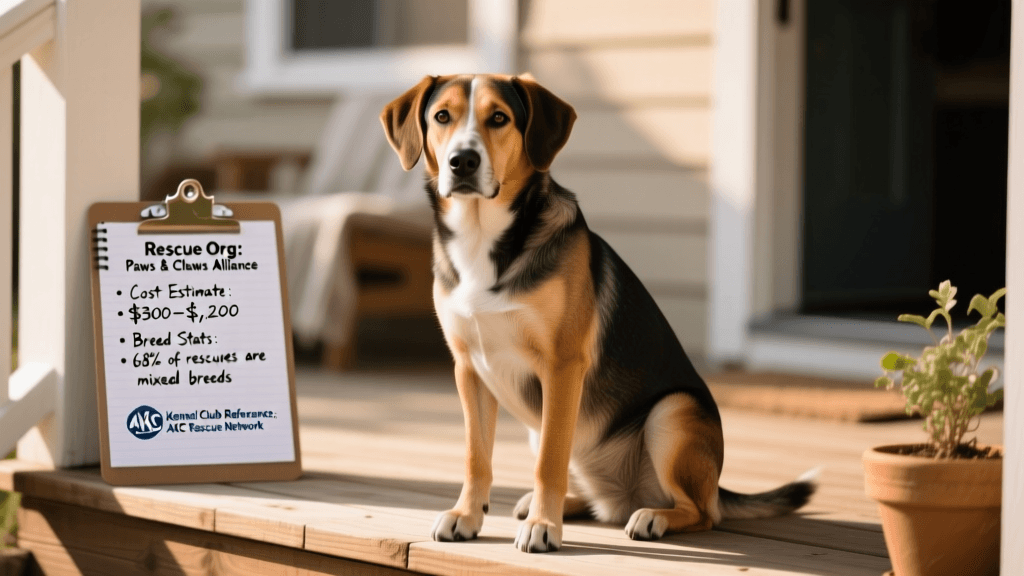
Costs Of Owning A Dog First Year Breakdown
Learn about costs of owning a dog first year breakdown with expert tips and data-backed advice.

What New Dog Owners Actually Spend in Year One
Bringing a dog home for the first time is one of the most rewarding decisions a person can make — but it is also one of the most financially significant. The first year of dog ownership consistently costs more than any subsequent year, because it combines one-time setup expenses with ongoing care costs that most prospective owners underestimate. According to the American Kennel Club (AKC, 2023), first-year costs for a new dog owner range from $1,000 to over $4,500 depending on breed, size, and whether the dog is adopted or purchased from a breeder.
Understanding where that money goes — and planning for it before you bring a dog home — is the difference between a smooth transition and a financial shock. This breakdown covers every major cost category, from the initial acquisition fee to routine veterinary care, so you can budget with confidence.
Acquisition Costs: Adoption vs. Breeder
The first expense most people think about is the cost of the dog itself. This varies enormously depending on your source. Adopting from a rescue organisation or municipal shelter typically costs between $50 and $500, with many shelters including initial vaccinations, microchipping, and spay/neuter surgery in that fee. The RSPCA in the United Kingdom, for example, charges adoption fees starting at around £135, which covers a health check, vaccinations, microchipping, and neutering where appropriate (RSPCA, 2024).
Purchasing from a reputable breeder registered with the Kennel Club or the American Kennel Club is a different financial picture entirely. Prices for popular breeds from health-tested parents routinely fall between $800 and $3,500. Some breeds command significantly more: French Bulldogs from health-tested lines can exceed $5,000, while working breeds like Border Collies from proven stock typically range from $1,200 to $2,500.
It is worth noting that a lower acquisition cost does not mean lower total costs. A dog adopted at age three may have unknown health history, while a puppy from a health-tested breeder may have documented genetic screening for conditions like hip dysplasia or progressive retinal atrophy. Either way, budget for the dog's purchase or adoption fee as just the beginning.
Rescue Organisations Worth Knowing
If adoption is your route, several well-established organisations maintain searchable databases of dogs needing homes. In the United States, the ASPCA operates shelters in New York City and partners with thousands of local shelters nationwide. In the UK, Dogs Trust runs 21 rehoming centres across England, Scotland, Wales, and Northern Ireland. Petfinder.com aggregates listings from over 11,500 shelters and rescue groups across North America, making it one of the most comprehensive search tools available.
One-Time Setup Costs in the First Month
Before your dog arrives, you will need to purchase equipment that will last for years. These are largely one-time costs, though some items will need replacing as a puppy grows. A realistic first-month equipment budget looks like this:
- Crate (appropriately sized): $40–$150
- Dog bed or mat: $30–$120
- Food and water bowls: $15–$50
- Collar, ID tag, and leash: $25–$80
- Harness (recommended for puppies and small breeds): $20–$60
- Baby gates or exercise pen: $30–$100
- Grooming tools (brush, nail clippers, shampoo): $30–$80
- Toys and enrichment items: $30–$100
- Enzymatic cleaner for accidents: $10–$25
Total one-time setup costs typically fall between $230 and $765. Buying mid-range products from the start tends to be more economical than purchasing cheap items that need replacing within months. A crate that fits a puppy but not an adult dog, for instance, will need to be replaced — factor in the adult size from the beginning.
Puppy-Proofing Your Home
Beyond equipment, puppy-proofing may require small home modifications. Cabinet locks, cord management, and securing toxic plants or chemicals are not expensive individually, but they add up. Budget an additional $50–$150 for home safety adjustments. Some owners also invest in a dog door ($75–$400 installed) during the first year, particularly if they have a yard.
Veterinary Costs in Year One
Veterinary care is the largest variable cost in the first year, and it is the category most likely to surprise new owners. A healthy puppy or newly adopted adult dog will require multiple vet visits in year one regardless of whether anything goes wrong.
For a puppy, the standard first-year veterinary schedule includes three to four rounds of core vaccinations (distemper, parvovirus, adenovirus, and rabies), deworming treatments, flea and tick prevention, a heartworm test, and spay or neuter surgery if not already done. The American Animal Hospital Association (AAHA, 2023) estimates that routine first-year veterinary costs for a puppy, excluding spay/neuter, average between $700 and $1,500 depending on geographic location and clinic pricing.
Spay or neuter surgery adds $200–$800 depending on the dog's size and your location. Low-cost clinics operated by organisations like the Humane Society of the United States can reduce this significantly, sometimes to under $100 for qualifying owners.
"The single most important thing a new dog owner can do financially is establish a relationship with a veterinarian before problems arise, and set aside a dedicated emergency fund of at least $1,000 from day one." — American Veterinary Medical Association guidance on pet financial preparedness (AVMA, 2022)
Emergency veterinary visits are not rare in year one. Puppies in particular are prone to ingesting foreign objects, sustaining minor injuries, and picking up gastrointestinal illnesses. A single emergency visit can cost $300–$2,000 or more. Pet insurance, discussed below, is one way to manage this risk.
Pet Insurance: Is It Worth It in Year One?
Pet insurance premiums for a healthy puppy typically range from $30 to $70 per month, or $360 to $840 annually. Policies vary widely in what they cover — accident-only plans are cheaper but exclude illness, while comprehensive accident-and-illness plans cost more but cover conditions like ear infections, digestive issues, and orthopedic problems that are common in young dogs.
For breeds with known health predispositions, insurance purchased before any conditions are diagnosed (and therefore before they become pre-existing exclusions) can provide significant financial protection. Labrador Retrievers, for example, have a 12.6% lifetime prevalence of hip dysplasia according to the Orthopedic Foundation for Animals, and surgical treatment can cost $3,500–$7,000 per hip.
Food Costs: Budgeting by Size
Food is the most consistent ongoing expense, and it scales directly with the dog's size. A 10-pound adult dog eating a quality dry kibble might consume $20–$40 worth of food per month. A 70-pound dog eating the same quality food will cost $60–$120 per month. Raw or fresh-food diets can cost two to four times as much as dry kibble for equivalent nutritional value.
| Dog Size | Monthly Food Cost (Dry Kibble) | Annual Food Cost |
|---|---|---|
| Small (under 20 lbs) | $20–$45 | $240–$540 |
| Medium (20–50 lbs) | $40–$80 | $480–$960 |
| Large (50–90 lbs) | $60–$120 | $720–$1,440 |
| Giant (over 90 lbs) | $90–$160 | $1,080–$1,920 |
In year one, puppies also require puppy-specific food formulations, which are often priced slightly higher than adult food. Budget for treats separately — training treats in particular can add $15–$40 per month during the intensive training period of the first six months.
Training and Socialisation
Training is not optional — it is a safety and welfare requirement. A dog that cannot be reliably recalled, that pulls dangerously on the leash, or that reacts aggressively to other dogs or people is a liability and a welfare concern. Group puppy classes typically cost $100–$250 for a six-to-eight-week course. Private training sessions run $75–$200 per hour.
Most new dog owners benefit from at least one group puppy class followed by a basic obedience course. Budget $200–$500 for structured training in year one as a baseline. Dogs with behavioural challenges, fearfulness, or reactivity may require ongoing work with a certified professional trainer or veterinary behaviourist, which can add $500–$2,000 or more.
Socialisation — exposing a puppy to a wide variety of people, environments, sounds, and other animals during the critical window between 3 and 14 weeks of age — is largely free but requires deliberate effort and time. The Kennel Club's Puppy Foundation Award programme in the UK provides a structured framework for early socialisation and basic training, and many affiliated clubs offer classes for under £100 for a full course.
Grooming, Boarding, and Other Recurring Costs
Grooming costs depend almost entirely on breed. Short-coated breeds like Beagles or Boxers require minimal professional grooming — a bath and nail trim every six to eight weeks at $30–$60 per visit. Double-coated breeds like Golden Retrievers or Siberian Huskies need more frequent brushing and deshedding treatments. High-maintenance coats like those of Poodles, Bichon Frises, or Doodle crosses require professional grooming every four to six weeks at $60–$120 per session, adding $720–$1,440 annually.
Boarding or pet-sitting costs apply whenever you travel. A reputable boarding kennel charges $30–$75 per night. In-home pet sitters typically charge $20–$50 per visit or $60–$100 per overnight stay. For a household that travels three or four times per year, annual boarding costs can easily reach $400–$1,200.
- Establish a dedicated dog savings account before bringing your dog home, with a minimum balance of $1,000 for emergencies.
- Research breed-specific health conditions before selecting a breed — some conditions are predictable and insurable, others are not.
- Get a veterinary estimate for your area's standard first-year puppy package before committing to a dog.
- Factor in your lifestyle honestly: a dog that requires professional grooming every five weeks is a recurring financial commitment for 10–15 years.
- Compare pet insurance policies before your dog's first vet visit, since pre-existing conditions diagnosed at that visit may be excluded from future coverage.
When all categories are added together — acquisition, setup, veterinary care, food, training, grooming, and incidentals — first-year costs for a medium-sized dog typically fall between $2,500 and $5,000. Large or giant breeds, high-maintenance coats, or dogs with early health issues can push that figure considerably higher. Going in with a realistic budget, a funded emergency reserve, and a clear-eyed understanding of the ongoing commitment makes the difference between a stressful first year and a genuinely joyful one.
Aaron Whyte
All our authors care for dogs every day — read more of their work on the authors page.