Diagnosing Home Hazards: Essential Puppy-Proofing Fixes
Learn how to diagnose hidden household hazards and apply targeted puppy-proofing solutions to keep your new dog safe. Room-by-room fixes and costs.
The Diagnostic Approach to Puppy-Proofing
Bringing a new dog or puppy into your home is a milestone filled with joy, but it also introduces a complex set of environmental challenges. Puppies explore the world with their mouths, and adult rescue dogs may exhibit stress-induced chewing or scavenging behaviors. According to the American Kennel Club (AKC), thousands of pets visit emergency veterinary clinics each year due to preventable household accidents. To ensure a safe transition, new owners must adopt a 'Problem Diagnosis and Solutions' mindset. Instead of a superficial once-over, you must systematically diagnose hidden hazards in every room and implement targeted, heavy-duty solutions.
Zone 1: The Kitchen and Dining Area
Problem Diagnosis: Toxins and Trash Raids
The kitchen is arguably the most dangerous room for a new dog. Xylitol (found in sugar-free gum, mints, and some peanut butters), grapes, onions, and macadamia nuts are highly toxic. The ASPCA Animal Poison Control notes that xylitol ingestion can cause a rapid, life-threatening drop in blood sugar and liver failure within hours. Furthermore, trash cans are a primary target for foraging dogs, leading to intestinal blockages from cooked bones, corn cobs, or avocado pits.
Solutions: Securing the Culinary Zone
Replace your standard trash can with a heavy-duty, step-operated model like the Simplehuman 50-Liter Semi-Round Kitchen Step Can (approx. $120), which features a secure latch and a weighted base that a 50-pound Labrador cannot tip over. For lower cabinets containing cleaning supplies or toxic foods, install the Safety 1st Magnetic Locking System (approx. $25 for a multi-pack). Unlike standard adhesive child locks, which a determined terrier can rip off with their teeth, magnetic locks remain entirely concealed and require a magnetic key to open. Store all sugar-free products on shelves at least 48 inches off the ground.
Zone 2: The Living Room and Common Areas
Problem Diagnosis: Electrical Cords and Toxic Flora
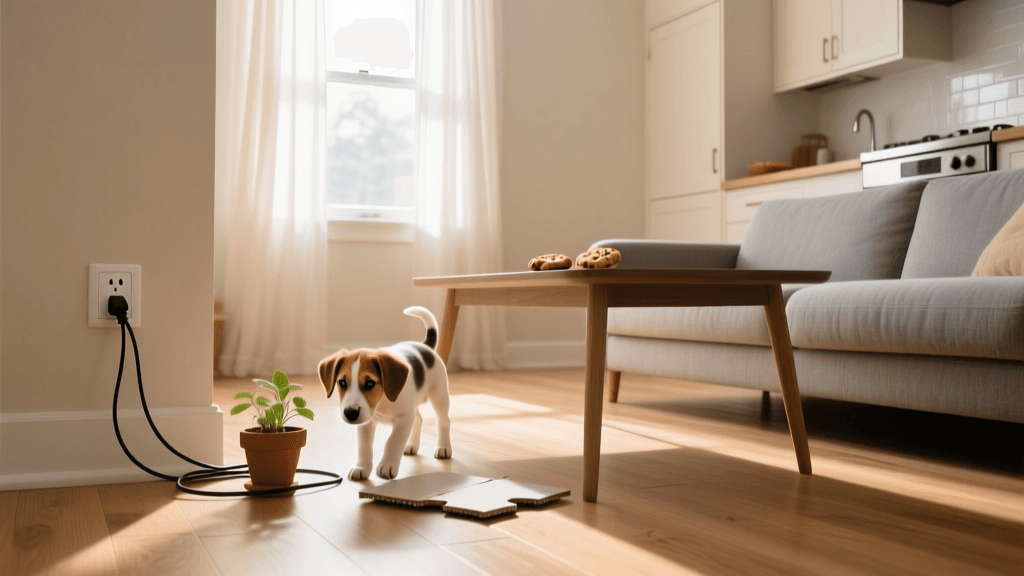
Electrical cords pose a severe electrocution risk and can cause fatal pulmonary edema if chewed. Additionally, many popular houseplants, such as Sago Palms, Peace Lilies, and Pothos, contain insoluble calcium oxalates or cycasin, which can lead to acute renal failure or severe gastrointestinal distress.
Solutions: Cord Management and Plant Relocation
Diagnose your cord layout by getting down on your hands and knees to view the room from a puppy eye level. Encase all accessible wiring in split-loom tubing or heavy-duty cord concealers like the JOTOY Cable Protector Sleeves (approx. $15). For baseboard wires, use rigid PVC cord channels secured with heavy-duty double-sided mounting tape. Regarding flora, audit your living room against the ASPCA toxic plant database. Relocate toxic plants to hanging planters suspended at least 36 inches above the highest piece of furniture your dog can jump onto, or replace them entirely with pet-safe alternatives like Boston Ferns, Spider Plants, or Calatheas.
Zone 3: Bathrooms and Laundry Rooms
Problem Diagnosis: Chemical Burns and Drowning Risks
Bathrooms contain concentrated chemical hazards and drowning risks. Open toilet bowls are an inviting water source for dogs, but if you use drop-in bleach tablets or bowl cleaners, the water becomes toxic. In the laundry room, brightly colored liquid laundry pods look and feel remarkably like chew toys. When punctured, the concentrated detergent can cause severe chemical burns to the mouth, esophagus, and stomach, as well as aspiration pneumonia if the dog inhales the suds.
Solutions: Childproofing and Elevation
Install a simple plastic toilet lid lock (approx. $8) to prevent access to treated water. Never leave laundry pods in open baskets or on low countertops; store them in a sealed, hard-plastic bin on a shelf at least 60 inches high. Ensure that all medications, including seemingly harmless vitamins and NSAIDs like ibuprofen, are kept in a locked medicine cabinet. Dogs can easily chew through child-resistant pill bottles in a matter of minutes.
Zone 4: The Yard and Garage
Problem Diagnosis: Escape Routes and Automotive Toxins
The perimeter of your yard is your first line of defense against escape. Gaps under wooden fences, loose chain-link ties, and diggable soil near gates are prime escape routes. In the garage, ethylene glycol (standard antifreeze) has a sweet taste that is highly attractive to dogs but causes irreversible kidney failure. Furthermore, cocoa bean mulch, often used in landscaping, contains theobromine, the same toxic compound found in chocolate.
Solutions: Perimeter Reinforcement and Safe Alternatives
Walk your fence line and diagnose weak points. To prevent digging, bury 1/2-inch galvanized hardware cloth 12 inches deep and 6 inches outward in an L-shape along the base of your fence line (approx. $35 per 25-foot roll). This physically blocks the dog paws from gaining traction to dig. In the garage, immediately switch to propylene glycol-based pet-safe antifreeze. Store all automotive fluids, fertilizers, and pesticides in lockable steel cabinets. If you use mulch, replace cocoa mulch with shredded pine or cedar, which are safe and naturally repel fleas.
Understanding the Root Cause: Teething vs. Boredom
Diagnosing the physical hazards is only half the battle; you must also diagnose the behavioral drivers behind your dog's chewing. Puppies typically begin teething at 3 to 4 weeks of age, with the most intense chewing urges peaking between 4 and 5 months as their adult teeth erupt. During this window, provide frozen, water-soaked washcloths and durable rubber toys like the Kong Classic (approx. $18) to soothe inflamed gums.
Conversely, adult rescue dogs may chew baseboards or door frames due to separation anxiety or under-stimulation. If the destruction is localized to exit points (doors and windows), the diagnosis is likely isolation distress. In these cases, environmental management must be paired with behavioral modification. Utilize a heavy-duty wire crate (sized so the dog can stand and turn, but not pace) when unsupervised, and consult a certified veterinary behaviorist for a structured desensitization protocol.
Hazard Diagnosis and Solution Cost Matrix
| Zone | Identified Hazard | Diagnostic Method | Recommended Solution | Estimated Cost |
|---|---|---|---|---|
| Kitchen | Trash Scavenging | Observe lid stability and latch strength | Weighted Step-Can with Lock | $100 - $130 |
| Kitchen | Cabinet Toxins | Test adhesive lock durability | Magnetic Locking System | $25 - $35 |
| Living Room | Electrocution | Crawl-space visual inspection | Split-Loom / PVC Cord Sleeves | $15 - $25 |
| Yard | Digging / Escape | Inspect soil displacement at fence base | 1/2-inch Hardware Cloth (L-Shape) | $35 - $50 |
| Garage | Antifreeze Toxicity | Check ingredient labels for ethylene glycol | Propylene Glycol Alternative | $20 - $30 |
Final Thoughts on Environmental Management
Management is the bridge between bringing a dog home and achieving reliable training. You cannot train a dog to avoid a hazard that is constantly available and rewarding to interact with.
Ultimately, puppy-proofing is not a one-time chore but an ongoing diagnostic process. As your dog grows, their reach, strength, and problem-solving skills will evolve. A cabinet lock that baffled a 10-pound puppy may be easily breached by an 80-pound adolescent dog. According to the Pet Poison Helpline, the majority of household poisonings occur during transitions, such as moving to a new home or leaving a dog unsupervised for the first time. By continuously auditing your environment and investing in robust, physical barriers, you protect your new companion from life-threatening emergencies and save yourself from thousands of dollars in potential veterinary bills.
anouk-beaumont
All our authors care for dogs every day — read more of their work on the authors page.