Diagnosing and Solving Dog Car Sickness and Anxiety
Discover how to diagnose and treat dog car sickness and travel anxiety. Learn practical solutions, top safety gear, and training tips for stress-free rides.
Understanding the Root Cause: Nausea vs. Anxiety
For many dog owners, the excitement of a road trip or a simple visit to the dog park is quickly derailed by a miserable, drooling, or vomiting pup in the backseat. Diagnosing the exact root cause of your dog's car trouble is the first step toward a solution. Is it physiological motion sickness, or is it psychological travel anxiety? According to VCA Hospitals, motion sickness in dogs is primarily caused by a conflict between the visual cues and the vestibular system in the inner ear. Puppies are especially prone to this because the structures of the inner ear that control balance are not fully developed. While many dogs outgrow this by the time they are one year old, others develop a conditioned psychological aversion to the car.
If your dog only vomits but seems otherwise happy, the issue is likely physiological motion sickness. However, if your dog exhibits pacing, whining, panting, or hiding before you even open the car door, you are likely dealing with travel anxiety. Often, the two are deeply intertwined; a dog that experiences nausea in the car quickly learns to associate the vehicle with feeling terrible, leading to secondary anxiety. Solving the problem requires a multi-faceted approach that addresses both the physical and emotional components of travel.
Diagnosing Your Dog's Car Trouble
Before implementing a treatment plan, carefully observe your dog's symptoms. Keep a log of their behavior starting from the moment you pick up your car keys. Common symptoms of car sickness and anxiety include:
- Excessive Drooling: A primary indicator of nausea in canines.
- Lip Smacking and Yawning: Subtle stress signals and early signs of an upset stomach.
- Whining or Barking: Vocalizations that indicate distress or panic.
- Panting and Pacing: Signs of elevated cortisol and adrenaline.
- Vomiting or Regurgitation: The physical climax of severe motion sickness.
- Diarrhea: Often a result of acute stress-induced colitis.
- Inactivity or Lethargy: Some dogs shut down and freeze when terrified.
Environmental Modifications for Comfort
Creating a soothing physical environment inside your vehicle can drastically reduce sensory overload. The American Veterinary Medical Association (AVMA) recommends ensuring proper ventilation and temperature control. Keep the car's interior temperature between 68°F and 72°F. Use a sunshade on the windows to prevent visual overstimulation, which can exacerbate the disconnect between the eyes and the inner ear. Crack a window slightly to allow fresh air to circulate and provide your dog with familiar scent markers from the outside world.
Additionally, consider using canine pheromones. Products like Adaptil Transport Spray (approximately $25 for a 20ml bottle) mimic the natural appeasing pheromones produced by nursing mother dogs. Spray it on your dog's travel blanket or the car seat 15 minutes before loading your dog to create a subconscious sense of security.
The 14-Day Desensitization Protocol
If your dog suffers from travel anxiety, you must rewrite their emotional response to the vehicle. This requires patience and high-value treats (such as boiled chicken, freeze-dried liver, or peanut butter stuffed Kongs). Dedicate 10 to 15 minutes a day to this protocol:
Days 1-3: The Stationary Car
With the car turned off, open the door and toss high-value treats into the backseat. Let your dog enter, eat, and exit. Do not close the door or start the engine. The goal is to build a positive association with the space.
Days 4-6: The Running Car
Repeat the previous step, but this time start the engine. Let the car idle for 2 to 3 minutes while your dog enjoys a long-lasting chew or a lick mat. Turn the car off before the dog finishes, ensuring the engine stopping predicts the end of the fun, not the start of a scary trip.
Days 7-10: Micro-Drives
Drive around the block (less than 2 minutes) and immediately return home to a massive reward, like a game of tug or a walk. Keep the drives incredibly short to prevent nausea from triggering.
Days 11-14: Destination Drives
Take slightly longer drives (5-10 minutes) exclusively to highly rewarding locations, such as a favorite hiking trail or a pet-friendly store. Avoid driving to the vet or groomer during this training phase.
Comparison Chart: Car Safety and Comfort Gear
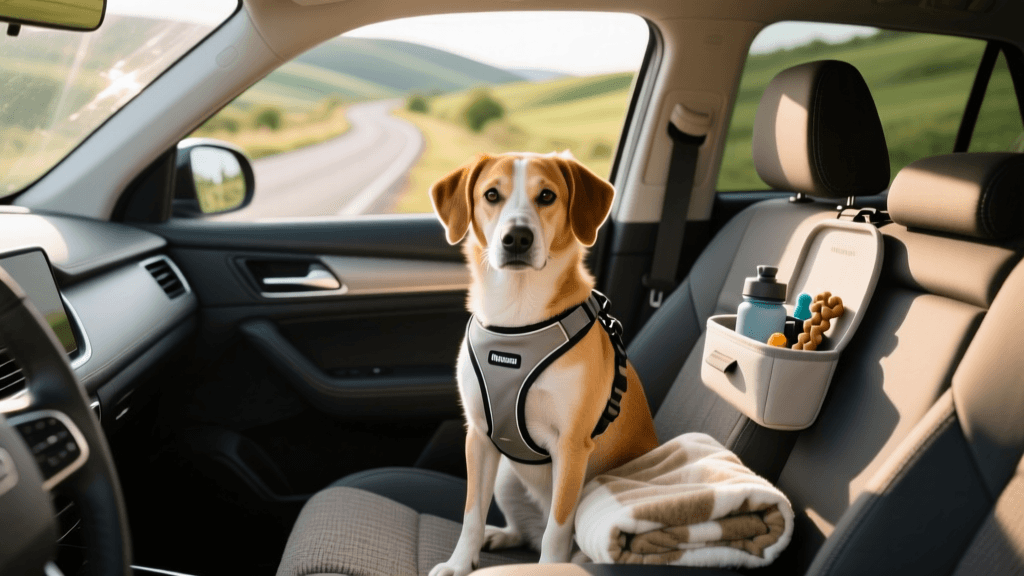
Proper restraint is not just about safety in the event of a crash; it also provides a sense of physical security that can reduce anxiety. The American Kennel Club (AKC) strongly advises against letting dogs ride loose or with their heads out the window. Below is a comparison of the top restraint options:
| Restraint Type | Top Product Example | Estimated Cost | Best For | Pros & Cons |
|---|---|---|---|---|
| Crash-Tested Harness | Sleepypod Clickit Sport | $90 - $110 | Dogs up to 90 lbs who need space | Pros: Allows sitting/lying down; highly secure. Cons: Takes time to fit properly. |
| Crash-Tested Crate | Gunner Kennels G1 | $500 - $700 | Severe anxiety; chewers; highway travel | Pros: Ultimate protection; den-like security. Cons: Expensive; heavy; requires cargo space. |
| Seatbelt Tether | Kurgo Swivel Tether | $20 - $30 | Calm dogs on short, low-speed trips | Pros: Cheap; easy to use. Cons: Not crash-tested for impact; allows too much movement. |
| Booster Seat | Sleepypod Air | $150 - $180 | Small dogs under 15 lbs | Pros: Elevates view to reduce nausea. Cons: Only for very small breeds. |
Medical and Holistic Interventions
When training and environmental changes are not enough, veterinary medicine offers highly effective solutions for motion sickness. The gold standard for canine motion sickness is Cerenia (maropitant citrate). Unlike older antihistamines that cause heavy sedation, Cerenia targets the neurokinin-1 (NK-1) receptors in the brainstem to prevent vomiting without making your dog overly drowsy. It is typically administered as a tablet 2 hours before travel and lasts for 24 hours. The cost is usually around $5 to $8 per pill, depending on your dog's weight.
For severe psychological anxiety that manifests as panic attacks, your veterinarian may prescribe a fast-acting situational anti-anxiety medication like Trazodone or Gabapentin. These medications take the edge off the panic response, allowing your dog to remain calm enough to learn new, positive associations with the car. Never administer human medications like Dramamine or Benadryl without explicit veterinary guidance, as incorrect dosing can lead to dangerous side effects, including paradoxical excitation or cardiovascular issues.
The Pre-Trip Preparation Routine
How you prepare your dog in the hours leading up to a trip can make or break the experience. Implement this pre-trip checklist:
- Fasting Window: Withhold food for 2 to 3 hours before departure to ensure the stomach is empty, reducing the likelihood of vomiting.
- Vigorous Exercise: Take your dog for a 30-minute run or intense game of fetch before the trip. A tired dog is much more likely to sleep through the journey.
- Potty Break: Ensure your dog has fully emptied their bladder and bowels immediately before loading into the car.
- Familiar Scents: Place a worn t-shirt with your scent in their crate or on their travel bed to provide comfort.
'Traveling with your dog should be a joy, not a chore. By taking the time to properly diagnose whether your dog is suffering from inner-ear nausea or learned anxiety, you can tailor a treatment plan that transforms the car from a scary metal box into a gateway to adventure.'
Conclusion
Solving dog car sickness and travel anxiety is rarely an overnight fix, but it is entirely possible with consistency and the right tools. By combining a gradual desensitization protocol, proper crash-tested safety gear, and targeted veterinary medications when necessary, you can help your dog overcome their travel hurdles. Remember to celebrate the small victories—every quiet, relaxed block driven is a step toward a lifetime of happy, stress-free adventures together.
marcus-aldridge
All our authors care for dogs every day — read more of their work on the authors page.