How To Leave Your Dog Home Alone Without Anxiety
Learn about how to leave your dog home alone without anxiety with expert tips and data-backed advice.
Understanding Separation Anxiety in Dogs
Every morning, millions of dog owners close the front door behind them and wonder what's happening on the other side. For some dogs, that closed door triggers a cascade of stress responses — pacing, whining, destructive chewing, or worse. For others, it's simply naptime. The difference between these two outcomes often comes down to preparation, routine, and a few evidence-based strategies that animal behaviorists have refined over decades.
Separation anxiety affects an estimated 20 to 40 percent of dogs presented to veterinary behavioral specialists, according to the American Veterinary Medical Association (AVMA, 2022). That's not a small number. It means tens of millions of dogs in the United States alone experience genuine distress when left alone — not misbehavior, not spite, but real physiological stress. Understanding this distinction is the first step toward helping your dog.
The good news is that most cases of mild to moderate separation anxiety respond well to behavioral modification, environmental enrichment, and consistent routine. Severe cases may require veterinary intervention, but the majority of dog owners can make meaningful progress at home with patience and the right tools.
Building a Pre-Departure Routine That Calms Rather Than Signals
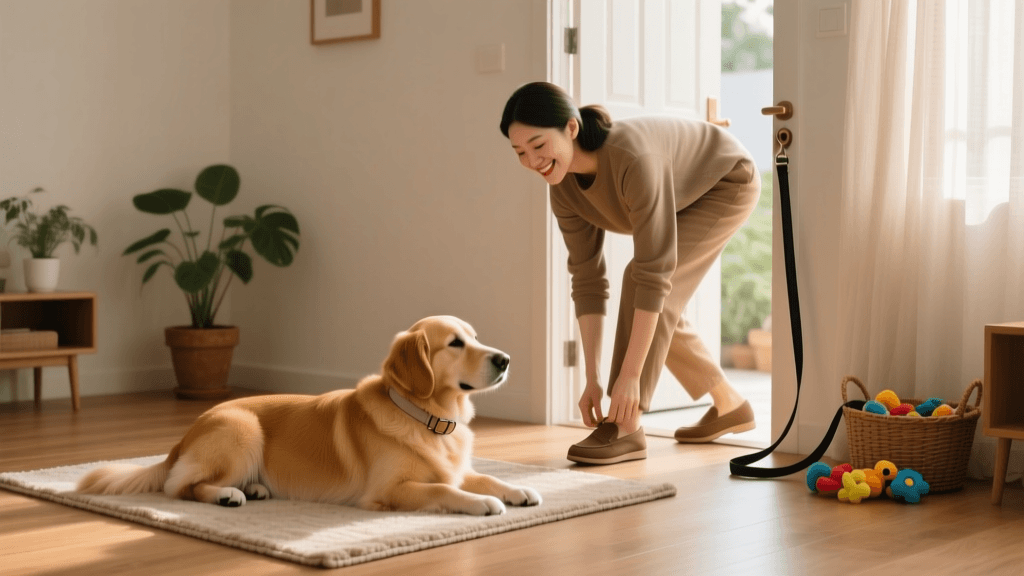
Dogs are extraordinarily good at reading patterns. If you always pick up your keys, put on your shoes, and grab your bag in the same order before leaving, your dog has likely mapped that sequence to your departure — and starts feeling anxious before you've even reached the door. This is called a pre-departure cue, and dismantling it is one of the most effective early interventions.
The technique involves desensitizing your dog to those cues by performing them randomly throughout the day without actually leaving. Pick up your keys, sit back down on the couch. Put on your shoes, make a cup of coffee. Over time — typically two to four weeks of consistent practice — the cues lose their predictive power and your dog's stress response diminishes.
The 30-Second Rule for New Departures
When you're first training a dog to tolerate alone time, start with absences of just 30 seconds. Step outside, wait, come back in. Gradually extend the duration over days and weeks. This graduated exposure approach, sometimes called systematic desensitization, is recommended by the ASPCA Animal Behavior Center and forms the backbone of most separation anxiety treatment protocols.
Sarah Milligan, a dog owner in Portland, Oregon, used this method with her three-year-old rescue Labrador mix, Biscuit. "We started with me just stepping onto the porch for half a minute," she says. "After six weeks, Biscuit could handle four hours without any signs of distress. It felt impossibly slow at first, but it actually worked."
Keeping Arrivals and Departures Low-Key
One of the most counterintuitive pieces of advice from animal behaviorists is to make your comings and goings as boring as possible. Enthusiastic hellos and emotional goodbyes, while natural for humans, can actually heighten a dog's emotional response to your absence. Instead, ignore your dog for the first few minutes after returning home, then greet them calmly once they've settled. This reduces the contrast between your presence and absence.
Creating an Environment That Supports Calm
The physical space your dog occupies while alone has a significant impact on their stress levels. A dog left to roam a large, empty house may feel more anxious than one settled in a cozy, familiar den-like space. Crate training, when done properly and positively, can give dogs a sense of security — not punishment.
Research published by the Battersea Dogs & Cats Home (2021) found that dogs with a designated safe space — whether a crate, a specific room, or a dog bed in a quiet corner — showed lower cortisol levels and fewer stress behaviors during owner absences compared to dogs with unrestricted access to the whole home.
- White noise or calming music: Studies from the Scottish SPCA found that classical music and reggae reduced stress behaviors in kenneled dogs. Apps like Relax My Dog offer playlists specifically designed for canine anxiety.
- Pheromone diffusers: Products like Adaptil (DAP) release synthetic versions of the calming pheromone mother dogs produce for their puppies. A 2015 meta-analysis found Adaptil reduced anxiety-related behaviors in approximately 72 percent of dogs studied.
- Puzzle feeders and long-lasting chews: Kongs stuffed with frozen peanut butter, Licki Mats, or bully sticks can occupy a dog for 20 to 45 minutes and create a positive association with your departure.
- Snuffle mats: These foraging toys engage a dog's nose and can reduce arousal levels. Even 10 minutes of sniffing activity has been shown to tire dogs more effectively than a short walk.
The Role of Exercise Before You Leave
A tired dog is a calmer dog. This isn't just folk wisdom — it's backed by behavioral science. Dogs that receive at least 30 minutes of vigorous exercise before an owner's departure show measurably lower anxiety indicators, including reduced heart rate and fewer destructive behaviors. For high-energy breeds like Border Collies, Australian Shepherds, or Vizslas, that number may need to be closer to 60 to 90 minutes.
Morning walks, fetch sessions, or even a 15-minute training session that engages the dog's brain can make a significant difference. Mental stimulation — obedience work, nose games, trick training — is often more exhausting for dogs than physical exercise alone.
Technology and Professional Support
Modern pet technology has made it easier than ever to monitor and support dogs left home alone. Pet cameras like the Furbo Dog Camera or Petcube Bites 2 allow owners to watch their dogs remotely, speak to them through two-way audio, and even dispense treats. While these tools don't replace behavioral training, they can help owners identify whether their dog is actually distressed or simply resting.
Knowing what your dog is doing in your absence is genuinely useful data. Many owners are surprised to discover their dog sleeps for most of the day. Others discover their dog begins pacing or vocalizing within minutes of departure — information that helps them calibrate their training approach.
"The biggest mistake owners make is assuming their dog is fine because they don't hear complaints from neighbors. Dogs can suffer silently — shutting down rather than acting out. Video monitoring changed everything for us. We could actually see what Milo was experiencing." — James Okafor, dog owner and member of the UK's Dog Welfare Alliance community forum
For dogs with moderate to severe separation anxiety, professional help is often the most efficient path forward. Certified Applied Animal Behaviorists (CAABs) and veterinary behaviorists can design individualized treatment plans. The Animal Behavior Society maintains a directory of certified professionals across North America. In the UK, the Association of Pet Behaviour Counsellors (APBC) offers a similar resource.
When to Consider Medication or Supplements
Behavioral modification alone isn't always sufficient, particularly for dogs with severe anxiety. In these cases, veterinary-prescribed medications can lower the dog's baseline anxiety enough for training to take hold. Fluoxetine (Prozac) and clomipramine are the two most commonly prescribed medications for canine separation anxiety, and both have strong evidence bases supporting their use alongside behavioral therapy.
Over-the-counter supplements are a lower-stakes option for mild anxiety. Products containing L-theanine, melatonin, or casein hydrolysate (found in products like Zylkene) have shown modest but real effects in clinical trials. Always consult your veterinarian before starting any supplement regimen, as dosing varies significantly by body weight and individual health status.
| Intervention | Best For | Typical Timeframe | Requires Vet? |
|---|---|---|---|
| Systematic desensitization | Mild to moderate anxiety | 4–12 weeks | No |
| Pheromone diffusers (Adaptil) | Mild anxiety, puppies | Ongoing | No |
| Calming supplements (Zylkene) | Mild to moderate anxiety | 2–4 weeks | Recommended |
| Prescription medication (fluoxetine) | Moderate to severe anxiety | 6–8 weeks to full effect | Yes |
| Veterinary behaviorist consultation | Severe or complex cases | Ongoing | Yes |
Practical Schedules and Real-World Adjustments
Even with the best training, life doesn't always cooperate. Long workdays, unexpected overtime, and travel can push a dog's alone time beyond what they're comfortable with. Building a support network before you need it is one of the most practical things a dog owner can do.
Dog walkers, pet sitters, and doggy daycare facilities provide structured breaks during long absences. Rover and Wag are two widely used platforms for finding vetted local dog walkers, with background-checked sitters available in most major cities. For dogs that enjoy canine company, daycare facilities like Camp Bow Wow (with locations across the United States and Canada) offer supervised socialization that can dramatically reduce the stress of a long workday.
- Identify your dog's current threshold: How long can they be alone before showing stress? Use a camera to find out.
- Build a support network: Line up a dog walker, neighbor, or family member who can provide midday breaks.
- Start desensitization training before you need it: Don't wait until you're back in the office full-time to begin.
- Establish a consistent daily schedule: Dogs thrive on predictability. Feeding, walking, and departure times should be as consistent as possible.
- Reassess every few weeks: Anxiety levels can change with age, health, and life circumstances. What worked at two years old may need adjustment at seven.
Maria Chen, a software engineer in Chicago who returned to office work after two years of remote work, found the transition harder on her Shih Tzu, Dumpling, than on herself. "I started the desensitization training about eight weeks before my return date," she says. "I also hired a dog walker for a midday visit. By the time I actually went back, Dumpling had already adjusted. The preparation made all the difference."
The reality is that most dogs can learn to be comfortable alone for reasonable periods — typically up to four to six hours for adult dogs — with the right preparation. Puppies under six months should not be left alone for more than two hours at a stretch, as their bladder control and emotional regulation are still developing. Senior dogs may also need more frequent check-ins depending on their health status.
What matters most is that you approach the process with consistency, patience, and realistic expectations. Separation anxiety is not a character flaw in your dog. It's a stress response that, with the right support, can be meaningfully reduced — and in many cases, resolved entirely.
Robin Maitland
All our authors care for dogs every day — read more of their work on the authors page.