Expert Guide To Multi-Dog Resource Guarding Solutions
Learn expert behavior analysis techniques to manage and resolve resource guarding in multi-dog households with actionable, step-by-step protocols.

The Ethology of Resource Guarding in Multi-Dog Homes
Resource guarding is one of the most frequently misunderstood behaviors in canine ethology, particularly within multi-dog households. From a behavior analysis perspective, guarding is not a manifestation of 'dominance' or a flawed personality trait. Rather, it is an adaptive, evolutionary survival strategy designed to protect valuable assets from competitors. When a dog growls, snaps, or stiffens over a bone, toy, or even a favored human, they are communicating a clear boundary. According to the ASPCA's comprehensive guide on canine aggression, resource guarding is a natural behavior that becomes problematic only when the intensity of the response poses a safety risk to other pets or humans in the home.
In a multi-dog environment, the competition for resources is inherently amplified. Dogs are opportunistic scavengers and hunters by nature, and the presence of a conspecific (another dog) near a high-value item triggers an autonomic nervous system response. The guarding dog experiences a spike in cortisol and adrenaline, preparing them for a 'fight or flight' response. As behavior consultants, our goal is never to suppress the dog's natural communication (such as a warning growl), but rather to change the underlying emotional response through systematic desensitization and counter-conditioning (DS/CC).
Mapping the Aggression Threshold and Avoiding Punishment
Every dog has an 'aggression threshold'—the point at which their stress levels overwhelm their ability to cope, resulting in a bite. Punitive measures, such as alpha rolls, leash corrections, or scolding, do not eliminate the dog's desire to guard the resource. Instead, they suppress the early warning signs. A dog that is punished for growling learns that growling results in a negative outcome, so the next time they feel threatened, they may skip the growl entirely and proceed directly to a bite. The American Veterinary Society of Animal Behavior (AVSAB) strongly advises against the use of punishment for behavior modification, noting that it can increase anxiety, exacerbate aggression, and severely damage the human-animal bond. Modern behavior analysis relies on positive reinforcement and environmental management to raise the dog's threshold and build a positive conditioned emotional response (+CER) to the presence of other dogs near valued items.
Canine Body Language: Calming Signals vs. Escalation Warnings
Successful behavior modification requires a keen eye for canine body language. Intervening before a dog crosses their threshold is critical. Below is a structured comparison chart to help you identify the subtle shifts in your dog's posture and behavior.
| Behavior Category | Calming Signal (Green/Yellow Zone) | Escalation Warning (Red Zone) | Required Action |
|---|---|---|---|
| Eye Contact | Blinking, looking away, soft gaze | Hard stare, whale eye (showing whites of eyes), fixed gaze on approaching dog | Interrupt visual contact immediately; toss a high-value treat away from the resource. |
| Body Posture | Relaxed muscles, loose wagging tail, play bows | Stiffening, freezing, leaning over the item, raised hackles, tail held high and rigid | Do not reach for the item. Call the guarding dog away using a happy, upbeat tone. |
| Vocalization | Soft whining, playful barks, huffing | Low-frequency rumbling growl, lip smacking, sudden silence | Evacuate the other dog from the room. Never punish the growl. |
| Mouth and Jaw | Open, relaxed mouth, panting softly | Lip curling, exposing teeth, snapping at the air, muzzle punching | Implement strict environmental management; separate dogs behind baby gates. |
The Behavior Modification Protocol: Management and DS/CC
Phase 1: Environmental Management (Days 1-14)
Before beginning active training, you must eliminate the dog's ability to practice the unwanted behavior. Every time a dog successfully guards a resource and drives the other dog away, the guarding behavior is negatively reinforced (the dog learns that guarding makes the 'threat' go away). Management is not a cure, but it is a mandatory prerequisite for behavior modification.
- Physical Barriers: Install hardware-mounted baby gates, such as the Regalo Easy Step Walk Thru Gate (approximate cost: $45), to create separate zones. Ensure the gates are at least 28 inches tall and feature a secure locking mechanism.
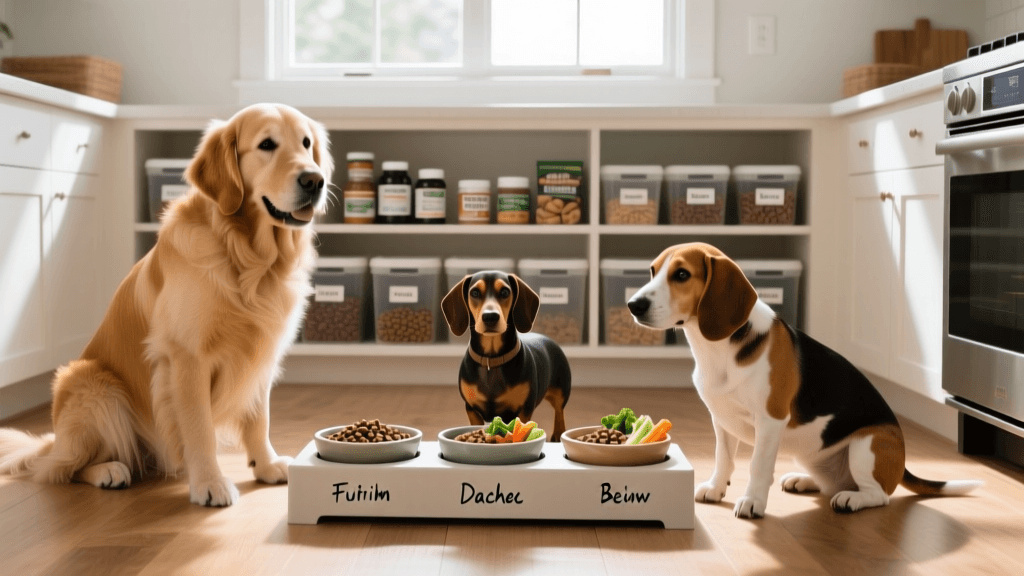
- Separate Feeding Protocols: Feed dogs in completely separate rooms or inside their respective crates. If using crates, cover them with a breathable blanket to block visual access, reducing the stress of perceived competition.
- High-Value Item Rotation: Bully sticks, raw bones, and stuffed Kongs should only be given when the dogs are physically separated. Once the dog finishes the item, remove the remnants before they are reintroduced to the shared space.
- Pheromone Support: Plug in an Adaptil Calm Home Diffuser (approximate cost: $25) in the primary shared living area. Synthetic dog-appeasing pheromones (DAP) have been clinically shown to reduce baseline anxiety in multi-pet households.
Phase 2: Desensitization and Counter-Conditioning (DS/CC)
Once management is in place, you can begin altering the guarding dog's emotional response. The goal is to teach the dog that the approach of the other dog predicts something wonderful, rather than a loss of their resource. We utilize a protocol often referenced in Fear Free Pets certification materials, focusing on low-stress handling and positive reinforcement.
The 'Trade-Up' and Proximity Protocol:
- Setup: Leash the guarding dog on a 10-foot long line. Give them a medium-value item (e.g., a standard chew toy). The other dog should be on a leash held by a helper, or secured behind a baby gate at a sub-threshold distance (e.g., 15 feet away).
- The Approach: Have the other dog take one step forward. The moment the guarding dog notices the other dog but remains relaxed, mark the behavior with a clicker or a verbal 'Yes!' and immediately toss a high-value treat (such as Stewart Freeze-Dried Beef Liver, approx. $18 per bag) away from the resource.
- Timing is Critical: The treat must be delivered within 0.5 seconds of the marker. This precise timing ensures the dog associates the other dog's approach with the arrival of premium food.
- Reset and Repeat: Conduct these sessions for a maximum of 5 to 10 minutes to prevent cognitive fatigue. Gradually decrease the distance between the dogs by 1-foot increments over several weeks, provided the guarding dog remains completely relaxed.
Essential Tools and Estimated Costs for the Behavior Toolkit
Investing in the right equipment ensures safety and facilitates clearer communication during the behavior modification process. Below is a breakdown of the recommended tools and their average market costs.
- Baskerville Ultra Muzzle ($22 - $35): Essential for safety during the initial phases of DS/CC if the guarding dog has a history of biting. This basket muzzle allows the dog to pant, drink, and accept treats through the front grille, ensuring welfare is not compromised.
- Regalo Easy Step Baby Gate ($45 - $60): Provides a sturdy, walk-through physical barrier for managing shared spaces without the need for complex installation.
- Snuffle Mat ($15 - $25): Used for scent-work and mental enrichment. Engaging the olfactory system naturally lowers a dog's heart rate and promotes a calm, foraging mindset, which is incompatible with guarding.
- Kong Classic (Red or Black, $12 - $18): A staple for food enrichment. Stuffing with canned pumpkin and freezing it creates a long-lasting licking activity, which releases endorphins and soothes the nervous system.
- Professional Behavior Consultation ($150 - $250 per hour): If the guarding dog has drawn blood or if the household dynamics are highly volatile, hiring a Certified Applied Animal Behaviorist (CAAB) or a board-certified veterinary behaviorist (DACVB) is non-negotiable for safety.
Conclusion: Patience and Consistency
Resolving resource guarding in a multi-dog household is a marathon, not a sprint. As an expert behavior analysis principle dictates, behavior modification is dictated by the dog's timeline, not ours. By prioritizing strict environmental management, respecting the dog's body language, and systematically applying desensitization and counter-conditioning, you can transform a volatile multi-dog home into a peaceful, cooperative pack. Remember to celebrate the micro-victories—a relaxed ear flick, a soft exhale, or a willing trade—and always prioritize safety over speed. If you feel overwhelmed, consult a qualified force-free behavior professional to guide you through the nuanced layers of canine ethology.
aaron-whyte
All our authors care for dogs every day — read more of their work on the authors page.