Diagnosing and Stopping Resource Guarding in Multi-Dog Homes
Learn how to diagnose and solve resource guarding in multi-dog households with practical management tools, training steps, and expert-backed behavior tips.
Understanding Resource Guarding in Multi-Dog Homes
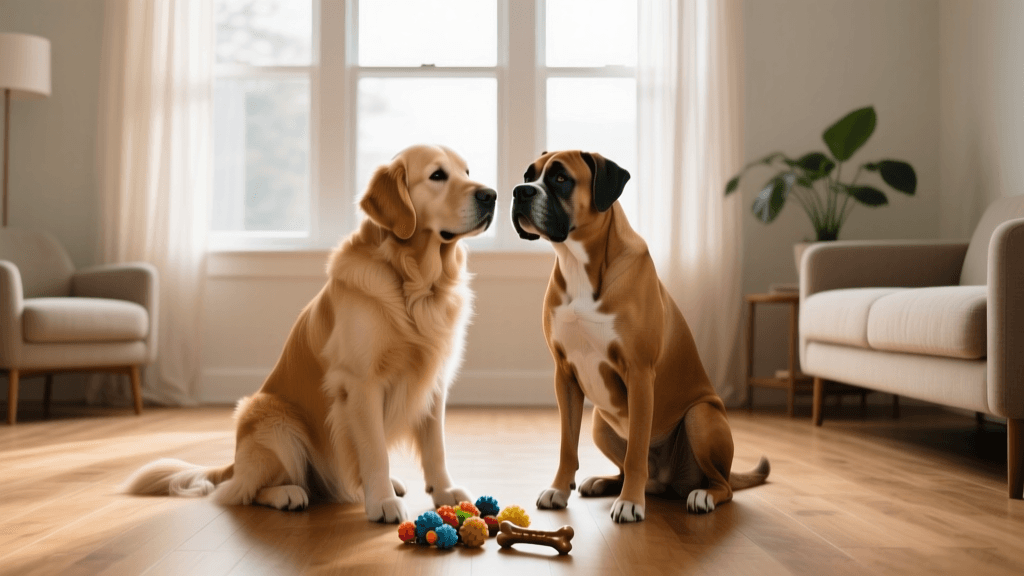
Sharing your life with multiple dogs can be a deeply rewarding experience, but it also introduces complex social dynamics. One of the most stressful and potentially dangerous issues multi-dog households face is resource guarding. Resource guarding occurs when a dog exhibits aggressive or defensive behaviors to maintain control over a valued item, space, or person. In a multi-dog home, this can quickly escalate from a low growl to a severe fight, resulting in veterinary bills and shattered household harmony.
It is crucial to understand that resource guarding is not a sign of 'spite' or a flawed 'dominance' hierarchy. According to the ASPCA, resource guarding is a natural, instinctual survival behavior. Dogs are hardwired to protect valuable resources like food and shelter. When you have two or more dogs competing for the same finite resources in a shared environment, the potential for friction multiplies. Solving this problem requires a shift away from punitive measures and toward structured management, environmental modifications, and positive reinforcement behavior modification.
Diagnosing the Trigger: What Exactly Are They Guarding?
Before you can implement a solution, you must accurately diagnose the specific triggers causing the guarding behavior. Dogs do not guard everything equally; they guard items that hold high subjective value to them. Common triggers in multi-dog homes include:
- Food and Bowls: Guarding kibble, wet food, or even empty bowls from approaching siblings.
- High-Value Chews: Bully sticks, rawhide, antlers, or stuffed Kongs often trigger intense guarding due to their long-lasting nature and high palatability.
- Favorite Toys: Squeaky toys, tug ropes, or balls that hold strong prey-drive associations.
- Spaces and Furniture: Guarding a specific spot on the couch, the owner's bed, or a favorite crate.
- People: Guarding a preferred family member, especially when that person is sitting or lying down.
Reading the Early Warning Signs
Many dog fights seem to happen 'out of nowhere' to untrained eyes, but dogs almost always provide early warning signals. Diagnosing the problem early means learning to read subtle canine body language before a growl or snap occurs. Watch for these micro-expressions when Dog A approaches Dog B's resource:
- Whale Eye: Showing the whites of the eyes while keeping the head pointed forward.
- Freezing: A sudden, rigid stillness over the item.
- Lip Licking or Yawning: Displacement behaviors indicating stress and anxiety.
- Hovering: Standing over the resource with tense shoulders and a lowered head.
- Accelerated Eating: Frantically gulping food or treats as another dog enters the room.
As noted by Fear Free Pets, punishing these early warning signs (like a growl) is incredibly dangerous. If you punish a growl, the dog learns to skip the warning and go straight to a bite the next time. Instead, we must manage the environment to prevent the rehearsal of the behavior.
Immediate Management Solutions (Safety First)
Behavior modification takes weeks or months. In the meantime, your primary goal is management. Every time a dog successfully guards a resource and keeps the other dog away, the behavior is reinforced. You must prevent the rehearsal of guarding by using physical barriers and structured routines.
| Management Tool | Purpose & Application | Estimated Cost | Recommended Brand / Type |
|---|---|---|---|
| Pressure-Mounted Baby Gates | Creates visual and physical barriers for separate feeding rooms or decompression zones. | $40 - $70 | Carlson Extra Wide Pet Gate or Regalo Easy Step |
| Puzzle Feeders & Snuffle Mats | Slows down eating, reduces bowl fixation, and provides mental enrichment without triggering competition. | $15 - $35 | Outward Hound Nina Ottosson Dog Brick |
| Basket Muzzles | Ensures absolute safety during desensitization training sessions when dogs must be in the same room. | $20 - $40 | Baskerville Ultra Muzzle (allows panting and treat-receiving) |
| Lick Mats | Provides soothing, low-arousal enrichment for dogs separated by gates or crates. | $10 - $15 | Hyper Pet IQ Treat Mat or LickiMat Soother |
Implementing the 'No Free Access' Rule
For high-value chews like bully sticks or raw bones, implement a strict 'No Free Access' rule. These items should only be given when the dogs are completely separated by a closed door or a secure crate. Once the chew is finished, or if the dog loses interest, you must pick up the item before the dogs are allowed back into the same shared space. Leaving high-value items on the floor is an invitation for a conflict.
Long-Term Behavior Modification Strategies
Once your management protocol is securely in place and the dogs are no longer practicing the guarding behavior, you can begin active training. The goal is to change the dogs' emotional response to each other's presence around valued resources.
Desensitization and Counter-Conditioning (DS/CC)
DS/CC involves exposing the guarding dog to the trigger (the other dog) at a distance that does not cause a reaction (the threshold), and pairing that exposure with something wonderful.
- Find the Threshold: Give Dog A a moderately valued toy. Have Dog B on a leash at the far end of the room (e.g., 15 feet away). If Dog A does not freeze, stare, or stiffen, you are below threshold.
- Pair with High-Value Treats: The moment Dog B takes a step toward Dog A, toss a piece of boiled chicken breast or freeze-dried liver directly to Dog A.
- Create a Positive Association: Dog A learns that Dog B's approach predicts the arrival of a premium treat, rather than the loss of their toy.
- Decrease Distance Gradually: Over multiple 10 to 15-minute sessions, decrease the distance by a foot or two, provided Dog A remains relaxed. If guarding signals appear, you have moved too fast; increase the distance immediately.
The 'Trade-Up' Game
Never chase a dog to take an item away, and never pry items from their jaws. This increases anxiety and reinforces the need to guard. Instead, teach a reliable 'Drop It' cue using the Trade-Up method.
- Step 1: Offer a low-value toy. When the dog takes it, present a piece of real meat or cheese right to their nose.
- Step 2: The dog will naturally drop the toy to eat the treat. Mark the behavior with a clicker or a verbal 'Yes!'.
- Step 3: Toss the treat a few feet away. While the dog retrieves it, pick up the toy, then immediately give the toy back. This teaches the dog that giving up an item doesn't mean losing it forever.
- Step 4: Add the verbal cue 'Drop It' just before presenting the treat. Over time, phase out the immediate treat presentation and rely on the verbal cue, rewarding heavily after the dog complies.
Structuring Your Daily Routine for Success
A predictable daily routine drastically reduces household anxiety and competition. Here is a sample schedule for a multi-dog home managing resource guarding:
- Morning (7:00 AM): Feed dogs in separate rooms or crates. Allow 15 minutes for eating, then pick up bowls and release the dogs together. Do not leave empty bowls on the floor.
- Mid-Day (12:30 PM): Provide mental enrichment using puzzle toys or snuffle mats, but keep dogs separated by baby gates to prevent pacing or staring.
- Afternoon (4:00 PM): Individual walks. Taking the dogs on separate 20-minute sniffaris lowers their overall arousal levels and reduces the tension that leads to guarding.
- Evening (7:00 PM): Supervised relaxation. If giving chew treats, dogs must be tethered to opposite ends of the room or placed in separate crates.
When to Call a Professional
While management and basic counter-conditioning can resolve mild guarding, severe cases require professional intervention. You should immediately seek the help of a certified veterinary behaviorist or a qualified fear-free dog trainer if:
- A fight has resulted in puncture wounds or veterinary visits for either dog or a human.
- The guarding dog exhibits extreme stress, panic, or redirected aggression when approached.
- Your management strategies are failing due to environmental constraints (e.g., a small apartment where physical separation is impossible).
Living with resource guarding is exhausting, but with strict management, patience, and science-based behavior modification, you can restore peace to your multi-dog household. Remember that progress is rarely linear; celebrate the small victories, respect your dogs' boundaries, and prioritize safety above all else.
jonas-cole
All our authors care for dogs every day — read more of their work on the authors page.