Diagnosing And Solving Resource Guarding In Multi-Dog Homes
Learn how to diagnose and stop resource guarding in multi-dog homes. Practical solutions, management tips, and training steps for a peaceful household.

Understanding Resource Guarding in Multi-Dog Households
Sharing your home with multiple dogs can be an incredibly rewarding experience, but it also introduces complex social dynamics that require careful management. One of the most stressful and potentially dangerous behavioral issues that can arise in a multi-dog home is resource guarding. Resource guarding is a natural, evolutionary survival behavior where a dog uses defensive aggression to retain control over a valued item, space, or person. While this behavior is rooted in survival instincts, it is highly problematic in a modern domestic setting, especially when multiple dogs are competing for the same household resources.
According to the ASPCA, resource guarding can manifest over food, high-value chew toys, favorite sleeping spots, and even access to their owners. In a multi-dog household, the mere presence of a canine sibling can elevate a dog's baseline anxiety, triggering guarding behaviors that might not occur if the dog were living alone. Diagnosing the early warning signs and implementing a structured, proactive management and training plan is essential to maintaining a peaceful, bite-free home.
Diagnosing the Problem: Early Warning Signs
Many owners mistakenly believe that resource guarding begins with a growl or a snap. In reality, dogs communicate their discomfort long before they escalate to vocalizations or biting. If you can diagnose the subtle, early-stage signs of guarding, you can intervene before the behavior becomes deeply ingrained. Watch for the following body language cues when one dog approaches another who is in possession of a valued item:
- Freezing: The dog suddenly stops chewing or eating and becomes completely rigid.
- Whale Eye: The dog turns its head slightly away while keeping its eyes fixed on the approaching dog, exposing the whites of its eyes.
- Lip Licking and Yawning: Rapid, out-of-context lip licking or yawning are classic canine calming signals that indicate internal stress.
- Accelerated Eating: The dog suddenly begins gulping down food or chewing a toy much faster than usual.
- Body Blocking: The dog hunches over the item or positions its body to physically shield the resource from the other dog.
- Hard Staring: A fixed, unblinking stare directed at the approaching dog.
If you notice these subtle signs, it is crucial not to wait for a growl. The Texas A&M University College of Veterinary Medicine emphasizes that punishing a dog for growling is dangerous, as it suppresses the warning system and can lead to a dog that bites without any prior notice. Instead, recognize the growl as valuable diagnostic information that your current management strategy is failing.
Immediate Environmental Management Solutions
Before you can begin a long-term training protocol, you must implement strict environmental management. Every time a dog successfully guards a resource and forces the other dog to back down, the guarding behavior is reinforced. Management prevents these rehearsals, keeping your dogs safe while you work on behavioral modification.
Comparison of Management Tools
| Management Tool | Estimated Cost | Best Used For | Pros | Cons |
|---|---|---|---|---|
| Hardware-Mounted Baby Gate | $40 - $80 | Separating feeding areas and high-value chew sessions | Extremely sturdy, allows visual contact without physical access | Requires drilling into walls, not easily portable |
| Heavy-Duty Wire Crate | $70 - $150 | Safe, isolated chewing and feeding | Highly secure, portable, provides a den-like safe space | Takes up significant floor space, requires prior crate training |
| Basket Muzzle (e.g., Baskerville) | $15 - $25 | High-risk introductions or emergency vet visits | Prevents biting while allowing panting and drinking | Does not cure underlying anxiety, requires extensive conditioning |
| Exercise Pen (X-Pen) | $45 - $90 | Creating temporary, flexible separation zones | No drilling required, easily reconfigured for different room layouts | Can be knocked over or climbed by large, determined dogs |
Practical Management Protocols
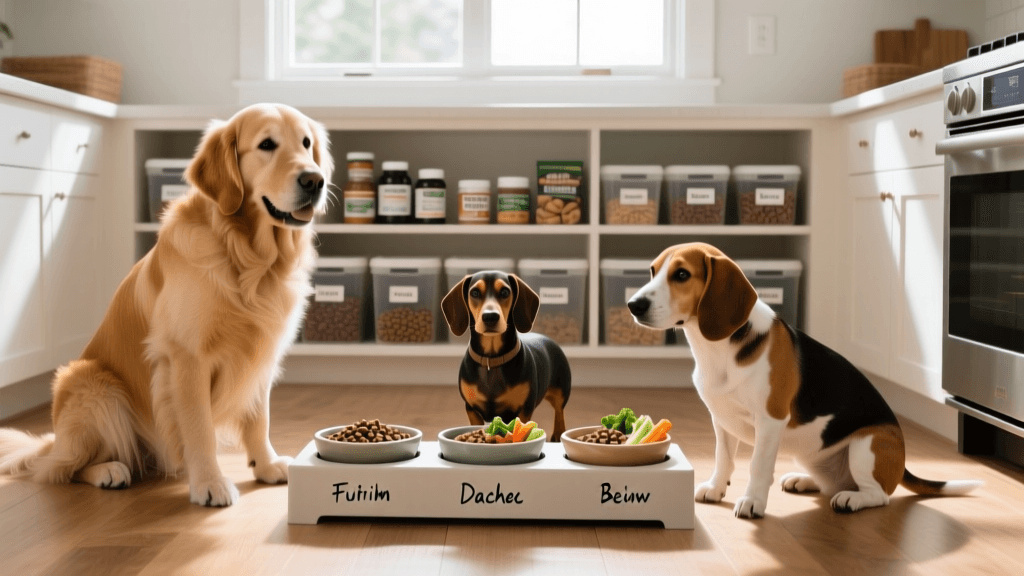
Feeding Time: Never feed multiple dogs from bowls placed side-by-side. Feed them in separate rooms, or use a sturdy baby gate to divide the kitchen. If you must feed them in the same room, maintain a minimum distance of 10 to 15 feet between bowls, and pick up the bowls immediately after the dogs finish eating. For high-value treats like bully sticks or raw bones, dogs must be completely separated (e.g., one in a crate, one behind a gate) until the item is entirely consumed.
Toy Management: Implement a "toys away" policy. Only bring out high-value toys during supervised, separated play sessions. When the dogs are roaming the house together, keep the environment clear of items that might trigger a dispute.
Step-by-Step Training Solutions: The Trade-Up Game
Once management is securely in place, you can begin counter-conditioning. The goal is to change the guarding dog's emotional response from "this dog is going to steal my stuff" to "this dog approaching means I get something even better." This is achieved through the "Trade-Up" game.
Step 1: Gather Your Tools
You will need a treat pouch filled with ultra-high-value rewards (e.g., freeze-dried beef liver, boiled chicken breast, or small pieces of hot dog). You also need a low-value item for the dog to hold, such as a basic cotton rope toy or a sterile chew bone. Finally, keep the other dog secured behind a baby gate or in a crate at a distance of at least 10 feet.
Step 2: The Approach and Toss
Give the guarding dog the low-value item. Allow them to settle. With the second dog secured at a distance, walk toward the guarding dog. The moment you enter their peripheral vision, toss a high-value treat directly to them, then immediately turn and walk away. Repeat this 10 to 15 times per session. You are teaching the dog that an approach predicts a fantastic reward, not a theft.
Step 3: The Trade
After several weeks of successful approach-and-toss sessions, you can introduce the trade. Approach the dog, present a piece of high-value food right at their nose, and say "Drop it" or "Trade." When they spit out the low-value toy to eat the treat, pick up the toy, give them a second treat, and then give the original toy back. Giving the toy back is crucial; it builds trust and proves to the dog that giving up an item does not mean losing it forever.
Step 4: Integrating the Second Dog
Only after the guarding dog reliably drops items for you without showing tension should you begin integrating the second dog. Keep the second dog on a 6-foot leash. Have the second dog approach from a distance of 10 feet. Toss a high-value treat to the guarding dog. If the guarding dog remains relaxed, reward both dogs. Slowly decrease the distance over multiple weeks, always working below the guarding dog's threshold for anxiety. Keep training sessions short—no more than 10 to 15 minutes—to prevent mental fatigue and frustration.
Common Human Mistakes to Avoid
When dealing with resource guarding, human error can inadvertently make the problem worse. Avoid these common pitfalls:
- Reaching into the dog's mouth: Forcing your hand into a dog's mouth to extract an item will almost always result in a bite and will severely damage the trust between you and your dog.
- The "Nothing in Life is Free" fallacy: Some outdated training advice suggests making a guarding dog perform commands for every single resource to establish "dominance." This actually increases the dog's anxiety around resources, making guarding worse.
- Allowing dogs to "work it out": Never let a minor squabble escalate under the assumption that the dogs will establish a natural hierarchy. In a domestic setting, this usually results in a severe injury to one dog and a reinforced aggressive response in the other.
When to Call a Professional
While mild to moderate resource guarding can often be managed and improved with dedicated owner training, severe cases require professional intervention. You should immediately seek the help of a certified professional if your dog has already inflicted a puncture wound on another dog or a human, if the guarding behavior is highly unpredictable, or if you feel unsafe managing the household environment.
Look for a professional who holds credentials from reputable organizations, such as a Certified Applied Animal Behaviorist (CAAB) or a veterinarian who is a Diplomate of the American College of Veterinary Behaviorists (DACVB). These experts can provide tailored behavior modification plans and, if necessary, discuss anti-anxiety medications that can lower your dog's baseline stress levels, making the training process significantly more effective.
Conclusion
Living with a resource-guarding dog in a multi-pet household requires patience, vigilance, and a commitment to proactive management. By accurately diagnosing the early warning signs, utilizing physical barriers to prevent rehearsals of the behavior, and systematically counter-conditioning your dog's emotional responses, you can drastically reduce tension in your home. Remember that behavior modification is a marathon, not a sprint. Celebrate the small victories, maintain strict management protocols, and prioritize the safety and emotional well-being of all the dogs in your care.
beth-carrasco
All our authors care for dogs every day — read more of their work on the authors page.