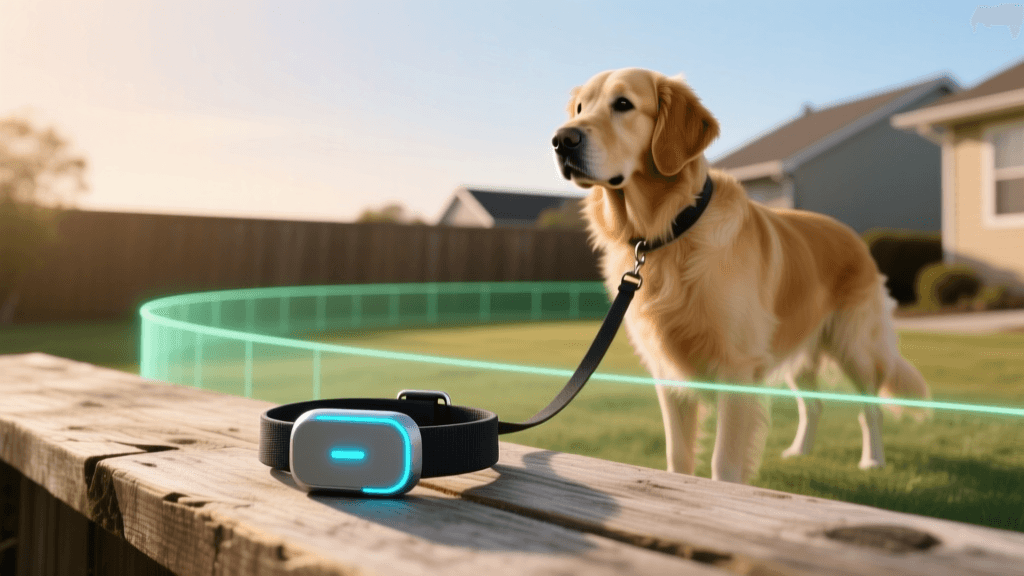
Smart GPS Collars for Dog Recall and Boundary Training
Discover how smart GPS collars and virtual fences revolutionize dog recall and boundary training. Learn setup tips, costs, and top tech features.
The Evolution of Dog Training: Enter Smart GPS Collars
For decades, dog owners relied on physical fences, long training leads, and traditional radio-frequency underground wires to keep their dogs safe and contained. While these methods still hold value, the modern era of dog care has introduced a paradigm shift through technology. Smart GPS collars and virtual fencing systems have revolutionized how we approach boundary conditioning and recall training. By leveraging global positioning systems, cellular networks, and programmable haptic feedback, owners can now create customizable, invisible boundaries that travel with them, whether they are at home, hiking in the mountains, or visiting a sprawling park.
According to the American Kennel Club, recall is arguably the most critical command for a dog's safety, yet it remains one of the most challenging to proof in high-distraction environments. Smart collars bridge the gap between traditional obedience training and modern safety requirements, offering a technological safety net that reinforces the physical boundaries you set. However, simply strapping a high-tech device onto your dog's neck is not a substitute for foundational training. To truly harness the power of these devices, owners must understand the behavioral conditioning required to integrate technology into their daily training routines.
How Virtual Fences and GPS Collars Work
Unlike traditional underground wire fences that rely on a localized radio signal, modern smart collars use a combination of GPS satellites and LTE-M cellular networks to track your dog's location in real-time. When you set a virtual boundary via a smartphone application, the collar monitors the dog's proximity to that invisible line. As the dog approaches the boundary, the collar issues a series of escalating warnings.
Most premium systems utilize a three-tier feedback loop:
- Warning Tone: An audible beep that alerts the dog they are nearing the boundary.
- Haptic Feedback: A gentle vibration that serves as a physical cue without causing pain.
- Static Correction: A mild, adjustable static pulse (similar to a TENS machine used in human physical therapy) designed to startle rather than harm, used only if the dog ignores the previous cues.
When integrating any new tool into your routine, the ASPCA emphasizes the importance of understanding your dog's individual behavioral thresholds and avoiding tools that induce chronic fear or anxiety. The goal of smart collar training is for the dog to respond to the audio or haptic cues, rendering the static correction entirely unnecessary.
Comparing Top Smart Collar Technologies
Investing in a smart collar is a significant financial commitment. Below is a comparison of the leading technologies on the market to help you choose the right tool for your training goals.
| Feature | SpotOn Virtual Fence | Halo Collar 4 | Fi Series 3 |
|---|---|---|---|
| Primary Function | Virtual Fencing & GPS | Virtual Fencing & GPS | GPS Tracking Only |
| Upfront Cost | ~$995 | ~$699 | ~$149 |
| Subscription | $99/year (Cellular) | $99/year (Cellular) | $99/year (Cellular) |
| Feedback Types | Tone, Vibrate, Static | Tone, Vibrate, Static, Sound | None (LED light only) |
| Battery Life | Up to 22 hours | Up to 20 hours | Up to 3 months |
| Boundary Setup | Walk the perimeter | App mapping & walking | N/A |
While the Fi Series 3 is an exceptional GPS tracker for monitoring your dog's location and activity levels, it does not offer virtual fencing capabilities. For dedicated boundary and recall training, systems like SpotOn and Halo provide the necessary programmable feedback loops required for behavioral conditioning.
The Training Protocol: Conditioning Your Dog to the Collar
Transitioning to a smart collar requires a structured, positive-reinforcement-based protocol. Rushing this process can lead to 'collar blindness' or boundary anxiety. The Humane Society of the United States recommends breaking training into manageable, highly rewarding sessions to ensure your dog associates the new equipment with positive outcomes.
Phase 1: Visual Marker Association (Days 1-5)
Before turning on the collar's feedback mechanisms, you must teach your dog where the boundary exists. Place highly visible boundary flags every 10 feet along the perimeter of your virtual fence. With your dog on a 15-foot long line, walk them toward the flags. As soon as they approach the flags, use an enthusiastic recall cue like 'Let's go!' and guide them back into the safe zone, immediately rewarding them with high-value treats such as freeze-dried liver or Zuke's Mini Naturals. Repeat this 3-5 times per session, twice a day.
Phase 2: Audio and Haptic Conditioning (Days 6-14)
Activate the warning tone and haptic feedback on the collar, but keep the static correction turned off. Walk your dog toward the boundary on the long line. When the collar emits the warning tone, immediately call your dog back and reward them generously. The goal is to condition the dog to believe that the warning tone is actually a 'recall cue' that predicts a jackpot reward. If the dog steps into the haptic zone, the vibration will startle them; use this moment to guide them back and reward the retreat.
Phase 3: Proofing the Boundary (Days 15-30)
Once your dog reliably retreats at the sound of the tone, you can begin proofing the behavior with mild distractions. Toss a toy just outside the boundary line. If your dog stops at the tone and looks back at you, mark the behavior with a clicker or a verbal 'Yes!' and reward them heavily. Only consider enabling the lowest level of static correction if the dog consistently ignores the tone and haptic feedback in high-distraction scenarios, and only after consulting with a certified professional dog trainer.
Using Tech for Reliable Recall Training
One of the most innovative applications of smart GPS collars is using the programmable tone as a dedicated recall signal. Because the tone can be triggered manually from your smartphone app, you can use it to call your dog back from vast distances—far beyond the range of your voice or a traditional whistle.
To build a tech-assisted recall:
- Start in a low-distraction environment with your dog off-leash or on a long line.
- Trigger the manual recall tone from the app.
- Simultaneously use your verbal recall command and offer a high-value reward when the dog returns.
- Gradually phase out the verbal command so the dog learns that the specific digital tone means 'return to the owner immediately for a massive reward.'
This method is particularly effective for hunting breeds, hounds, and herding dogs that are prone to ignoring verbal commands when they lock onto a scent or a moving target. The distinct, unnatural sound of the digital tone cuts through environmental noise and the dog's internal drive.
Avoiding Common Tech-Training Pitfalls
While technology offers incredible advantages, it is not a panacea for poor training habits. Owners must be vigilant to avoid the following pitfalls:
- Over-Reliance on Static Correction: Using the static pulse as a primary training tool rather than a safety backup can damage the human-animal bond and increase anxiety.
- Battery Failure Blind Spots: Smart collars require daily charging. If you allow the collar to die and leave it on the dog, they will quickly learn that the boundary rules no longer apply, leading to an escape.
- GPS Drift: In areas with heavy tree cover or near large structures, GPS signals can 'drift,' causing the collar to issue a warning when the dog is actually well inside the safe zone. Always account for a 10-to-15-foot buffer zone when mapping your boundaries to prevent false corrections.
Technology should never replace the foundational bond and trust between you and your dog; it should merely act as a safety net while you build that relationship.
Conclusion
Smart GPS collars and virtual fences represent a monumental leap forward in modern dog care, offering unprecedented freedom and safety for our canine companions. By understanding the underlying technology, investing in the right system for your budget, and committing to a structured, positive-reinforcement training protocol, you can effectively condition your dog to respect invisible boundaries and respond to digital recall cues. Embrace the technology, but never forget that the most reliable connection you have with your dog is the trust and communication you build together every single day.
hannah-wickes
All our authors care for dogs every day — read more of their work on the authors page.