Senior Dog Training: Cognitive Games & Adapted Tricks
Discover how to train senior dogs with adapted tricks and cognitive games. Learn age-appropriate methods to keep your aging dog's mind sharp and active.
The Myth of the Untrainable Senior Dog
The old adage 'you can't teach an old dog new tricks' is not only scientifically inaccurate, but it also does a massive disservice to our aging canine companions. As dogs enter their senior years—typically around age seven for large breeds and age ten for smaller breeds—their physical and cognitive needs shift dramatically. Training is no longer just about basic obedience or burning off boundless puppy energy; it becomes a vital component of life stage care. Specifically, it aims to preserve cognitive function, maintain joint mobility, and deepen the human-animal bond. In this comprehensive life stage care guide, we will explore how to adapt your training regimen for senior dogs, focusing on low-impact cognitive games, specialized gear, and strategies to combat canine cognitive dysfunction.
Understanding the Senior Dog's Changing Physiology
Before introducing new commands or tricks, it is crucial to understand the physiological barriers your senior dog may be facing. According to the ASPCA, aging dogs frequently experience a decline in sensory acuity, including hearing and vision loss, alongside degenerative joint diseases like osteoarthritis. A dog that previously excelled at agility or high-impact fetch may now hesitate to jump or run due to underlying pain. Furthermore, metabolic slowdowns mean that senior dogs fatigue much faster than their younger counterparts. Therefore, training must pivot from physical exertion to mental stimulation. Mental enrichment burns calories, tires the dog out, and builds new neural pathways without placing undue stress on aging hips and knees.
Adapting Your Training Environment and Gear
Creating a safe, comfortable environment is the first step in senior dog training. Slippery hardwood or tile floors can cause anxiety and physical strain for dogs with weakened hindquarters or arthritis.
Essential Senior Training Gear
- Non-Slip Rug Pads: Invest in high-quality non-slip mats (such as Gorilla Grip rug pads, costing around $20-$30) to place under your dog's designated training bed or mat. This provides the traction they need to stand or shift positions confidently.
- Orthopedic Training Beds: Use a supportive bed like the Big Barker Orthopedic Dog Bed ($150-$300) as your 'place' command station. Memory foam relieves pressure on arthritic joints while they engage in cognitive tasks.
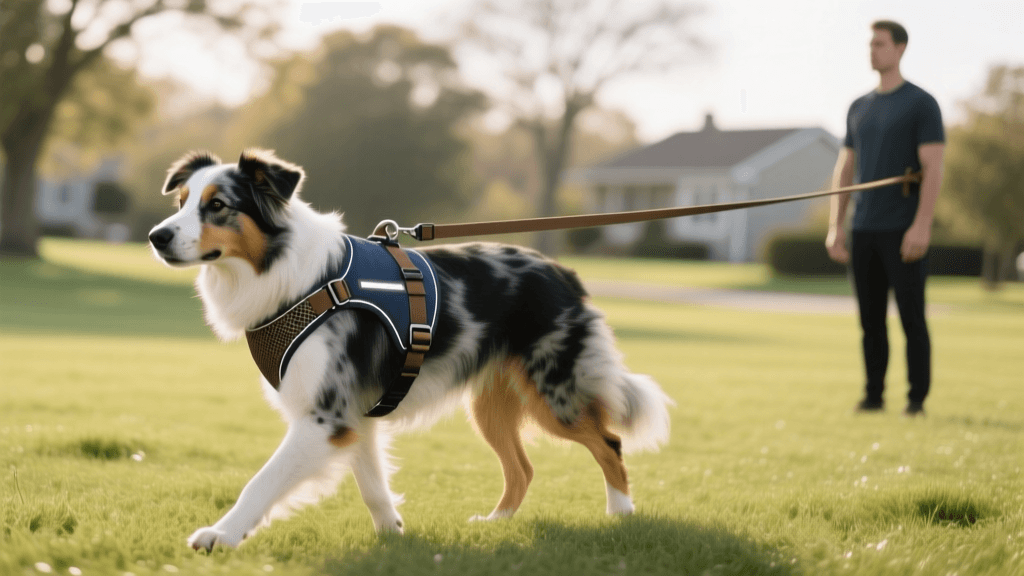
- Support Harnesses: For tricks that require standing or slight movements, a support harness like the Ruffwear Web Master ($90) allows you to gently assist your dog's balance without pulling on their neck or spine.
- High-Value, Soft Treats: Senior dogs often have dental issues or sensitive digestion. Opt for soft, low-calorie training treats like Zuke's Mini Naturals ($6 per bag) that can be broken into pea-sized pieces to prevent weight gain.
Low-Impact Cognitive Games and Adapted Tricks
When physical limitations restrict movement, we must engage the brain. The olfactory system (sense of smell) is directly linked to the brain's limbic system, making scent-based games incredibly enriching and tiring for senior dogs.
1. Scent Discrimination and Nosework
Nosework is arguably the best life stage activity for aging dogs. It requires zero jumping and can be done entirely while the dog is lying down. Start by introducing a specific target scent, such as birch or anise essential oil applied to a cotton swab. Place the swab in a small tin with breathing holes. Begin by holding the tin near your dog's nose and rewarding them with a soft treat when they investigate. Gradually hide the tin around the room at nose-level. For dogs with severe mobility issues, you can use a 'snuffle mat' ($15-$30) placed directly in front of them on their orthopedic bed, hiding their daily kibble ration within the fabric strips to encourage natural foraging behaviors.
2. Paw and Nose Targeting (While Recumbent)
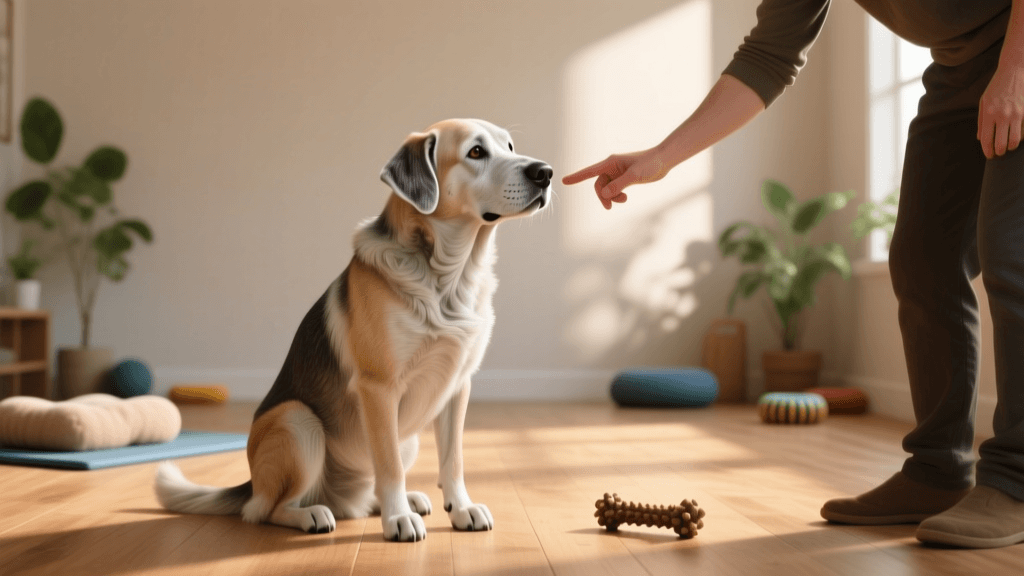
Targeting teaches the dog to touch a specific object with their nose or paw. This is excellent for maintaining proprioception (body awareness) without requiring the dog to stand. Use a target stick with a brightly colored ball on the end (ideal for dogs with fading vision). While your dog is lying comfortably on their mat, hold the target stick near their nose. The moment they lean forward to sniff or touch it, click a clicker or use a verbal marker like 'Yes!' and deliver a treat. Over time, you can teach them to touch the stick with a specific paw, which helps maintain joint flexibility and nerve signaling in their limbs.
3. Visual Cues for Hearing-Impaired Seniors
Many senior dogs experience presbycusis (age-related hearing loss). If your dog can no longer hear verbal commands like 'sit' or 'stay', you must transition to hand signals. The American Kennel Club (AKC) recommends using broad, distinct hand movements. For example, a flat palm pushed downward can signal 'down,' while a sweeping upward motion can signal 'sit.' For dogs that are completely deaf and prone to wandering, conditioning them to a vibration collar (such as the Dogtra Pathfinder Vibration Collar, approx. $150) can serve as a gentle 'recall' or 'look at me' cue. Never use shock functions; the vibration simply acts as a tactile tap on the shoulder to get their attention.
Comparison Chart: Puppy vs. Senior Dog Training
Understanding the differences between life stages is critical for setting realistic expectations and ensuring your dog's welfare. Below is a structured comparison of training parameters across life stages.
| Training Feature | Puppy Training (8-12 Months) | Senior Dog Training (7+ Years) |
|---|---|---|
| Session Length | 10-15 minutes, multiple times daily | 3-5 minutes, 2-3 times daily |
| Primary Motivation | Burning energy, socialization, basic manners | Cognitive preservation, joint mobility, bonding |
| Physical Impact | High (running, jumping, retrieving) | Low (scent work, recumbent targeting) |
| Reward Type | Standard kibble, chew toys, play | Soft treats, gentle praise, massage |
| Environmental Needs | Distractible, varied environments | Quiet, temperature-controlled, non-slip flooring |
Recognizing Signs of Training Fatigue
Because senior dogs are eager to please, they may push past their physical limits to earn your approval. It is your responsibility as the handler to monitor for subtle signs of fatigue or discomfort. Stop the training session immediately if you observe:
- Excessive panting that is not related to room temperature.
- Trembling in the hind legs or difficulty rising from a lying position.
- Lip licking, yawning, or turning the head away (calming signals indicating stress or overwhelm).
- Decreased interest in high-value treats that they normally love.
Always end on a positive note, even if it means reverting to a simple, easy trick they know well, followed by a gentle chest massage.
Combating Canine Cognitive Dysfunction (CCD)
Canine Cognitive Dysfunction (CCD) is a neurodegenerative disease similar to Alzheimer's in humans. According to research from the Cornell University College of Veterinary Medicine, CCD affects a significant portion of dogs over the age of 11, manifesting as disorientation, altered sleep-wake cycles, and a decrease in learned behaviors. While there is no cure, veterinary neurologists agree that consistent mental stimulation and novel learning tasks can build 'cognitive reserve,' potentially delaying the onset and severity of CCD symptoms. Teaching your senior dog a new, low-impact trick every month forces the brain to forge new synaptic connections, keeping their mind sharp and engaged with their environment.
Conclusion: A Lifelong Journey of Learning
Training does not end when puppyhood fades; it simply evolves. By adapting your methods to accommodate the physical realities of aging, you provide your senior dog with a profound sense of purpose and joy. Whether they are sniffing out a hidden birch tin, touching a target stick from their orthopedic bed, or learning a new hand signal, your aging dog is still a capable, eager student. Embrace these modified life stage care techniques, and you will not only preserve your dog's cognitive health but also cherish the quiet, focused moments of connection that define the golden years of dog ownership.
jonas-cole
All our authors care for dogs every day — read more of their work on the authors page.