Moving With Dogs In 2026: Boundary And Recall Training
Discover expert boundary and recall training strategies to ease your dog's relocation anxiety and establish obedience in your new 2026 home.
Navigating Canine Relocation Stress in 2026
Moving is universally ranked as one of life's most stressful events, and in 2026, with the continued normalization of remote-work relocations and shifting suburban housing markets, more families are uprooting than ever before. But while you are focused on packing boxes, coordinating movers, and securing mortgage rates, your dog is experiencing a profound environmental shock. Canine relocation stress can manifest as regression in house training, heightened reactivity, and a sudden forgetfulness of basic obedience cues. According to the ASPCA's guide on moving with pets, maintaining a consistent routine and implementing structured training protocols are the most effective ways to mitigate this anxiety.
This comprehensive guide explores targeted training strategies designed specifically for dogs transitioning into a new home. By focusing on decompression, boundary setting, and recall reconditioning, you can help your dog build confidence and re-establish obedience in unfamiliar territory.
The Decompression Phase: Setting the Baseline
Before you can expect flawless obedience in a new environment, you must allow your dog's nervous system to regulate. The veterinary behavior community widely recognizes the '3-3-3 Rule' of rescue and relocation: three days of overwhelm, three weeks of settling in, and three months of true bonding and routine establishment. During the first week in your new home, active obedience training should be paused. Instead, focus entirely on decompression.
Implementing Decompression Walks
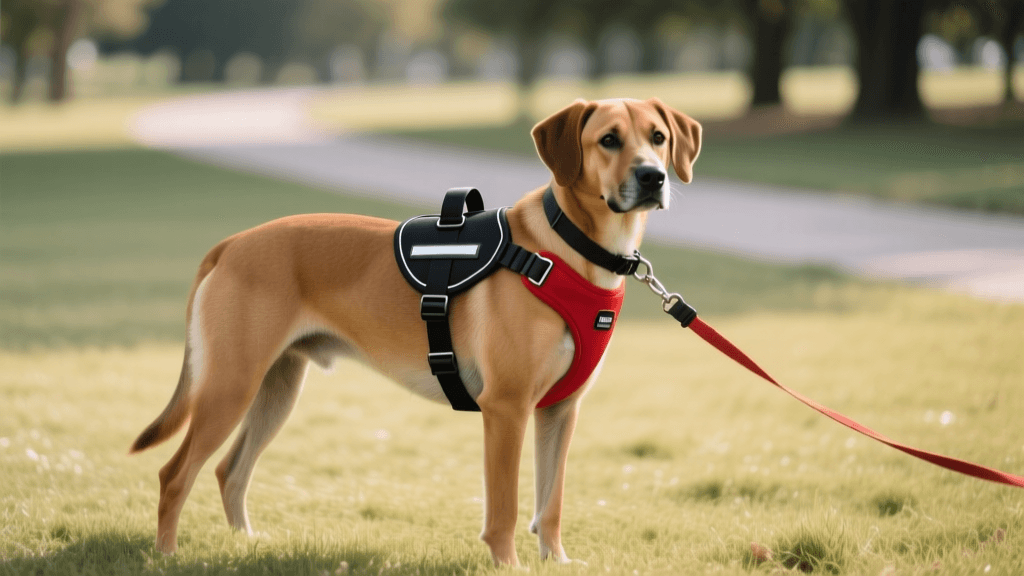
Decompression walks are unstructured, sniff-heavy outings designed to lower a dog's cortisol levels. In your new neighborhood, these walks should be conducted using a 15-to-30-foot BioThane long line attached to a well-fitted back-clip harness. BioThane is highly recommended for 2026 relocations because it is waterproof, easy to clean if dragged through unfamiliar mud or brush, and provides a secure grip. Allow your dog to dictate the pace and direction of the walk, intervening only to prevent them from ingesting dangerous items or approaching unknown, off-leash dogs.
The 'Safe Zone' Concept
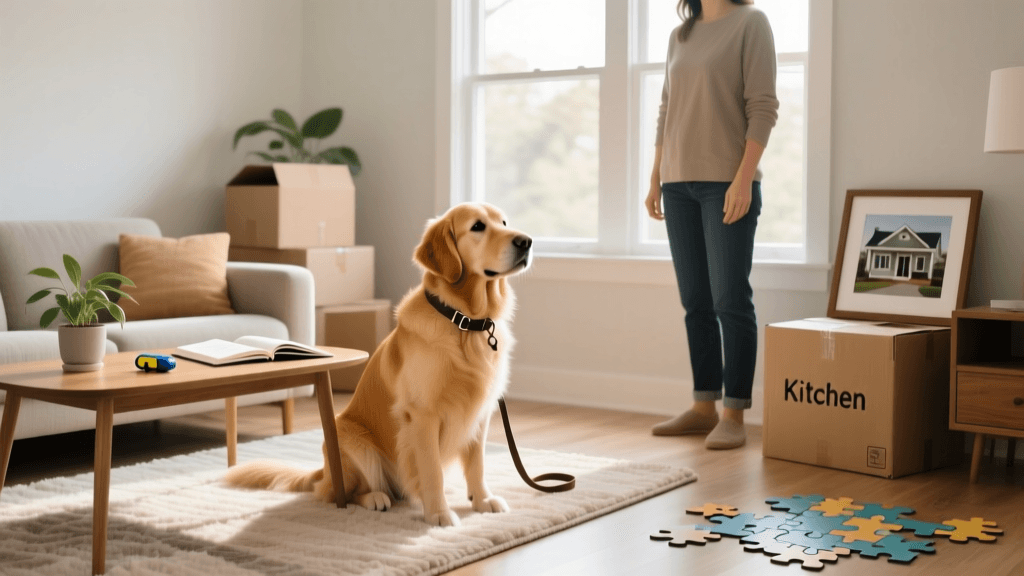
Designate one room in your new house as your dog's primary 'Safe Zone.' This room should contain their familiar bedding, unwashed toys (which carry comforting home scents), and a white noise machine to muffle unfamiliar street sounds or new neighbors. According to Humane Society relocation tips, restricting a dog's access to the entire new house immediately upon arrival can prevent sensory overload and reduce the likelihood of stress-induced marking or destructive chewing.
Boundary Training and Threshold Manners
Once the initial decompression phase has passed, it is time to establish the rules of the new environment. Boundary training is critical for preventing door-dashing, a common and dangerous behavior that spikes when dogs are in unfamiliar areas with unknown escape routes.
Mastering the 'Place' Command
The 'Place' command is an invaluable tool for life transitions. It teaches your dog to settle on a specific mat or elevated cot until released. Elevated cots, such as the Kuranda or Coolaroo beds, are particularly effective because the physical elevation provides a clear spatial boundary that dogs can easily understand.
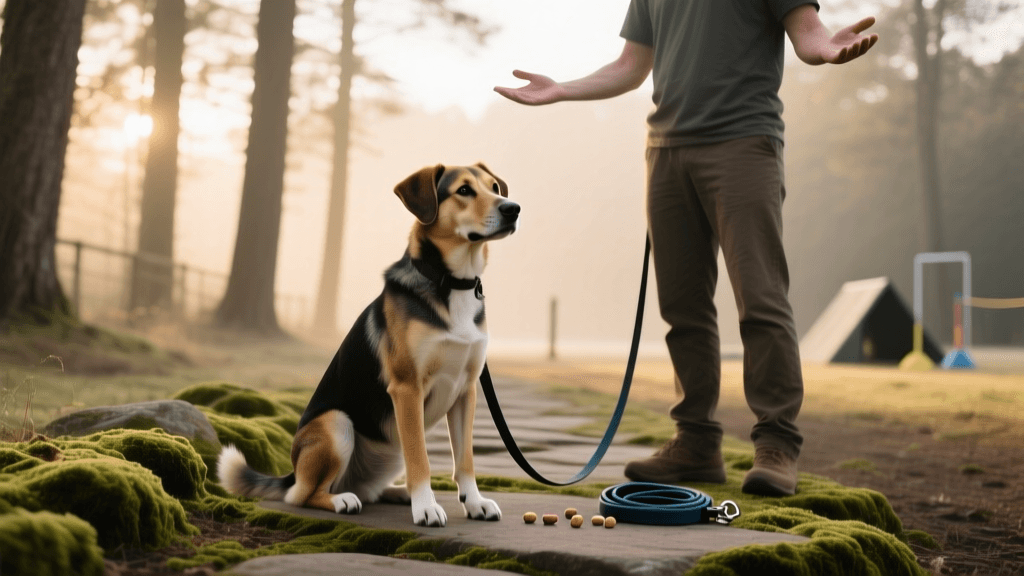
- Step 1: Luring and Marking. Stand near the cot with high-value treats (such as freeze-dried beef liver). Lure your dog onto the bed. The moment all four paws are on the fabric, use a marker word like 'Yes!' or a clicker, and deliver the treat.
- Step 2: Adding the Cue. Once your dog is reliably following the lure, introduce the verbal cue 'Place' just before they step onto the bed.
- Step 3: Building Duration. Begin to delay the treat delivery. Ask for 'Place,' wait two seconds, mark, and reward. Gradually increase the time to 10 seconds, then 30 seconds, and eventually several minutes.
- Step 4: Adding Distractions. Practice the 'Place' command while you unpack boxes, open the front door, or ring the new smart-home doorbell. This teaches your dog that the cot is their default relaxation zone amidst household chaos.
Threshold Manners at the Front Door
New front doors often trigger excitement or anxiety. Teach your dog that an open door does not mean 'go.' Start with the door closed. Ask your dog to sit. Slowly turn the handle. If your dog breaks the sit, immediately close the door and reset. Repeat this process, gradually increasing the door's opening width, until your dog remains seated with the door wide open. Only release them to exit with a specific release cue, such as 'Let's go' or 'Free.'
Re-establishing Recall in Unfamiliar Territory
A dog's recall is often the first casualty of a move. New environments are flooded with novel scents, wildlife, and sounds that easily overpower a dog's trained response to their name. To rebuild a bulletproof recall, you must make yourself the most rewarding element in the new environment.
The Premack Principle and Recall
The Premack Principle states that a high-probability behavior (like sniffing a new bush) can be used to reinforce a low-probability behavior (like coming when called). In your new yard or a secure local park, call your dog to you. When they arrive, reward them with a high-value treat, and then immediately give them a release cue that allows them to return to the exact bush they wanted to sniff. By giving them permission to engage with the environment as a reward for returning to you, you build a powerful recall history.
Whistle Recall Conditioning
For larger properties or rural relocations common in 2026, a whistle recall is highly recommended. The Acme 211.5 whistle is a staple among professional trainers because it produces a consistent, high-frequency pitch that carries over long distances and is unaffected by the handler's emotional state. To condition the whistle, pair a single short blast with the delivery of a high-value treat in a low-distraction environment. Repeat this dozens of times before ever using the whistle when the dog is distracted. Eventually, the sound of the whistle will trigger an involuntary, conditioned response to run back to you.
Relocation Training Timeline and Equipment Guide
Structuring your training approach over the first few months is vital for long-term success. Refer to the table below to pace your expectations and prepare the necessary gear.
| Phase | Timeline | Training Focus | Equipment Needed |
|---|---|---|---|
| Decompression | Days 1-7 | Sensory regulation, potty routine, safe zone acclimation | 15-30ft BioThane long line, white noise machine, back-clip harness |
| Boundary Setting | Weeks 2-3 | Threshold manners, 'Place' command, indoor spatial limits | Elevated dog cot, baby gates, treat pouch |
| Active Recall | Weeks 4-6 | Emergency recall, whistle conditioning, Premack reinforcement | Acme 211.5 whistle, freeze-dried treats, secure long line |
| Neighborhood Integration | Months 2-3 | Leash neutrality, engage-disengage with new triggers | Front-clip harness, clicker, treat pouch |
Managing Smart Home and Neighborhood Triggers
Modern homes in 2026 are equipped with an array of smart devices that can inadvertently trigger reactivity in a newly relocated dog. Smart doorbells, automated vacuum cleaners, and motorized blinds produce high-pitched frequencies and sudden movements that can spark alert barking or fear responses.
Sound Desensitization Protocols
To desensitize your dog to new household noises, utilize counter-conditioning. Record the sound of your new smart doorbell or find a similar audio file online. Play the sound at a volume so low that your dog notices it but does not react. Immediately feed a high-value treat. Gradually increase the volume over several days, continuing to pair the sound with food. If your dog barks or shows signs of stress, you have increased the volume too quickly; lower it and proceed at a slower pace.
The Engage-Disengage Game
When exploring your new neighborhood, you will inevitably encounter new triggers, such as unfamiliar livestock, strange architectural features, or different types of local wildlife. The Engage-Disengage game is a behavioral conditioning technique used to change your dog's emotional response to these triggers. When your dog notices a trigger from a safe distance (Engage), mark the behavior with a 'Yes' and reward them. Before they have a chance to bark or lunge, they will naturally turn their head toward you to get the treat (Disengage). Over time, your dog will learn that seeing a new trigger predicts a reward from you, rather than a need to react defensively.
Conclusion
Relocating with a dog requires patience, empathy, and a strategic approach to training. By prioritizing decompression, enforcing clear boundaries, and systematically rebuilding your recall, you can transform a stressful move into an opportunity to deepen your bond. Remember that regression is a normal part of the transition process. Rely on the foundational techniques outlined above, maintain a predictable daily routine, and give your dog the time they need to confidently claim your new house as their forever home.
marcus-aldridge
All our authors care for dogs every day — read more of their work on the authors page.