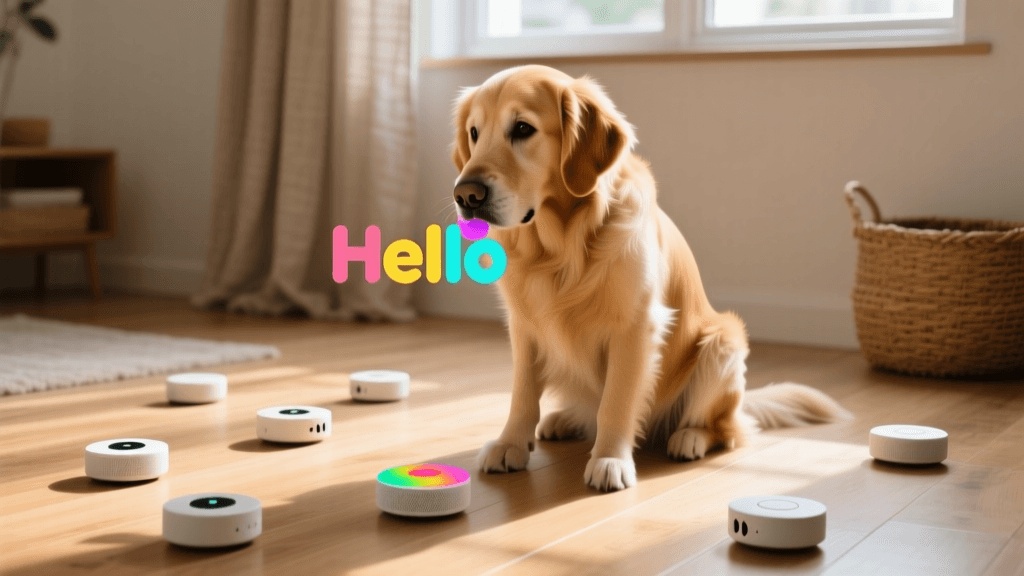
Smart Collars and Apps: Modern Guide to Dog Recall Training
Discover how to use smart GPS collars and app-based clickers to master dog recall training. Explore top tech tools, costs, and step-by-step methods.

The Intersection of Technology and Canine Cognition
Dog training has evolved far beyond simple leash corrections and pocketfuls of treats. Today, the intersection of technology and canine cognition offers unprecedented opportunities for pet owners to master complex behavioral conditioning, particularly in recall and boundary training. Modern dog care leverages smart GPS collars, app-based clickers, and biometric tracking to provide consistent, real-time feedback to our canine companions. According to the American Kennel Club, a reliable recall is one of the most critical life-saving commands a dog can learn. However, achieving a bombproof recall in high-distraction environments requires meticulous timing and consistency—two areas where modern technology excels.
By integrating smart wearables and digital training platforms, owners can bridge the communication gap, especially when working at a distance. This guide explores how to ethically and effectively use technology to train your dog, complete with product recommendations, cost analyses, and a structured training protocol.
Essential Tech Tools for Modern Recall Training
Before diving into the training protocol, it is essential to understand the hardware and software available to modern dog owners. The market is saturated with gadgets, but only a few provide the reliability required for active behavioral conditioning.
1. Smart GPS Collars
Smart collars are the cornerstone of tech-assisted distance training. Unlike traditional invisible fences that rely on static shock, modern smart collars utilize GPS geofencing, cellular connectivity, and customizable vibration or audio cues. They allow you to track your dog's exact location and set digital boundaries. When your dog approaches the edge of a designated safe zone, the collar can emit a gentle tone or vibration, serving as a conditioned aversive or a recall trigger without causing physical pain.
2. App-Based Clickers and Training Platforms
Applications like Puppr and Dogo have digitized the traditional mechanical clicker. While a physical clicker is excellent, app-based clickers offer varied tones, which can be useful if you are training multiple dogs and need distinct markers. Furthermore, these apps provide step-by-step video tutorials and progress tracking, ensuring you maintain a structured training schedule. The critical metric here is latency; ensure your app has a sound delay of less than 300 milliseconds to accurately mark the desired behavior.
Comparison Chart: Top Smart Collars for Training
Selecting the right hardware is crucial. Below is a comparison of the leading smart collars used by modern trainers, focusing on features relevant to recall and boundary conditioning.
| Brand / Model | Primary Training Feature | Battery Life | Hardware Cost | Monthly Subscription | Best For |
|---|---|---|---|---|---|
| Fi Series 3 | Safe-zone geofencing, escape alerts, activity tracking | Up to 3 months | $149 | $8.00 / mo | Urban and suburban recall training |
| Whistle GO | Real-time GPS tracking, health monitoring, audio alerts | Up to 20 days | $130 | $8.33 / mo | Health-conscious owners, moderate distances |
| Garmin Alpha 300 | Radio-frequency tracking, remote tone/vibration, multi-dog | Up to 55 hours | $449 | None | Rural areas, hunting dogs, off-grid reliability |
Note: As highlighted in Wirecutter's comprehensive GPS pet tracker reviews, cellular-dependent collars (like Fi and Whistle) require adequate local coverage to function properly, whereas radio-frequency collars (like Garmin) are superior for remote wilderness training.
Step-by-Step Tech-Assisted Recall Protocol
Integrating technology into your training routine requires a phased approach. Do not introduce the smart collar's alert features until the dog has a foundational understanding of the recall command.
Phase 1: Digital Marker Conditioning (Weeks 1-2)
Goal: Associate the app-based clicker or the smart collar's specific tone with a high-value reward.
- Setup: Use your smartphone's training app in a low-distraction indoor environment.
- Action: Press the digital clicker, then immediately (within 1 second) deliver a high-value treat (e.g., freeze-dried liver or boiled chicken).
- Timing: Conduct three 5-minute sessions per day. Total cost for treats: ~$15.
- Milestone: The dog looks expectantly for a treat the moment they hear the digital tone.
Phase 2: Geofence Boundary Setting (Weeks 3-4)
Goal: Teach the dog to recognize the digital boundary of your yard or local park using the collar's vibration or audio warning.
- Setup: Open your smart collar app and draw a geofence. Start with a small radius of 50 feet in a familiar, enclosed area.
- Action: Walk your dog on a 30-foot long-line leash toward the boundary. When the collar emits the warning tone (triggered by the app as you cross the line), say your recall cue (e.g., "Come!"), gently guide them back to the center, and reward heavily.
- Expansion: Gradually increase the geofence radius by 50 feet every three days, eventually reaching a 300 to 500-foot radius depending on your environment.
Phase 3: Distance Recall with GPS Tracking (Weeks 5-6)
Goal: Achieve a reliable recall at distances exceeding 100 yards, utilizing GPS to verify the dog's response time and path.
- Setup: Take your dog to a secure, open field. Ensure the collar has a full charge and strong cellular/GPS signal.
- Action: Allow the dog to wander up to 100 yards. Call their name followed by the recall cue. Use the app to monitor their speed and direct path back to you.
- Measurement: A successful recall should result in the dog returning within 10 to 15 seconds from a 100-yard distance. Use the app's activity logs to track improvements in their sprint speed back to you.
Troubleshooting Tech Interference
Technology is not infallible. Modern dog owners must be prepared to troubleshoot common technical hurdles that can disrupt training sessions.
- GPS Drift: In areas with heavy tree canopy or tall buildings, GPS signals can bounce, causing the app to show your dog outside the geofence when they are actually inside. Solution: Rely on physical visual confirmation and only use the app's boundary alerts in open-sky environments.
- Cellular Dead Zones: If your smart collar relies on AT&T or T-Mobile networks (as most do), rural dead zones will disable real-time tracking. Solution: Pre-download offline maps if your app supports it, or switch to a radio-frequency collar like the Garmin Alpha for off-grid work.
- Audio Latency: Bluetooth lag can cause app-based clickers to sound a half-second after you tap the screen, ruining the operant conditioning timing. Solution: Always test your app's latency before a session. If the delay exceeds 300 milliseconds, revert to a mechanical box clicker for that specific training day.
Ethical Tech Use: Avoiding Aversive Pitfalls
While technology offers incredible advantages, it also presents ethical risks. The market still produces "e-collars" that utilize static shock as a primary training mechanism. Modern, science-based dog care strongly advises against the use of pain-based aversives. According to veterinary behaviorists, shock collars can induce fear, anxiety, and aggression, ultimately degrading the trust between you and your dog.
When using smart collars for boundary and recall training, strictly utilize audio tones and gentle haptic vibrations. The vibration should be surprising, not painful. It serves as a tactile tap on the shoulder to break the dog's focus on a distraction (like a squirrel) and redirect their attention back to you for the recall cue. Always pair the technological cue with a high-value reward to build a positive emotional response to the device.
Conclusion
Integrating smart GPS collars and app-based training platforms into your dog care routine transforms the abstract concept of "recall training" into a measurable, data-driven science. By selecting the right hardware, adhering to a structured conditioning protocol, and prioritizing positive reinforcement over aversive punishment, you can leverage modern technology to ensure your dog's safety and strengthen your bond. Remember, technology is a powerful amplifier of your training efforts, but your consistency, patience, and relationship with your dog remain the ultimate keys to success.
priya-sutaria
All our authors care for dogs every day — read more of their work on the authors page.