The Best Long-Line Leashes for Dog Recall Training
Discover the best long-line leashes for dog recall training. Compare top biothane, nylon, and cotton leads to master off-leash obedience safely.
Why Long-Line Leashes Are Essential for Recall Training
Teaching a dog to reliably return to you, commonly known as recall training, is one of the most critical skills you can impart to your canine companion. However, transitioning from a controlled indoor environment to the unpredictable outdoors is where most training falls apart. This is where a long-line leash becomes your most valuable training tool. A long line bridges the gap between on-leash control and off-leash freedom, allowing your dog to explore and experience distractions while you maintain a safety net.
According to the ASPCA's comprehensive dog training resources, establishing a reliable recall requires consistent positive reinforcement and the ability to prevent the dog from practicing the unwanted behavior of running away. If a dog learns that ignoring your recall cue results in the reward of chasing a squirrel, the unwanted behavior is reinforced. A long line prevents this self-rewarding loop, ensuring that when you give the 'come' cue, you have the physical means to guide your dog back and reward them, thereby building a rock-solid habit.
A reliable recall is not just a fun trick; it is a vital safety behavior that can save your dog's life in an emergency. The right equipment is the foundation of that reliability.
Key Features to Look for in a Training Lead
Not all long lines are created equal. When shopping for the best recall training leash, you must consider the material, length, weight, and hardware. Choosing the wrong lead can lead to tangled messes, friction burns, or broken equipment.
1. Material Matters
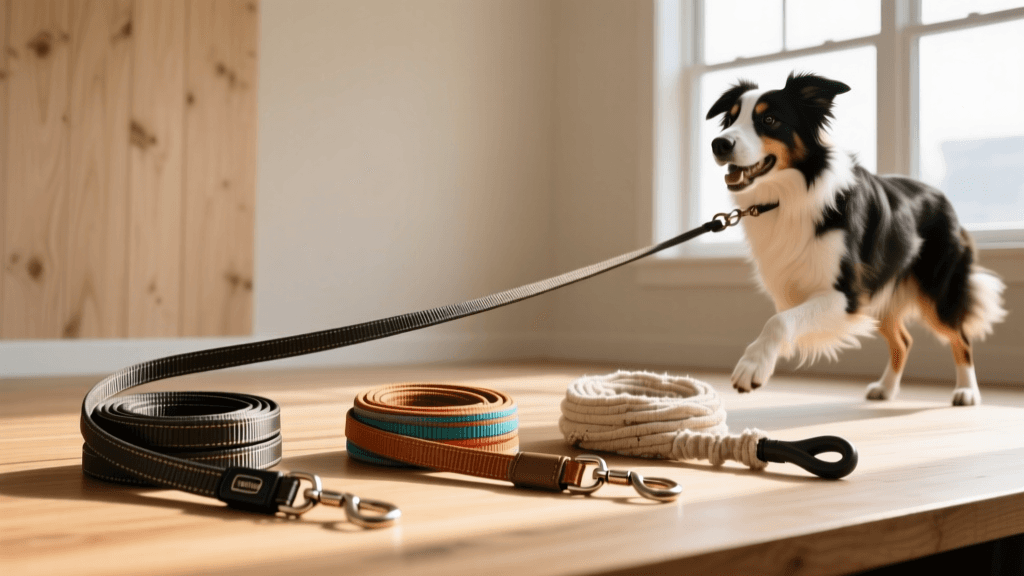
- Biothane: The gold standard for professional dog trainers. Biothane is a polyester webbing coated with TPU or PVC. It is waterproof, mud-proof, odor-resistant, and incredibly durable. It glides through grass and dirt without tangling or becoming heavy when wet.
- Nylon: Lightweight and affordable, but prone to tangling. Nylon absorbs water and mud, making it heavy and smelly over time. It can also cause severe friction burns if the line runs through your bare hands quickly.
- Cotton/Rope: Offers a great tactile grip and is gentle on the hands, but like nylon, it absorbs moisture, drags heavily in wet grass, and can harbor bacteria and odors.
2. Choosing the Right Length
For initial recall training in open fields, a 20 to 30-foot line is ideal. It provides enough distance to proof the behavior against moderate distractions without becoming unmanageable. For advanced scent work or hiking in dense woods, a 15-foot line prevents dangerous wrapping around trees. Lines longer than 30 feet are generally discouraged for active recall training due to the excessive weight and high risk of tangling.
3. Hardware and Weight
The snap hook at the end of the leash should be lightweight but strong. Heavy brass hardware can be uncomfortable for small to medium dogs, constantly pulling their heads down. Look for stainless steel or lightweight alloy swivels that prevent the line from twisting as your dog spins and explores.
Top Long-Line Leashes for Recall Training: Buyer's Guide
Based on durability, handling, and trainer preferences, here are the top long-line leashes for mastering off-leash obedience.
1. Premium Biothane Tracking Line (The Gold Standard)
If you ask any professional force-free trainer what is on their gear list, it is a Biothane long line. Brands like Signature K9 or custom Etsy makers offer exceptional Biothane leads. The material feels slightly grippy but slides easily through the hands. Because it does not absorb water, a morning training session in dew-heavy grass won't leave you holding a soggy, heavy rope. The hardware is typically rust-proof stainless steel, and the lead can be wiped clean with a damp cloth in seconds. While the upfront cost is higher, the lifespan of a Biothane line often outlasts the dog's training journey.
2. Mighty Paws Tagg Training Lead (Best Budget Nylon)
For owners on a budget or those training in dry, arid climates, the Mighty Paws nylon long line is a solid entry-level choice. It features a padded handle loop at the end, which is a unique feature that helps prevent friction burns if you need to grab the end quickly. However, you must be diligent about keeping it untangled, and it is not recommended for rainy or muddy environments.
3. Mendota Products Slip Lead / Long Line (Best Cotton/Rope)
Mendota is famous for its show leads, and their cotton long lines are excellent for dogs with sensitive skin or owners who prefer a traditional rope feel. The cotton is soft, pliable, and easy to knot. It is highly visible and provides a secure grip. The main drawback is the maintenance; it must be washed regularly to prevent mildew if used in wet conditions.
Comparison Chart: Best Training Long Lines
| Product Type | Material | Ideal Length | Hardware | Estimated Cost |
|---|---|---|---|---|
| Premium Biothane Lead | Biothane | 20-30 ft | Stainless Steel | $35 - $65 |
| Mighty Paws Tagg Lead | Nylon | 15-30 ft | Zinc Alloy | $15 - $25 |
| Mendota Long Line | Cotton/Rope | 15-20 ft | Brass/Snap | $20 - $30 |
Step-by-Step Guide to Recall Training on a Long Line
Having the right gear is only half the battle. The American Kennel Club (AKC) training experts emphasize that proofing behaviors in increasingly distracting environments is the key to a reliable recall. Here is how to use your new long line effectively.
Step 1: Acclimation and Harness Fitting
Never attach a long line to a flat collar or a prong collar. The sudden force of a dog hitting the end of a 30-foot line can cause severe tracheal or cervical spine damage. Always use a well-fitted, back-clip Y-harness. Allow your dog to drag the line in a safe, enclosed area for 10 minutes to get used to the weight and feel before you pick up the other end.
Step 2: The Engage-Disengage Game
Head to an open park. Let your dog wander to the end of the line. When they naturally turn to look at you, mark the behavior with a clicker or a 'yes!' and toss a high-value treat toward them. This teaches the dog that checking in with you is highly rewarding, even when they are far away.
Step 3: Adding the Cue
Once your dog is frequently checking in, wait until they are mildly distracted (e.g., sniffing a bush). Say your recall cue ('Come!' or 'Here!') in a bright, happy tone. If they turn toward you, mark and reward heavily with a jackpot of treats or a favorite toy. If they do not respond, do not repeat the cue. Instead, gently reel them in using the long line, then reward them for arriving. This prevents the cue from becoming background noise.
Step 4: Proofing with Distractions
Gradually introduce higher-level distractions, such as other dogs at a distance, people, or wildlife. Keep your distance from the distraction at first, and slowly decrease the gap over multiple sessions. The long line ensures that if your dog decides to bolt toward the distraction, you can gently step on the line to stop their forward momentum, resetting them for another attempt.
Crucial Safety Rules for Long Line Handling
Long lines can be dangerous if handled improperly. Follow these strict safety protocols to protect yourself and your dog:
- Never Wrap the Line Around Your Hands or Wrists: If a 60-pound dog spots a deer and bolts, a wrapped line can cause severe friction burns, deglove injuries, or even break your fingers. Always hold the line in an open palm or use the loops provided.
- Step, Don't Grab: If you need to stop your dog quickly, drop the excess line and step firmly on it with your foot. This provides a secure stop without risking injury to your hands or jarring the dog's harness too harshly.
- Watch for Tangles: Be hyper-aware of your dog's legs. If the line wraps around a hind leg, stop immediately and untangle it to prevent rope burn or restricted circulation.
- Avoid Dense Brush: Long lines are for open fields, beaches, and parks. Do not use a 30-foot line in dense forests where it can easily snag on roots and branches, potentially trapping your dog or pulling them backward unexpectedly.
Conclusion
Investing in a high-quality long-line leash, particularly a durable Biothane option, will drastically accelerate your dog's recall training. It provides the perfect balance of freedom and safety, allowing you to build trust and reliability in the real world. Pair the right equipment with high-value rewards, consistent practice, and patience, and you will soon be enjoying the peace of mind that comes with a truly reliable off-leash recall.
beth-carrasco
All our authors care for dogs every day — read more of their work on the authors page.