Separation Anxiety vs Boredom in Dogs: Diagnosis & Fixes
Is your dog destructive when alone? Learn how to diagnose separation anxiety versus boredom and discover actionable training solutions and tools.
The Frustration of Coming Home to Destruction
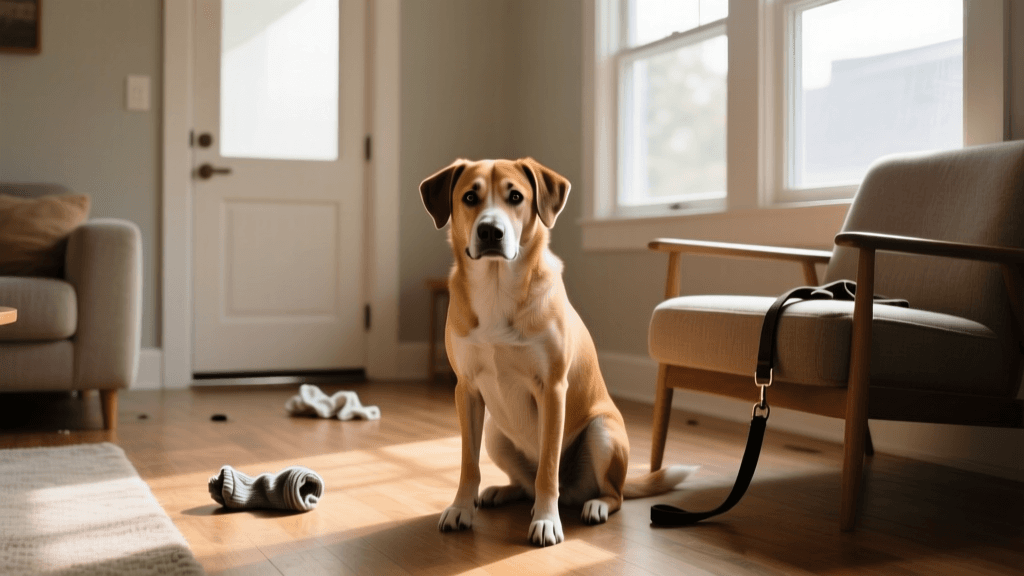
There are few things more disheartening for a dog owner than opening the front door after a long day at work, only to be greeted by shredded pillows, overturned trash cans, and scratched doorframes. The immediate reaction is often guilt or frustration, quickly followed by a desperate internet search for a cure. Most owners immediately label this behavior as separation anxiety. However, misdiagnosing the root cause of your dog's destructive behavior can lead to months of ineffective training, wasted money on the wrong products, and prolonged stress for your pet.
According to the ASPCA, true separation anxiety is a severe panic disorder, whereas boredom is simply a lack of adequate physical and mental enrichment. While the symptoms can look remarkably similar to the untrained eye, the underlying psychology and the required solutions are vastly different. In this comprehensive guide, we will break down the behavioral science behind canine distress, provide a clear diagnostic framework, and offer actionable, cost-effective solutions to restore peace to your home.
The Core Difference: Panic vs. Understimulation
To effectively treat the problem, we must first understand the canine psychology driving it. Boredom in dogs is a state of understimulation. Dogs are working animals bred for specific tasks—herding, hunting, guarding, or retrieving. When a high-drive or intelligent dog is left alone for eight hours with nothing to do, they will invent their own job. This usually involves chewing, digging, or exploring the trash. The American Kennel Club (AKC) notes that mental stimulation is just as critical as physical exercise; in fact, 15 minutes of intense sniffing and problem-solving can burn as much energy as an hour of walking.
Separation anxiety, on the other hand, is a clinical behavioral condition characterized by extreme panic when the dog is separated from their attachment figure. A dog with separation anxiety is not chewing the doorframe because they are looking for something fun to do; they are chewing it in a desperate, terrified attempt to escape the confinement and reunite with you. They are experiencing a physiological fight-or-flight response, complete with elevated cortisol levels, panting, and drooling. Punishing a dog for this behavior is not only ineffective but deeply cruel, as they are acting out of sheer terror.
Diagnostic Chart: Separation Anxiety vs. Boredom
Use the following comparison table to accurately diagnose your dog's behavior. Pay close attention to the timing of the destruction and the specific targets of their chewing.
| Behavioral Marker | Boredom / Understimulation | Separation Anxiety |
|---|---|---|
| Target of Destruction | Random items: shoes, remote controls, trash, pillows, baseboards. | Exit points: doors, window sills, crate bars, door frames. |
| Timing of Behavior | Can happen at any time, often after a nap or when the owner is home but distracted. | Occurs almost exclusively when the dog is left alone or isolated from the owner. |
| Vocalization | Occasional barking at outside noises or whining for attention. | Frantic, continuous howling, crying, or barking that starts immediately upon departure. |
| Potty Accidents | Rare, unless the dog is simply not properly house-trained or held too long. | Common, even in fully house-trained dogs, due to loss of bowel/bladder control from panic. |
| Body Language on Return | Happy, relaxed, may bring a toy, easily redirected. | Overly frantic, submissive urination, clingy, panting, unable to settle. |
| Escape Attempts | None. The dog is content to roam the house. | Desperate attempts to break through drywall, windows, or crate doors, often resulting in bloody paws or broken teeth. |
Step-by-Step Solutions for Canine Boredom
If your diagnostic points to boredom, the solution is straightforward: you must provide appropriate outlets for your dog's energy and natural instincts. Here is a practical, actionable protocol to enrich your dog's alone time.
1. Implement a Pre-Departure Exercise Routine
A tired dog is a quiet dog. However, physical exercise alone is rarely enough. You must combine aerobic exercise with mental fatigue. Spend 20 minutes before you leave playing a high-intensity game of fetch or using a flirt pole, followed by a 10-minute structured sniffing walk. Allow your dog to dictate the pace of the walk, letting them process the olfactory information in the environment.
2. Upgrade to High-Value Food Puzzles
Ditch the stainless steel food bowl. Dogs are scavengers by nature, and eating from a bowl is a missed opportunity for mental enrichment. Invest in a Kong Classic (approximately $15 to $25 depending on size). Fill it with a mixture of your dog's kibble, plain pumpkin puree, and a smear of xylitol-free peanut butter. Freeze it overnight. A frozen Kong can occupy a moderate chewer for 30 to 45 minutes, providing a soothing, licking-based activity that releases endorphins in the canine brain.
3. Environmental Enrichment
Leave the television on to a nature channel or use a white noise machine (around $20) to mask outside triggers like delivery trucks or neighborhood dogs. Scatter feeding is another excellent tool; hide small portions of kibble around the living room so your dog has to hunt for their breakfast while you are getting ready for work.
Step-by-Step Solutions for Separation Anxiety
If your dog exhibits the hallmarks of true separation anxiety, food puzzles will not cure them. A panicked dog will not eat, even if their favorite treat is right in front of them. Treating separation anxiety requires a multi-modal approach involving management, desensitization, and potentially veterinary intervention.
1. Immediate Management and Safe Spaces
While you work on long-term training, you must manage the environment to prevent rehearsal of the panicked behavior. Every time a dog panics and breaks out of a crate, the behavior is reinforced. If your dog destroys crates, abandon the crate and use a dog-proofed room or a reinforced indoor pen. Consider using an Adaptil DAP (Dog Appeasing Pheromone) diffuser (approximately $25 for the starter kit, with refills lasting 30 days). According to the Humane Society of the United States, synthetic pheromones can help lower baseline stress levels in mildly anxious dogs, creating a calmer starting point for training.
2. The 3-Week Departure Desensitization Protocol
Dogs with separation anxiety often begin to panic during your pre-departure routine (putting on shoes, grabbing keys). You must desensitize these triggers.
- Week 1: Neutralizing Triggers. Pick up your keys, then sit back down on the couch. Put on your coat, then take it off and make a sandwich. Do this 10 to 15 times a day until your dog no longer reacts to these cues.
- Week 2: Micro-Departures. Walk to the front door, open it, step out, and immediately step back in. Do not say goodbye or hello. Gradually increase the time outside from 1 second to 10 seconds, then 30 seconds, over several days. If your dog shows stress, you have moved too fast; drop back to a shorter duration.
- Week 3: Building Duration. Once your dog can handle a 5-minute absence without panicking, begin leaving the house for short, real-world errands (e.g., grabbing the mail, taking out the trash). Keep departures and arrivals incredibly boring and low-key.
3. Veterinary and Pharmacological Support
For moderate to severe cases, behavioral modification alone is not enough because the dog's brain is too flooded with panic hormones to learn. Consult a veterinarian or a board-certified veterinary behaviorist. They may prescribe SSRIs (like fluoxetine) or fast-acting anti-anxiety medications (like trazodone or gabapentin) to lower the dog's panic threshold. Medication costs typically range from $15 to $50 per month and can be the critical bridge that allows your desensitization training to actually work.
Essential Tools and Cost Breakdown
Whether you are dealing with boredom or anxiety, having the right tools is essential for monitoring and managing your dog's behavior. Below is a breakdown of recommended products, their primary use case, and estimated costs.
| Product Name | Primary Use Case | Estimated Cost | Best For |
|---|---|---|---|
| Kong Classic (Red/Black) | Mental stimulation, soothing licking | $15 - $25 | Boredom, mild settling |
| Furbo 360 Dog Camera | Monitoring, two-way audio, treat tossing | $150 - $210 | Diagnosis (recording behavior), boredom |
| Adaptil DAP Diffuser | Calming synthetic pheromones | $25 (Starter) | Mild anxiety, general stress |
| Snuffle Mat | Olfactory enrichment, scavenging | $15 - $35 | Boredom, pre-departure fatigue |
| Thundershirt | Swaddling, deep pressure therapy | $40 - $50 | Noise phobias, mild anxiety |
| White Noise Machine | Masking environmental triggers | $20 - $30 | Boredom, reactivity to outside sounds |
Conclusion: Patience and Professional Guidance
Understanding the distinction between a bored dog and an anxious dog is the first and most critical step in resolving destructive behaviors. Boredom is a lifestyle issue that can be fixed with better enrichment, structured exercise, and interactive toys. Separation anxiety is a clinical condition that requires deep empathy, rigorous desensitization protocols, and often the support of veterinary medicine.
Do not attempt to punish your dog for behaviors driven by panic or understimulation. Instead, use the diagnostic tools and actionable steps outlined above to build a customized treatment plan. If your dog's anxiety is severe, resulting in self-injury or extreme distress, do not hesitate to seek the help of a certified applied animal behaviorist (CAAB) or a veterinary behaviorist. With the correct diagnosis, the right environmental management, and consistent training, you can help your dog find peace when left alone, and return to a home that is both intact and harmonious.
hannah-wickes
All our authors care for dogs every day — read more of their work on the authors page.