Border Collie vs. Cavalier: Matching Breed Instincts to Life
Compare the Border Collie and Cavalier King Charles Spaniel. Discover how breed instincts, energy levels, and psychology impact your lifestyle choice.

Understanding Canine Psychology: Beyond the Surface
When selecting a dog, many prospective owners focus primarily on aesthetics, size, or popularity. However, true compatibility lies in understanding the deep-seated psychological instincts and behavioral drives inherent to specific breeds. A dog's genetics dictate how they perceive the world, process stress, and interact with their environment. To illustrate the profound impact of breed-specific psychology on daily life, we will compare two polar opposites in the canine world: the high-drive Border Collie and the affection-driven Cavalier King Charles Spaniel. By examining the behavioral instincts of these two distinct breeds, you can make an informed, compassionate choice that aligns with your lifestyle, living situation, and emotional bandwidth.
The Border Collie: The Psychology of the Herding Instinct
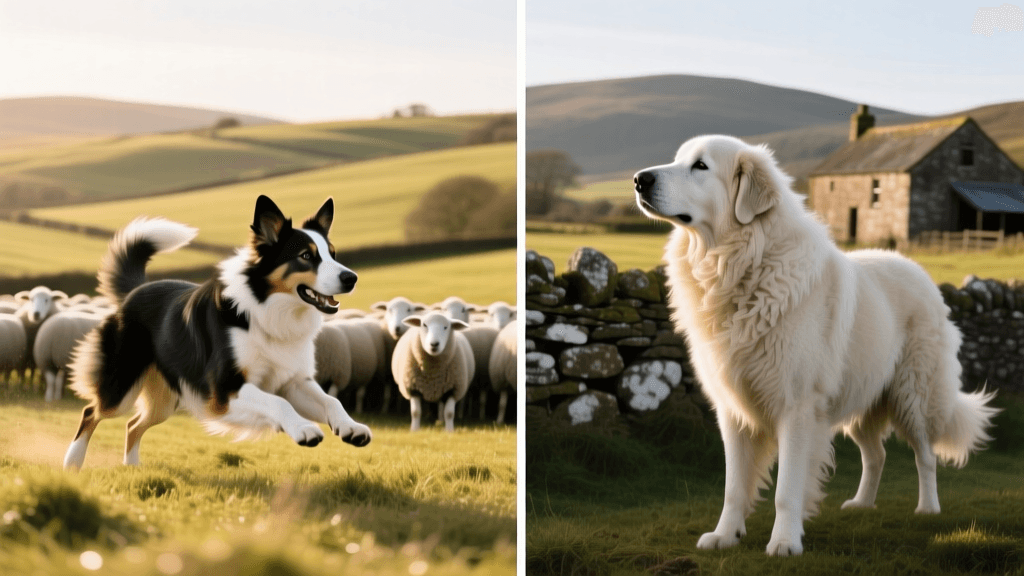
The Border Collie is widely regarded as the most intelligent dog breed, but this intelligence is inextricably linked to their working heritage. Bred for centuries to herd sheep across rugged terrain, their psychology is governed by the predatory motor sequence—specifically the 'eye,' 'stalk,' and 'chase' phases, with the 'kill' phase intentionally bred out. According to the American Kennel Club, this results in a dog that is hyper-vigilant, highly reactive to movement, and desperate for a 'job.'
Behavioral Traits and Daily Requirements
A Border Collie does not simply want to exercise; they need to problem-solve. A standard 30-minute walk around the block will not satisfy their psychological need for purpose. Without adequate mental and physical outlets, their herding instincts will misfire. They may begin to 'herd' children, cars, or even their own shadows, leading to severe neuroses, destructiveness, and chronic anxiety.
- Physical Exercise: Requires 90 to 120 minutes of rigorous, heart-pumping activity daily (e.g., running, agility, fetch).
- Mental Stimulation: Needs advanced puzzle toys (like the Outward Hound Nina Ottosson Dog Brick, $25-$35), obedience training, or scent work.
- Space Requirements: Thrives in homes with large, securely fenced yards. They are generally ill-suited for apartment living unless the owner is an elite-level athlete and trainer.
The Cavalier King Charles Spaniel: The Companion's Psychology
In stark contrast, the Cavalier King Charles Spaniel was bred for a singular, vital purpose: companionship. Their psychology is rooted in proximity and social bonding. The AKC notes that Cavaliers are the ultimate 'velcro dogs,' possessing an innate drive to be in physical contact with their humans. This breed experiences a powerful oxytocin feedback loop when cuddling, which regulates their stress and promotes a calm demeanor.
Behavioral Traits and Daily Requirements
While Cavaliers are playful and enjoy a good romp in the park, their baseline arousal level is significantly lower than that of a working breed. Their primary psychological challenge is not boredom from a lack of work, but rather separation anxiety stemming from their intense social dependency. They do not cope well with isolation and can develop stress-induced behaviors, such as excessive licking or vocalization, if left alone for long periods.
- Physical Exercise: Requires 30 to 45 minutes of moderate, leisurely walking daily.
- Mental Stimulation: Thrives on social interaction, gentle trick training, and interactive lap time.
- Space Requirements: Highly adaptable. They are excellent apartment dogs provided they are not left alone for 8+ hours a day.
Head-to-Head Comparison: Data and Lifestyle Metrics
To help visualize the stark differences in care, cost, and time commitments, review the structured comparison below. This data highlights how breed instincts directly translate to owner responsibilities.
| Metric | Border Collie (Herding) | Cavalier King Charles Spaniel (Companion) |
|---|---|---|
| Daily Exercise Need | 90 - 120+ minutes (High Intensity) | 30 - 45 minutes (Moderate Intensity) |
| Mental Enrichment | Advanced puzzles, agility, herding trials | Social bonding, gentle tricks, snuffle mats |
| Separation Anxiety Risk | Moderate (Manifests as destructive boredom) | High (Manifests as distress and vocalization) |
| Estimated Annual Cost | $1,800 - $2,500 (Agility, high-calorie food) | $1,500 - $2,200 (Grooming, specialized health care) |
| Ideal Owner Profile | Active outdoorsman, runner, dog sport enthusiast | Work-from-home professional, retiree, family |
Actionable Advice for Prospective Owners
Selecting between a working breed and a companion breed requires an honest audit of your daily routine, financial flexibility, and living environment. Veterinary behaviorists, such as those cited by the ASPCA in their general dog care guidelines, emphasize that behavioral issues are most frequently the result of a mismatch between a dog's genetic drives and an owner's lifestyle.
Evaluating Your Time and Schedule
If you work a standard 9-to-5 job away from home, a Cavalier will suffer without a mid-day dog walker or a doggy daycare routine (budget $15-$25 per day for daycare). Conversely, if you work from home but spend 8 hours a day in video meetings with your door closed, a Border Collie will become highly frustrated and may develop attention-seeking behaviors like barking or pawing at the door. Working breeds require integrated participation in your day, not just passive coexistence.
Financial Commitments and Health Screening
Understanding breed psychology also means preparing for breed-specific physical vulnerabilities that impact their mental well-being. Cavaliers are notoriously prone to Mitral Valve Disease (MVD) and Syringomyelia. A dog in chronic pain will exhibit behavioral changes, such as irritability or withdrawal. Budgeting for comprehensive pet insurance ($50-$80/month) is non-negotiable for this breed. Border Collies, while generally robust, are prone to hip dysplasia and Collie Eye Anomaly. Furthermore, the financial cost of keeping a Border Collie mentally stimulated—through agility classes ($150-$200 per month), specialized harnesses ($40-$60), and durable interactive toys—adds up quickly.
Environmental Enrichment Strategies
For the Border Collie owner, environmental enrichment must mimic the unpredictability of herding. Use flirt poles (ensure they are heavy-duty, $30-$50) to satisfy the chase instinct safely, and practice 'find it' scent games in tall grass. For the Cavalier owner, enrichment is about creating a secure, comforting environment. Invest in a high-quality orthopedic bed ($70-$120) to support their joints, and use calming pheromone diffusers (like Adaptil, $25-$40) if you must leave the house, helping to mitigate their innate separation distress.
'A dog's behavior is a direct reflection of how well their environment satisfies their genetic blueprint. We cannot train away a breed's core instincts; we can only provide appropriate, healthy outlets for them.'
Conclusion
Choosing between a Border Collie and a Cavalier King Charles Spaniel is not merely a choice between a large, energetic dog and a small, quiet one. It is a choice between two entirely different psychological frameworks. The Border Collie demands a partnership built on action, challenge, and mutual work. The Cavalier asks for a partnership built on proximity, gentleness, and emotional attunement. By respecting the profound depth of canine instincts and honestly evaluating your own lifestyle metrics, you pave the way for a harmonious, fulfilling, and lifelong bond with your future companion.
beth-carrasco
All our authors care for dogs every day — read more of their work on the authors page.