The Canine Gut-Brain Axis: Nutrition And Dog Behavior
Discover how the canine gut-brain axis impacts dog behavior and anxiety. Learn actionable nutrition tips, specific supplements, and diets to calm your pet.
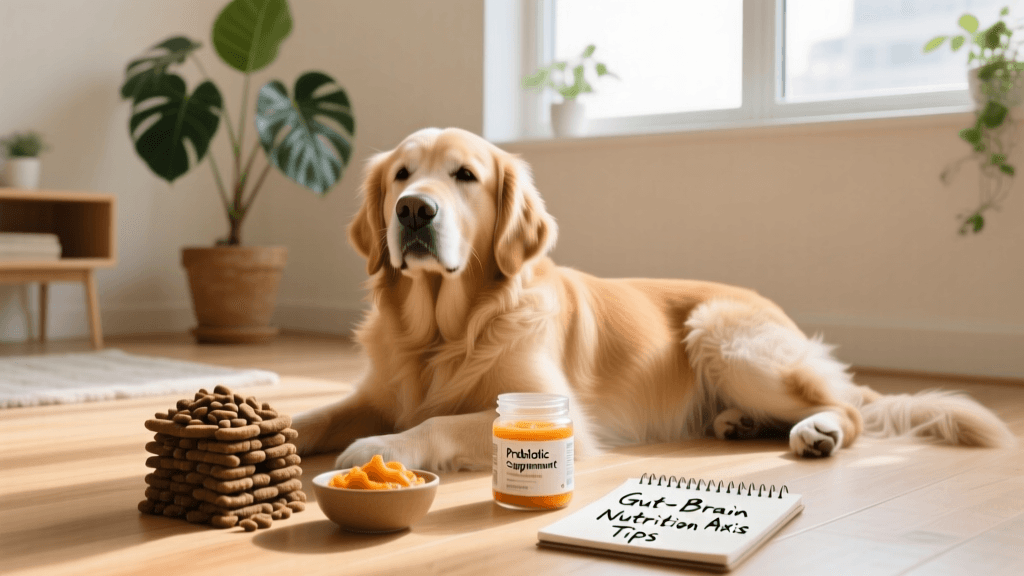
The Hidden Link Between Your Dog's Belly and Brain
When we think about canine behavior, we often focus on training methods, socialization, and environmental triggers. However, a rapidly growing field of veterinary science is revealing that the secret to a calm, well-adjusted dog might actually lie in their gastrointestinal tract. This is known as the gut-brain axis, a complex, bidirectional communication network that links the enteric nervous system (the gut) with the central nervous system (the brain). Understanding this connection is a game-changer for dog owners dealing with anxiety, reactivity, and unexplained behavioral issues.
If your dog struggles with separation anxiety, noise phobias, or leash reactivity, traditional behavior modification is essential. But without addressing the underlying biological foundation, you may be fighting an uphill battle. By taking a deep dive into canine nutrition and gut health, you can provide the biochemical building blocks your dog's brain needs to process stress effectively.
The Science of the Canine Microbiome and Behavior
The canine gut is home to trillions of microorganisms, collectively known as the microbiome. These bacteria do much more than digest food; they are active participants in your dog's neurological health. In fact, approximately 90% of the body's serotonin—the primary neurotransmitter responsible for mood regulation and feelings of well-being—is produced in the gastrointestinal tract, not the brain.
When a dog's gut microbiome falls out of balance, a condition known as dysbiosis, it can lead to systemic inflammation and impaired neurotransmitter production. According to a landmark study published by the National Institutes of Health (NIH), dogs exhibiting aggressive and fearful behaviors toward strangers possess a distinctly different gut microbiome profile compared to non-aggressive, confident dogs. The study found that dogs with reactive behaviors often have lower populations of beneficial bacteria like Bifidobacterium and Lactobacillus, which are crucial for producing calming short-chain fatty acids (SCFAs) like butyrate.
Furthermore, the American Kennel Club (AKC) emphasizes that gastrointestinal distress is a primary, often overlooked trigger for sudden behavioral changes, irritability, and decreased stress tolerance in canines. If the gut lining is compromised (often referred to as 'leaky gut'), inflammatory cytokines can cross the blood-brain barrier, directly influencing the amygdala, the brain's fear center.
Actionable Nutrition Strategies to Support Behavioral Health
To harness the power of the gut-brain axis, you must be intentional about what you feed your dog. Here are specific, actionable nutritional interventions designed to reduce anxiety and promote behavioral stability.
1. Targeted Probiotics for Anxiety Reduction
Not all probiotics are created equal when it comes to behavior. You need specific psychobiotic strains that have been clinically proven to influence the nervous system. The most well-researched strain for canine anxiety is Bifidobacterium longum BL999.
- Product Recommendation: Purina Pro Plan Veterinary Supplements Calming Care.
- Dosage: One packet daily, sprinkled over food.
- Cost: Approximately $35 to $45 for a 30-day supply.
- Timing: Must be given consistently for 6 to 8 weeks before full behavioral benefits are observed, as the bacteria need time to colonize the gut lining.
2. Omega-3 Fatty Acids for Neuro-Inflammation
Omega-3 fatty acids, specifically EPA (eicosapentaenoic acid) and DHA (docosahexaenoic acid), are potent anti-inflammatories. They protect the brain from the inflammatory signals originating in a compromised gut and are vital for maintaining the structural integrity of neuronal cell membranes.
- Product Recommendation: Nordic Naturals Omega-3 Pet or Green Lipped Mussel Oil (e.g., Native Pet Omega Oil).
- Dosage: For behavioral and cognitive support, veterinary neurologists often recommend a higher therapeutic dose: roughly 300mg of combined EPA/DHA per 10 pounds of body weight daily.
- Cost: $20 to $35 per bottle, lasting 1 to 2 months depending on dog size.
- Timing: Administer with meals to enhance fat-soluble absorption. Results in coat and joint health appear in 3 weeks, but neuro-behavioral shifts take 8 to 12 weeks.
3. Prebiotic Fibers for Microbial Diversity
Probiotics are the live bacteria, but prebiotics are the food that keeps them alive. Soluble fibers ferment in the colon to produce butyrate, an SCFA that strengthens the gut barrier and signals the vagus nerve to induce a state of calm.
- Product Recommendation: Native Pet Organic Pumpkin Powder or pure psyllium husk powder.
- Dosage: 1 teaspoon of pumpkin powder per 10 pounds of body weight, mixed into wet food.
- Cost: Around $20 for a 30-serving container.
- Timing: Can be introduced immediately, but start with half the dose for the first 3 days to prevent temporary gas or loose stools.
Foods to Avoid: The Blood Sugar Behavior Connection
Just as important as what you add to your dog's diet is what you remove. Diets high in simple carbohydrates and high-glycemic fillers (like corn syrup, white rice, or excessive potato starches) cause rapid spikes and crashes in blood glucose. When a dog's blood sugar crashes, the body releases cortisol and adrenaline to compensate. This biological stress response directly mimics and exacerbates anxiety, making a dog hyper-vigilant, reactive, and unable to focus on training cues. Transitioning to a diet with complex, low-glycemic carbohydrates (like sweet potatoes, oats, or legumes) or a balanced raw/gently cooked diet helps maintain stable blood sugar, providing a steady emotional baseline throughout the day.
Comparison Chart: Behavioral Supplements and Gut Impacts
| Supplement Type | Specific Ingredient / Strain | Primary Behavioral Benefit | Estimated Monthly Cost | Time to See Results |
|---|---|---|---|---|
| Psychobiotic Probiotic | Bifidobacterium longum BL999 | Reduces anxiety, pacing, and noise phobia | $35 - $45 | 6 - 8 Weeks |
| Marine Omega-3 Oil | EPA & DHA (Fish or Mussel Oil) | Lowers neuro-inflammation, improves focus | $20 - $35 | 8 - 12 Weeks |
| Prebiotic Fiber | Organic Pumpkin / Psyllium Husk | Produces butyrate, stabilizes gut-brain signaling | $15 - $20 | 3 - 4 Weeks |
| Amino Acid Supplement | L-Theanine (e.g., Virbac Anxitane) | Increases GABA, promotes acute relaxation | $30 - $40 | 1 - 2 Weeks |
Real-World Timeline: When Will You See Behavioral Changes?
It is vital to manage your expectations when using nutrition to modify behavior. The gut-brain axis relies on cellular turnover, microbiome colonization, and the reduction of systemic inflammation. This is not a quick-fix sedative; it is a foundational health intervention.
- Weeks 1-2: You may notice improvements in stool quality, digestion, and a slight increase in daytime lethargy as the body shifts from a sympathetic ('fight or flight') state to a parasympathetic ('rest and digest') state.
- Weeks 3-5: Inflammatory markers begin to drop. Owners often report that their dog's 'fuse' is slightly longer; the dog may notice a trigger (like a passing dog) but recover faster without escalating into a full reactive episode.
- Weeks 6-12: The microbiome has stabilized. Neurotransmitter production is optimized. This is the window where significant behavioral shifts occur, making traditional counter-conditioning and desensitization training vastly more effective because the dog's brain is chemically primed to learn.
Integrating Nutrition with Traditional Behavioral Training
Nutrition will not teach your dog how to sit, stay, or walk politely on a leash. However, optimal gut health lowers the neurological barriers to learning, allowing your dog to actually process and retain the training you provide.
Always pair these nutritional deep dives with force-free, reward-based behavioral modification guided by a certified professional dog trainer (CPDT) or a veterinary behaviorist. Furthermore, veterinary nutritionists, including those contributing to the World Small Animal Veterinary Association (WSAVA), recommend evaluating the diet's overall fiber, prebiotic, and micronutrient content to ensure optimal microbial fermentation and long-term health.
Conclusion
Understanding your dog requires looking beyond the surface of their actions and examining the internal biological machinery that drives them. The gut-brain axis is a profound testament to the fact that behavior is deeply rooted in physical health. By strategically utilizing targeted probiotics, high-quality omega-3 fatty acids, and prebiotic fibers, you can actively reshape your dog's microbiome. In doing so, you are not just improving their digestion—you are giving them the biochemical resilience needed to navigate a stressful world with confidence and calm.
jonas-cole
All our authors care for dogs every day — read more of their work on the authors page.