Senior Dog Training: Adapting Techniques For Aging Pets
Learn how to adapt dog training techniques for senior pets. Discover actionable tips, joint-friendly exercises, and cognitive enrichment for aging dogs.
The Golden Years: Why Train a Senior Dog?
The golden years of a dog’s life, typically beginning around age seven for large breeds and age ten for smaller breeds, are a time of profound change. As pet parents, we often focus heavily on the veterinary and medical aspects of aging, such as managing arthritis, monitoring kidney function, and adjusting caloric intake. However, the behavioral and cognitive needs of senior dogs are frequently overlooked. Many owners mistakenly believe that training is exclusively for puppies and adolescents, assuming that an older dog’s capacity to learn has diminished. This could not be further from the truth.
Veterinary behaviorists emphasize that canine brains retain a degree of neuroplasticity throughout their entire lives. While a senior dog may not possess the boundless energy or rapid physical recovery rate of a six-month-old Labrador Retriever, their ability to form new neural pathways remains intact. In fact, older dogs often excel in training scenarios that require impulse control, focus, and patience—traits that hyperactive puppies have yet to develop. Training a senior dog is not about preparing them for competitive agility or high-impact obedience trials; rather, it is about preserving their cognitive function, enhancing their daily quality of life, and deepening the bond you share. According to the ASPCA’s Senior Dog Care guidelines, mental stimulation is just as critical as physical exercise in staving off age-related decline.
Adapting to Physical Limitations
Before introducing new commands or revisiting old ones, you must conduct a thorough environmental and physical assessment. Aging joints, deteriorating vision, and diminished hearing acuity require significant modifications to your training methodology. For instance, asking a dog with moderate hip dysplasia to perform a traditional 'sit' or 'down' command on a slippery hardwood floor can cause acute pain and create a negative association with training.
To mitigate these risks, invest in proper environmental supports. Place non-slip rugs, such as the Gorilla Grip Original Bath Mat (approximately $20 for a 24x16 inch mat), over slick surfaces where you conduct training sessions. Provide an orthopedic resting place nearby, like the Big Barker 7-inch Pillow Top Orthopedic Dog Bed (retailing around $239), to allow your dog to recover between repetitions. When teaching a 'place' or 'settle' command, use a low-profile, high-density foam mat rather than a raised cot, which requires jumping and can exacerbate joint inflammation.
Command Modifications for Arthritic Dogs
When physical mobility is compromised, traditional obedience commands may need to be retired or modified. Below is a comparison chart detailing how to adapt standard commands for senior dogs experiencing joint pain or mobility issues.
| Traditional Command | Senior-Friendly Alternative | Reasoning and Benefit |
|---|---|---|
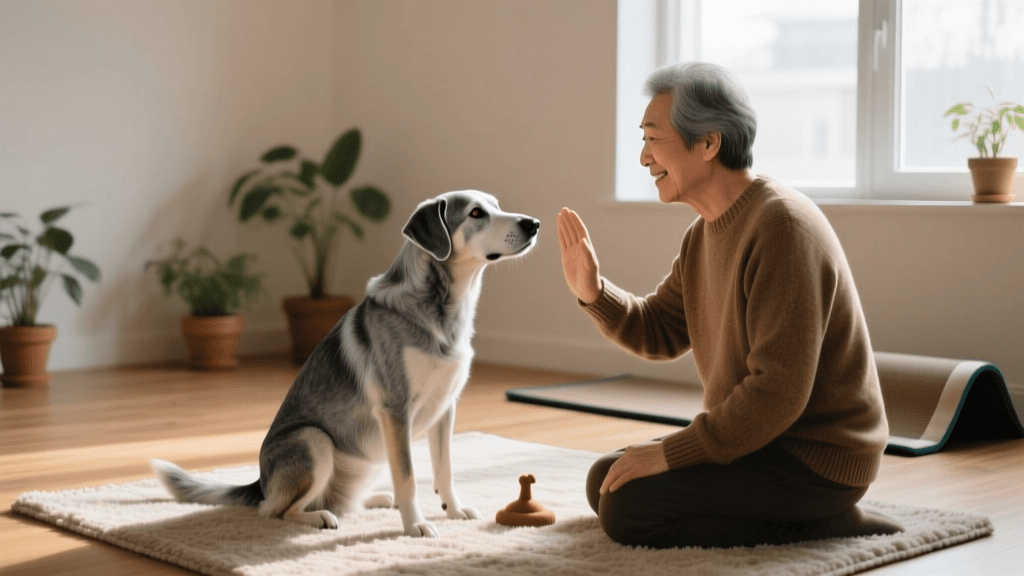
| Sit | Touch (Hand Target) | Eliminates the need to fold the hindquarters, reducing pressure on the hips and lower spine. |
| Down | Settle (On a specific mat) | Allows the dog to find their own comfortable resting position rather than forcing a rigid sphinx-like posture. |
| Come (Recall) | Recall to a Chair/Stool | Rewards the dog at an elevated, easily accessible surface so the owner does not need to bend down, and the dog feels engaged at eye level. |
| Stay | Wait (Duration reduced) | Shifts focus from rigid physical immobility to impulse control, allowing for minor, comfortable weight shifts. |
Managing Cognitive Decline and Sensory Loss
Canine Cognitive Dysfunction (CCD) is a prevalent condition in aging dogs, sharing many pathological similarities with Alzheimer’s disease in humans. Symptoms include disorientation, altered sleep-wake cycles, and a decrease in learned behaviors. The Cornell University College of Veterinary Medicine notes that early intervention through environmental enrichment and targeted cognitive training can significantly slow the progression of CCD symptoms.
Instead of repetitive physical drills, pivot to scent-based and puzzle-oriented training. Scent work capitalizes on a dog’s most powerful sense, providing immense mental fatigue without physical strain. Hide high-value, low-calorie treats (such as Zuke’s Mini Naturals, which cost about $8 for a 4-ounce bag) inside a specialized snuffle mat (approximately $25). Alternatively, introduce interactive puzzle toys like the Nina Ottosson Dog Brick Intermediate Puzzle ($15). Start by leaving the puzzle compartments completely open, allowing your senior dog to easily access the reward. Gradually increase the difficulty over several weeks, ensuring the dog never becomes overly frustrated, which can lead to stress-induced hypertension.
Training Around Sensory Deficits
Sensory deficits are an inevitable part of the aging process. If your dog is experiencing presbycusis (age-related hearing loss), verbal markers like 'Good boy' or clicker sounds may no longer register. Transition to visual hand signals or tactile feedback. A gentle, two-finger tap on the shoulder can serve as a marker for a correct behavior, immediately followed by a food reward. For dogs developing cataracts or nuclear sclerosis, which clouds their vision, rely on scent trails and tactile markers. You can use distinct, dog-safe essential oil scents (safely diluted) on cotton swabs to guide them to their bed or feeding station, turning navigation into a rewarding training game.
Addressing House-Training Regression
One of the most distressing aspects of senior dog ownership is house-training regression. This is rarely a behavioral issue rooted in disobedience; rather, it is typically a medical or physiological limitation. Weakened urethral sphincters, chronic kidney disease, and canine diabetes can drastically reduce a dog’s ability to 'hold it.' The American Kennel Club (AKC) advises owners to adjust their expectations and management strategies rather than punishing the dog for involuntary accidents.
Implement a proactive elimination schedule. If your adult dog previously required three outdoor breaks a day, increase this to five or six shorter outings. Track their water intake and anticipate bathroom needs roughly 45 to 60 minutes after drinking. For overnight management or for owners who work long hours, introduce washable, reusable pee pads like the Pet Parents PawGanics Washable Pads (about $30 for a three-pack). Train your dog to use these pads using the same positive reinforcement techniques you would use for outdoor potty training, rewarding heavily with a specific visual hand signal and a premium treat immediately upon elimination.
A Sample Daily Training and Enrichment Schedule
Senior dogs thrive on predictable routines that balance mental stimulation with ample rest. Below is a structured daily schedule designed to keep your aging dog engaged without causing physical exhaustion.
- 8:00 AM - Morning Potty & Scent Walk (20 mins): Allow your dog to sniff extensively. Sniffing lowers the heart rate and provides mental enrichment. Keep the leash loose and let them dictate the pace.
- 10:30 AM - Puzzle Toy Session (10 mins): Serve a portion of their daily kibble inside a Nina Ottosson puzzle toy or a Kong Senior (specifically designed with softer rubber for aging teeth, ~$15).
- 1:00 PM - Mid-Day Potty & Gentle Sunning (15 mins): A brief outdoor break followed by resting in a warm, sunny spot to soothe arthritic joints.
- 4:00 PM - Hand Signal Review (5 mins): Conduct a brief, low-impact training session in the living room using non-slip mats. Practice 'Touch', 'Wait', and 'Settle' using high-value rewards.
- 7:00 PM - Evening Potty & Massage (15 mins): Final outdoor break followed by a gentle canine massage to improve circulation and reinforce bonding before bedtime.
Conclusion
Training a senior dog requires empathy, patience, and a willingness to adapt. By shifting your focus from physical compliance to cognitive enrichment and comfort, you can dramatically improve your older dog's quality of life. Remember that the goal of training in the golden years is not perfection, but rather the preservation of joy, independence, and the profound connection you have built over a lifetime together. Always consult with your veterinarian or a certified veterinary behaviorist before starting a new training regimen to ensure it aligns with your dog's specific medical needs.
beth-carrasco
All our authors care for dogs every day — read more of their work on the authors page.