Senior Dog Training: Adapting Obedience For Aging Canines
Discover how to adapt obedience training and tricks for senior dogs. Learn age-appropriate routines, joint-friendly tips, and cognitive enrichment strategies.
The Golden Years: Why Training Shouldn't Stop
Welcome to the Life Stage Care Guides, where we tailor our canine care advice to the specific developmental and aging phases of your dog's life. When we think of dog training, we often picture energetic puppies learning to sit or adolescent dogs mastering leash manners. However, training is a lifelong journey. As your dog enters their senior years—typically around age seven to ten, depending on the breed—their physical and cognitive needs shift dramatically. According to the ASPCA's Senior Dog Care guidelines, older dogs still require mental stimulation and structured routines to maintain their quality of life. In fact, continuing to train your senior dog can slow cognitive decline, strengthen your bond, and provide them with a comforting sense of purpose. This guide will explore how to adapt obedience training, trick teaching, and behavioral conditioning specifically for the aging canine body and mind.
Physical Adjustments: Accommodating Joints and Mobility
The most significant hurdle in senior dog training is managing physical limitations. Osteoarthritis affects an estimated 80% of dogs over the age of eight, making traditional commands like 'sit' or 'down' uncomfortable or even painful. Before beginning any training session, it is crucial to consult your veterinarian to understand your dog's specific mobility constraints.
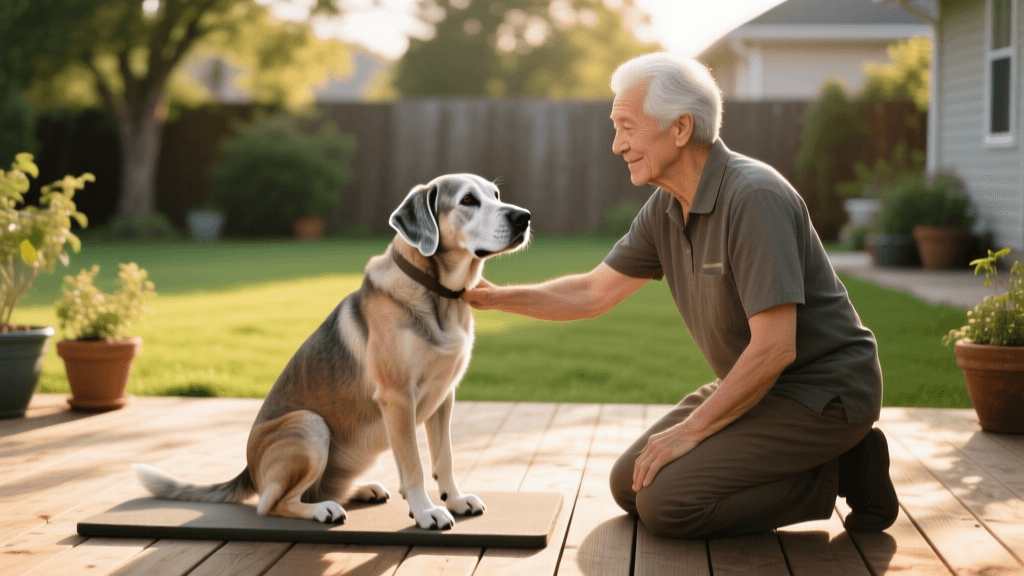
To create a joint-friendly training environment, invest in supportive gear. For example, the Kuranda Chewproof Dog Bed (approximately $130) provides orthopedic, elevated support that is much easier for arthritic dogs to mount and dismount than traditional plush beds. When practicing 'place' or 'settle' commands, use this bed or a thick orthopedic mat rather than a hard floor.
Timing and Duration: Senior dogs fatigue quickly. Replace your standard 15-minute training blocks with micro-sessions. Aim for 3 to 5 minutes of training, twice a day. This prevents joint stiffness and mental exhaustion while keeping the learning process positive. If your training involves moving between rooms or entering vehicles, utilize a ramp like the PetSafe Happy Ride Folding Ramp (62 inches long, approximately $70) to eliminate the need for jumping, which can exacerbate hip dysplasia and spinal issues.
Adapting Core Commands for Senior Limitations
Just because your dog can no longer physically perform a command does not mean they have forgotten it. As part of our Life Stage Care Guides, we recommend swapping high-impact physical commands for low-impact cognitive alternatives. Below is a structured comparison chart to help you adapt your obedience vocabulary.
| Standard Command | Senior Adaptation | Why It Works & How to Train |
|---|---|---|
| Sit | Hand Target (Touch) | Reduces strain on hips and knees. Hold your palm out; reward when their nose touches it. Cost: $0 (use existing treats). |
| Down | Settle on Mat | Lying down on hard floors is painful. Teach them to lie exclusively on an orthopedic mat using lure-and-reward shaping. |
| Fetch | Scent Work / Find It | Removes the need for sudden sprinting and hard stops. Hide treats in a snuffle mat or around the room to engage their nose. |
| Recall (Come) | Whistle or Vibration | Seniors often lose hearing or vision. A gentle vibration collar or specific whistle pitch provides a reliable, non-startling cue. |
By modifying your expectations and commands, you respect your dog's physical boundaries while keeping their obedience sharp. The American Veterinary Medical Association (AVMA) emphasizes that adapting your home and routines to your senior pet's changing abilities is a cornerstone of responsible geriatric care.
Cognitive Enrichment and Brain Games
Canine Cognitive Dysfunction (CCD) is a condition similar to Alzheimer's disease in humans, affecting a significant portion of the senior dog population. Symptoms include disorientation, altered sleep-wake cycles, and forgetting previously learned commands. The American Kennel Club (AKC) notes that mental enrichment and novel learning tasks can help build cognitive reserve and delay the onset of CCD symptoms.
Instead of physical tricks, pivot your training toward brain games and puzzle-solving. Introduce interactive puzzle toys like the Outward Hound Nina Ottosson Dog Brick Puzzle (approximately $15). Start at the easiest difficulty level to build confidence, and gradually increase the complexity as your dog learns to slide and lift the compartments.
Treat Management: When doing repetitive cognitive training, caloric intake can quickly become an issue, as senior dogs have slower metabolisms. Use ultra-low-calorie training rewards like Zuke's Mini Naturals (under 3 calories per treat, approximately $8 for a 16oz bag). Ensure that training treats make up no more than 10% of your dog's daily caloric intake to prevent obesity, which puts devastating stress on aging joints.
Navigating Sensory Decline: Vision and Hearing Loss
It is incredibly common for senior dogs to experience a decline in their vision and hearing. Cataracts, nuclear sclerosis, and presbycusis (age-related hearing loss) can make traditional verbal and hand-signal training ineffective. However, dogs are remarkably adaptable, and you can retrain them using their remaining senses.
For Hearing Impaired Dogs: Transition from verbal cues to visual signals or tactile feedback. American Sign Language (ASL) basics work wonderfully for dogs. For recall, consider a vibration collar such as the Dogtra iQ Plus (approximately $150). Unlike shock collars, which should never be used on senior dogs, vibration collars provide a gentle, physical 'tap' that gets your dog's attention without causing pain or anxiety. Pair the vibration with a high-value reward like boiled chicken breast to create a positive association.
For Visually Impaired Dogs: Rely on scent markers and auditory cues. You can train your dog to follow a specific scent trail using a dab of dog-safe essential oil (like lavender or anise) on a target object. Use consistent verbal markers and a 'step up' or 'step down' command to help them navigate stairs and curbs safely. Never rearrange your furniture, as blind or partially blind senior dogs map their environment spatially and rely on memory to navigate.
Creating a Senior-Friendly Training Environment
The environment in which you train your senior dog plays a massive role in their success and safety. Slippery surfaces like hardwood or tile can cause a senior dog's legs to splay out, leading to muscle strains or severe ligament tears. Before initiating any standing or moving training exercises, lay down interlocking foam floor mats (approximately $30 for a 6-pack). These provide the necessary traction for arthritic paws to grip without slipping.
Additionally, consider the lighting and temperature. Older dogs have poorer night vision and are more sensitive to cold drafts. Train in well-lit, warm areas of the house. If your dog is easily startled by sudden noises—a common symptom of cognitive decline—use a white noise machine in the background to muffle outside traffic or neighborhood sounds during your training sessions.
Conclusion
Training a senior dog is less about achieving perfect obedience and more about maintaining their physical comfort, mental acuity, and emotional well-being. By adapting your commands, utilizing joint-friendly products, and focusing on cognitive enrichment, you honor the years of loyalty your dog has given you. Remember to be patient, celebrate the small victories, and let your dog's comfort dictate the pace of your sessions. Through these tailored Life Stage Care Guides, you can ensure your aging companion remains engaged, happy, and deeply connected to you throughout their golden years.
jonas-cole
All our authors care for dogs every day — read more of their work on the authors page.