Fueling Focus: Meal Timing and Treats for Dog Training
Discover how strategic meal timing and healthy treat selection can boost your dog's focus, prevent obesity, and accelerate obedience training results.
The Intersection of Canine Nutrition and Behavioral Conditioning
Dog training is frequently viewed through the exclusive lens of psychology, operant conditioning, and behavioral science. However, as a cornerstone of canine health and wellness, nutrition plays an equally critical, yet often overlooked, role in how effectively your dog learns. A dog's ability to focus, retain new commands, and maintain impulse control is directly tethered to their metabolic state, blood glucose levels, and gastrointestinal comfort. When we approach obedience training from a 'Health and Nutrition Deep Dive' perspective, we unlock new pathways to accelerate learning while simultaneously safeguarding our dogs against the rising epidemic of canine obesity.
According to the Association for Pet Obesity Prevention (APOP), over 55% of dogs in the United States are classified as overweight or obese. A significant contributor to this crisis is the unmonitored use of high-calorie training treats. By understanding the biological link between diet and cognition, owners can utilize strategic meal timing and carefully selected, nutrient-dense rewards to maximize training efficacy without compromising their dog's physical health.
The Biological Link Between Nutrition and Canine Cognition
The canine brain is a metabolically demanding organ. Despite accounting for only a small percentage of a dog's total body weight, the brain consumes a disproportionate amount of the body's glucose and oxygen. During intensive training sessions—such as learning complex agility sequences, mastering scent work, or practicing duration stays in high-distraction environments—the brain's demand for readily available energy spikes.
If a dog's blood sugar is too low (hypoglycemia), they may exhibit signs of lethargy, confusion, and an inability to focus. Conversely, if a dog consumes a massive, high-carbohydrate meal immediately before a training session, their body will divert blood flow and energy away from the brain and toward the digestive system, resulting in a 'food coma' or postprandial somnolence. To optimize cognitive function, trainers and owners must balance the timing of meals and the glycemic impact of the treats used during the session. Incorporating diets rich in Omega-3 fatty acids (specifically DHA and EPA) has also been clinically shown to support neuroplasticity and memory retention in canines, making the foundational diet just as important as the training rewards.
Strategic Meal Timing: Harnessing the Appetite Drive
One of the most common mistakes novice trainers make is attempting to conduct obedience sessions immediately after the dog has eaten their daily meal. While a satiated dog is comfortable, they lack the primary biological drive that makes food-based positive reinforcement effective: appetite.
To leverage a dog's natural foraging and hunting instincts, training should be scheduled during a mild fasting window. For most adult dogs, this means scheduling your most demanding training sessions roughly 30 to 45 minutes before their scheduled dinner. During this window, the dog's ghrelin levels (the hunger hormone) are rising, increasing their motivation to work for food rewards without crossing the threshold into stress or starvation. Puppies, who require more frequent feeding due to their rapid growth and smaller glycogen reserves, should be trained on a lighter schedule, perhaps right before their midday or evening meal, ensuring they never go more than a few hours without appropriate caloric intake.
The 10% Rule and Caloric Deduction
When utilizing food as a primary reinforcer, the volume of treats consumed during a 20-minute high-repetition session can be staggering. The World Small Animal Veterinary Association (WSAVA) Global Nutrition Committee strictly advises that treats and supplemental calories should never exceed 10% of a dog's total daily caloric intake. The remaining 90% must come from a complete and balanced commercial or veterinarian-formulated diet to prevent severe micronutrient deficiencies.
To adhere to the 10% rule while still providing high-value rewards, you must practice 'caloric deduction.' If your dog requires 800 calories per day to maintain an ideal body condition score (BCS), a maximum of 80 calories can be allocated to training treats. If you are using a standard training treat that contains 5 calories per piece, you have a budget of exactly 16 treats per day. If your session requires 30 repetitions, you must either break those treats into micro-pieces (the size of a pea) or deduct the caloric equivalent from their dinner bowl. A practical rule of thumb is to remove roughly 1/4 cup of standard dry kibble for every 100 calories of treats consumed during the day's training sessions.
Training Treat Comparison Chart: Health and Efficacy
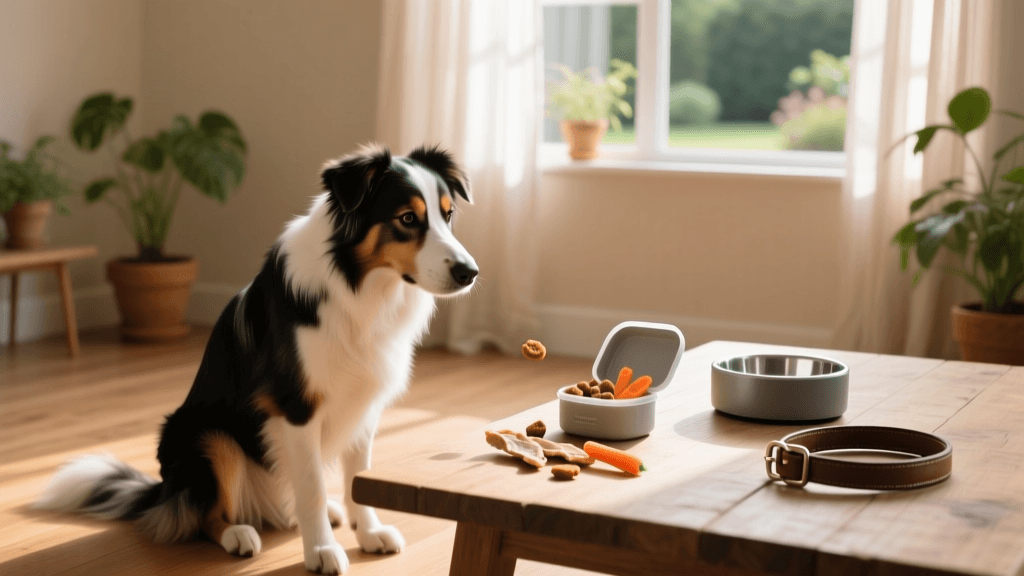
Not all treats are created equal. High-value treats are necessary for proofing behaviors in distracting environments, but they often carry a heavy caloric and fat load. Below is a structured comparison of common training rewards, evaluated through a nutritional lens to help you make informed, health-conscious decisions.
| Treat Type | Brand / Example | Calories / Piece | Crude Protein | Crude Fat | Best Training Use Case |
|---|---|---|---|---|---|
| Low-Cal Kibble | Dog's Regular Diet | 3 - 5 kcal | Varies | Varies | Basic obedience, indoor luring, high-repetition shaping. |
| Soft & Chewy | Zuke's Mini Naturals | ~3 kcal | 14% min | 4% min | Agility, recall practice, maintaining focus without GI upset. |
| Freeze-Dried Liver | Stewart Pro-Treat Beef Liver | ~2 kcal (crumb) | 80% min | 2% min | High-distraction environments, fear counter-conditioning. |
| Peanut Butter | KONG Classic Stuffing (Unsweetened) | ~90 kcal / tbsp | 25% min | 50% min | Crate training, duration stays, grooming desensitization. |
| Boiled Chicken Breast | Homemade (Skinless, Unsalted) | ~3 kcal (pea-size) | 85% min | 3% min | Dogs with severe food allergies or sensitive stomachs. |
Note: Always consult your veterinarian before introducing novel proteins or high-fat treats, especially for breeds predisposed to pancreatitis (e.g., Miniature Schnauzers, Yorkshire Terriers).
Managing Gastrointestinal Health During High-Volume Sessions
A deep dive into training nutrition must address the gastrointestinal (GI) tract. Rapid consumption of varied, high-protein, or high-fat treats during a single session can disrupt the canine gut microbiome, leading to osmotic diarrhea, vomiting, or acute gastroenteritis. This is particularly common in dogs with sensitive stomachs or inflammatory bowel disease (IBD).
To mitigate GI upset while maintaining high training value, utilize the 'base and spike' method. Use the dog's hypoallergenic or sensitive-stomach prescription kibble as the 'base' reward for 80% of the session's repetitions. Reserve the 'spike'—a novel, high-value protein like freeze-dried salmon or boiled chicken—only for the most difficult behaviors or the final 'jackpot' reward. Furthermore, according to experts at Tufts University's Cummings Veterinary Medical Center, avoiding treats with excessive artificial preservatives, glycerin, or high sugar content (like molasses) will significantly reduce the likelihood of training-induced diarrhea.
Sample Daily Training and Nutrition Schedule
To put these health and nutrition principles into action, here is a sample daily schedule for a 40-pound, moderately active adult dog requiring approximately 900 kcal per day. This schedule ensures optimal cognitive focus, respects the 10% treat rule, and prevents obesity.
- 7:00 AM - Breakfast & Decompression: Feed 70% of the daily kibble ration (approx. 630 kcal). Allow 2 hours for digestion and a light sniff-walk to promote gut motility.
- 12:00 PM - Cognitive Enrichment: Use 10% of the daily kibble ration (90 kcal) inside a snuffle mat or puzzle toy. This provides mental stimulation without adding extra treat calories.
- 4:30 PM - Fasting Window Begins: Water is available ad libitum, but no food is provided. Ghrelin levels begin to rise, increasing the dog's drive and focus.
- 5:15 PM - Core Obedience Training Session (20 mins): Utilize Zuke's Mini Naturals (3 kcal each) and pea-sized pieces of boiled chicken breast. Budget: 20 treats (approx. 60 kcal). Focus on high-repetition heel work and recall.
- 5:45 PM - Dinner & Post-Training Recovery: Feed the remaining 20% of the daily kibble ration mixed with the remaining treat allowance (approx. 120 kcal total). Feeding immediately after training capitalizes on the Premack principle and reinforces the training session as a successful 'hunt'.
Conclusion
Effective dog training is not just about the mechanics of the clicker or the timing of the leash; it is deeply rooted in the physiological well-being of the animal. By viewing obedience training through the lens of health and nutrition, owners can strategically manipulate meal timing to enhance focus, select nutrient-dense and low-calorie rewards to prevent obesity, and protect the canine gut microbiome during intensive learning periods. When we fuel our dogs correctly, we do not just build better-behaved companions; we cultivate healthier, happier, and more cognitively vibrant partners for life.
tom-renshaw
All our authors care for dogs every day — read more of their work on the authors page.