Senior Dog Training: Adapting Obedience for Aging Dogs
Discover how to adapt obedience training and cognitive enrichment for senior dogs. Learn low-impact exercises, brain games, and life stage care tips.
Why Training Matters in Your Dog's Golden Years
When we think of dog training, we often picture rambunctious puppies learning to sit or adolescent dogs mastering leash manners. However, as part of comprehensive life stage care guides, it is crucial to recognize that training is a lifelong endeavor. Senior dogs—typically defined as those over seven years old for large breeds and over ten for small breeds—experience profound physical and cognitive changes. According to the American Animal Hospital Association (AAHA), proactive mental and physical engagement can significantly improve the quality of life for aging pets, delaying the onset of age-related decline and managing chronic conditions like osteoarthritis.
Training your senior dog is not about teaching them to perform high-impact agility courses or rigorous obedience drills. Instead, it focuses on cognitive preservation, low-impact mobility maintenance, and strengthening the bond between you and your aging companion. By adapting your training methods to suit their changing life stage, you can help your dog navigate their golden years with confidence, comfort, and joy.
Adapting Physical Obedience for Senior Joints
One of the most common life stage changes in older dogs is the development of osteoarthritis or general joint stiffness. Repetitive motions, such as the classic "sit-down-sit" drill or jumping over hurdles, can cause micro-traumas and exacerbate pain. To adapt your obedience training, you must prioritize joint health and comfort.
Use Orthopedic Training Mats
Slippery floors are a senior dog's worst enemy, often leading to splaying and hip strain. When practicing commands like "place," "down," or "stay," always use a high-traction, orthopedic surface. Invest in a raised cot like the Kuranda Dog Bed (approximately $120 to $150) or a dense memory foam mat. These provide joint relief and give your dog a clear, safe boundary for mat training without the strain of getting up from a hard floor.
Modify the "Down" and "Sit" Commands
If your dog hesitates to lie down or struggles to stand back up, do not force the repetition. Instead, train a "settle" or "chin rest" command. Teaching your dog to rest their chin on a target (like a small cushion or your hand) engages their brain and reinforces focus without requiring them to fold their aching joints into a sphinx position.
Cognitive Enrichment: Brain Games for Aging Minds
Mental stimulation is just as exhausting—and beneficial—as physical exercise. For a senior dog with limited mobility, 15 minutes of scent work or puzzle-solving can burn as much energy as a one-mile walk. Cognitive enrichment helps build "cognitive reserve," which can protect against age-related mental decline.
Scent Work and Nose Games
A dog's olfactory system remains highly functional well into their senior years. Scent work is an excellent, low-impact training activity. Start by hiding high-value, soft treats (like Zuke's Mini Naturals, which are only 3.5 calories each and cost around $6 per bag) in a snuffle mat or around the living room. Use the cue "find it" and let your dog use their nose to forage. This taps into their natural hunting instincts and provides immense mental satisfaction.
Interactive Puzzle Toys
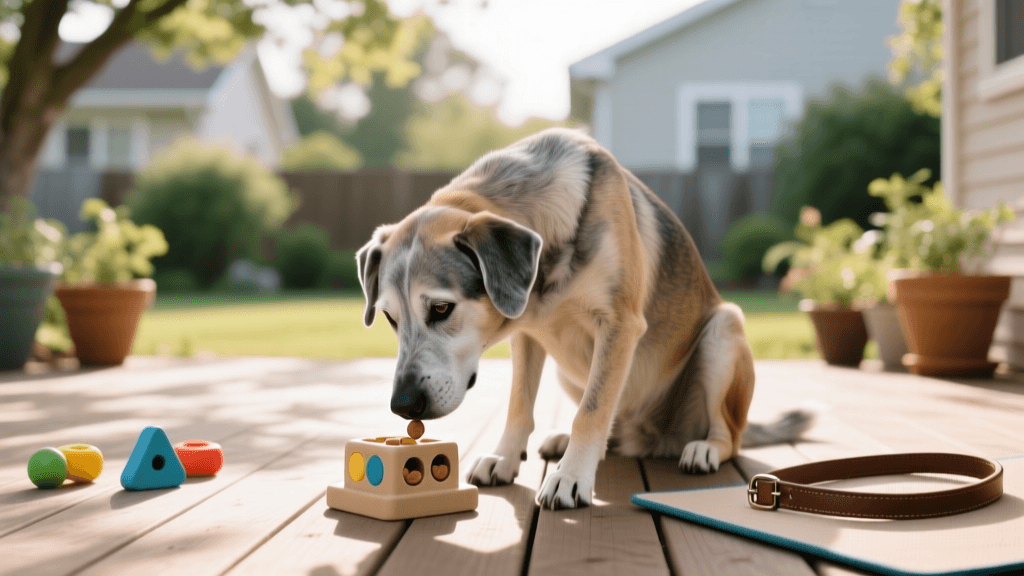
Puzzle toys require dogs to use their paws and snouts to uncover hidden rewards. The Nina Ottosson by Outward Hound Dog Brick puzzle (priced around $15 to $25) is an excellent entry-level cognitive tool. It requires sliding and lifting compartments, which promotes problem-solving and fine motor skills without demanding heavy physical exertion.
Comparison Chart: Traditional vs. Senior-Adapted Training
Understanding how to pivot your training expectations is a cornerstone of life stage care. Below is a structured comparison to help you adapt your daily routines.
| Training Exercise | Traditional Method | Senior-Adapted Method | Life Stage Benefit |
|---|---|---|---|
| Recall ("Come") | Calling from across a large park; dog runs at full speed. | Short-distance recalls in a hallway or using a long-line with a slow, encouraging pace. | Prevents sudden joint impact and slipping on grass or hardwood. |
| Mat Training ("Place") | Sending the dog to a flat mat on a slippery floor. | Directing the dog to a raised, orthopedic cot or thick memory foam bed. | Reduces hip and elbow strain when lying down and standing up. |
| Trick Training | Rolling over, jumping through hoops, or weaving through legs. | Hand targeting, "speak," or "touch" (nose to hand). | Engages the brain and builds focus without spinal torsion or jumping. |
| Impulse Control | "Leave it" with a treat dropped on the floor from a height. | "Leave it" with a treat placed gently on a low table or in your open palm. | Eliminates the need for sudden downward neck movements or floor-level scavenging. |
Recognizing and Managing Canine Cognitive Dysfunction (CCD)
As dogs age, they may develop Canine Cognitive Dysfunction (CCD), a condition similar to Alzheimer's disease in humans. According to the Cornell University College of Veterinary Medicine, CCD affects a significant percentage of dogs over the age of 11. Symptoms include disorientation, altered sleep-wake cycles (sundowning), decreased interaction with family, and house-soiling.
While training cannot cure CCD, structured cognitive exercises can help manage the symptoms and slow the progression of the disease. Maintaining a predictable daily routine, using the same verbal cues, and engaging in gentle, daily scent work can provide a sense of security for a confused senior dog. If your dog begins to pace at night or stare blankly at walls, consult your veterinarian. They may recommend dietary supplements rich in Omega-3 fatty acids and antioxidants, alongside a modified behavioral enrichment plan.
Diet and Treat Adjustments for Senior Training Sessions
Senior dogs generally have slower metabolisms and lower caloric needs, meaning you must be strategic about the treats you use during training to prevent obesity—a major aggravator of joint disease.
- Calorie Tracking: Treats should make up no more than 10% of your dog's daily caloric intake. For a 50-pound senior dog on a 900-calorie diet, that is only 90 calories of treats per day.
- Texture Matters: Older dogs often suffer from periodontal disease or missing teeth. Swap hard, crunchy biscuits for soft, pliable treats. Brands like Cloud Star Tricky Trainers ($8 for 16 oz) offer a soft texture that is easy on aging gums.
- Alternative Rewards: Not all rewards need to be food. For a senior dog, a gentle chest massage, a slow brush session, or simply quiet verbal praise can be just as reinforcing as a treat, especially if they are on a calorie-restricted veterinary diet.
Sample Weekly Training Schedule for the Senior Dog
Consistency is key, but brevity is essential. Senior dogs fatigue quickly, both physically and mentally. Keep sessions to 3 to 5 minutes, two or three times a day.
- Monday: Morning scent work (5 mins) in the living room. Evening "chin rest" and gentle handling exercises (3 mins).
- Tuesday: Short-leash "heel" practice in the yard (5 mins) focusing on slow, deliberate steps. Evening puzzle toy dinner.
- Wednesday: "Place" command practice on an orthopedic bed (3 mins). Gentle massage and passive range-of-motion (PROM) stretches as a reward.
- Thursday: Hand-targeting tricks (5 mins) to encourage neck mobility and mental focus. Evening snuffle mat foraging.
- Friday: Recall practice using a long-line in a safe, flat grassy area (5 mins). Focus on calm, low-speed returns.
- Weekend: "Decompression walks" in nature. No strict obedience required; allow the dog to sniff and explore at their own pace to stimulate their brain and provide low-impact physical therapy.
Final Thoughts on Life Stage Care and Training
Adapting your training approach to meet the needs of your senior dog is one of the most compassionate aspects of life stage care. By swapping high-impact obedience for cognitive enrichment, utilizing joint-friendly equipment, and keeping a close eye on their mental acuity, you ensure that your dog's twilight years are as enriching and fulfilling as their youth. Remember, the goal of senior training is not perfection; it is connection, comfort, and preserving the vibrant spark in your aging best friend's eyes.
tom-renshaw
All our authors care for dogs every day — read more of their work on the authors page.