Adopting a Senior Dog With OA: 2026 Home Prep & Care
Adopting a senior dog with osteoarthritis? Discover 2026 home prep essentials, first-day tips, and the latest OA treatments to keep your new pet comfortable.
Welcoming a Senior Rescue: The Reality of Canine OA
Choosing to adopt a senior dog or a large-breed rescue with a known history of joint issues is one of the most compassionate decisions a prospective pet parent can make. However, bringing home a dog with canine osteoarthritis (OA) requires more than just love; it demands strategic home preparation, a solid understanding of modern veterinary care, and a commitment to ongoing management. As we navigate the veterinary landscape in 2026, the approach to treating and managing canine OA has evolved dramatically, offering unprecedented comfort and mobility for aging joints.
According to the American Kennel Club, osteoarthritis is a progressive, degenerative disease that affects the cartilage and surrounding tissues of the joints. When you decide to adopt a dog with OA, you are signing up to be their advocate for pain management and mobility support. This guide will walk you through the essential first-day preparations, the latest 2026 treatment protocols, and the nutritional strategies you need to ensure your new companion thrives in their forever home.
First-Day Home Prep: Creating an OA-Friendly Environment
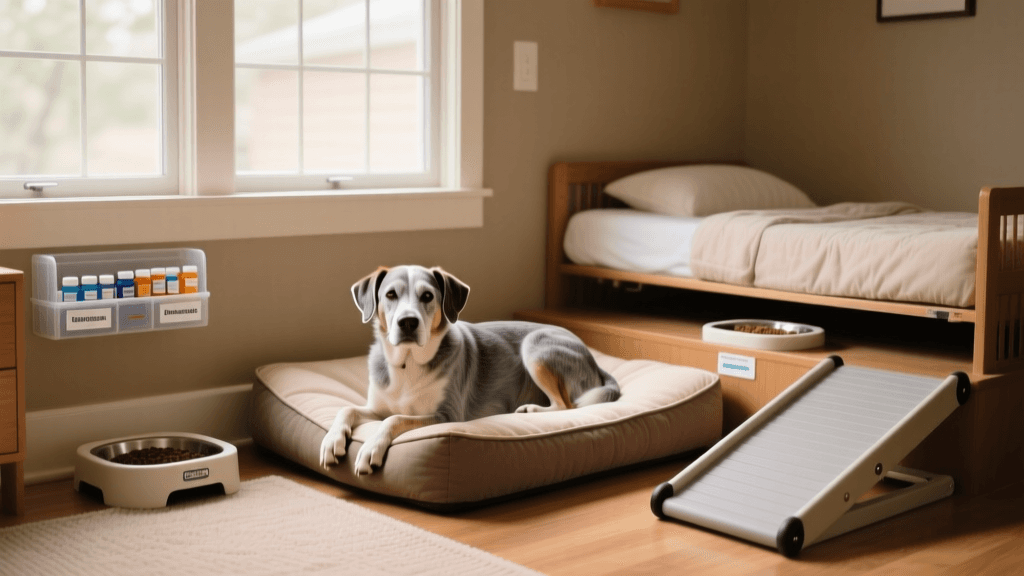
Before your new dog crosses the threshold, your home must be optimized to minimize joint strain. Dogs with OA struggle with slippery surfaces, steep inclines, and hard resting spots. Addressing these environmental hazards on day one is critical to preventing acute flare-ups.
Strategic Flooring and Traction
Hardwood, tile, and laminate floors are the enemy of arthritic joints. A single slip can cause micro-trauma to compromised hips or knees. Before adoption day, lay down non-slip area rugs, interlocking foam mats, or specialized canine traction rugs in high-traffic areas. Focus specifically on the pathways between your dog's bed, their feeding station, and the door to the yard. If you have stairs, install pressure-mounted baby gates to restrict access until you can assess your dog's mobility and confidence.
Orthopedic Resting Zones
Standard dog beds do not provide adequate support for OA. You must invest in a high-density, medical-grade orthopedic bed. Look for beds featuring at least 4 to 6 inches of supportive memory foam that do not compress entirely under your dog's weight. For large breeds like German Shepherds or Golden Retrievers, ensure the bed is large enough for them to stretch out fully without their joints resting on the hard floor. Place these beds in draft-free, warm areas of the home, as cold temperatures can exacerbate joint stiffness.
Ramps and Accessibility Aids
Jumping onto a couch or into the back of an SUV can generate forces equivalent to several times a dog's body weight on their front limbs and spine. Procure a lightweight, foldable ramp with a high-traction surface and a gentle incline (ideally less than 18 degrees) for vehicle loading. For indoor furniture, consider pet stairs with deep, wide treads and side rails to provide a sense of security for visually impaired or anxious senior dogs.
The 2026 Veterinary Landscape: Advanced OA Treatments
The most significant advantage of adopting a dog in 2026 is the access to revolutionary veterinary therapies that were largely unavailable or in their infancy a decade ago. Modern OA management has shifted away from relying solely on daily oral medications that can tax the liver and kidneys, moving toward targeted biologic therapies.
Anti-NGF Monoclonal Antibodies
The gold standard for canine OA pain management in 2026 involves monoclonal antibodies (mAbs) that target Nerve Growth Factor (NGF). NGF is a protein that becomes elevated in arthritic joints and is responsible for transmitting pain signals to the brain. By neutralizing NGF, these therapies effectively turn down the volume on joint pain without interfering with the liver or kidney function, making them exceptionally safe for senior dogs with underlying metabolic conditions.
According to clinical guidelines highlighted by the American Animal Hospital Association (AAHA), managing OA requires a multimodal approach. Monthly injections administered by your veterinarian have become the cornerstone of this approach, providing consistent, round-the-clock pain relief that oral medications often fail to maintain due to missed doses or variable absorption rates.
Multimodal Therapy and Rehabilitation
Treatment in 2026 is rarely a single-pill solution. Veterinary rehabilitation therapists now utilize a combination of underwater treadmill therapy, therapeutic laser (photobiomodulation), and targeted acupuncture to maintain muscle mass and joint flexibility. When you adopt a dog with OA, budget for an initial consultation with a certified canine rehabilitation practitioner to establish a customized physical therapy routine that you can safely continue at home.
Nutrition, Weight Management, and Joint Supplements
One of the most powerful, yet entirely controllable, factors in managing canine OA is body weight. Every extra pound places exponential stress on arthritic joints. Upon bringing your new dog home, work with your veterinarian to determine their ideal lean body condition score (BCS). In many cases, an arthritic dog should be kept at the lower end of the normal BCS range (a 4 out of 9) to minimize mechanical loading on the hips and knees.
Targeted Joint Nutrition
Beyond calorie control, the biochemical environment of the joint can be supported through specific nutraceuticals. In 2026, veterinary nutritionists heavily recommend diets or supplements rich in EPA and DHA (Omega-3 fatty acids derived from marine sources), which possess potent natural anti-inflammatory properties. Additionally, supplements containing green-lipped mussel extract, undenatured type II collagen, and curcumin have shown excellent efficacy in supporting cartilage matrix health and reducing inflammatory cytokines.
Always consult your veterinarian before introducing over-the-counter supplements, as the market is flooded with products that lack bioavailability or fail to meet label claims. Your vet can recommend clinically tested, veterinary-exclusive joint diets that are formulated to therapeutic levels.
2026 Canine OA Management Comparison Guide
To help you budget and plan for your new dog's care, here is a structured overview of the primary OA management options available in 2026. Note that costs are approximate and vary by region, veterinary clinic, and the specific weight of your dog.
| Treatment Modality | Administration & Frequency | Estimated 2026 Cost (Monthly) | Primary Benefit for OA Dogs |
|---|---|---|---|
| Anti-NGF Monoclonal Antibodies | Subcutaneous injection by Vet (Every 4 weeks) | $80 - $160 | Targeted pain relief; zero liver/kidney toxicity. |
| Prescription NSAIDs | Oral chew or liquid (Daily or as needed) | $40 - $90 | Rapid reduction of acute joint inflammation. |
| Therapeutic Laser (Cold Laser) | In-clinic sessions (1-2 times per week initially) | $50 - $100 per session | Stimulates cellular repair and reduces localized swelling. |
| Omega-3 Joint Supplements | Oral pump or capsule (Daily) | $25 - $60 | Systemic anti-inflammatory support for cartilage. |
| Orthopedic Memory Foam Bed | Environmental (One-time purchase) | $120 - $250 (Upfront) | Prevents pressure sores and supports spinal alignment. |
Your First Month: Establishing a Baseline
The first 30 days after adopting a dog with OA are crucial for establishing a baseline. Keep a daily digital journal noting your dog's stiffness levels in the morning, their willingness to go on walks, and any signs of hesitation when navigating stairs or jumping. This data will be invaluable during your first veterinary follow-up.
Remember that dogs are stoic creatures; they rarely vocalize chronic pain. Instead, pain manifests as behavioral changes, such as reluctance to be groomed, irritability when touched near the hips, or a decrease in overall activity. By combining a meticulously prepared home environment with the advanced, targeted therapies available in 2026, you can provide your newly adopted senior dog with a vibrant, comfortable, and deeply rewarding second chapter in life.
priya-sutaria
All our authors care for dogs every day — read more of their work on the authors page.