Senior Dog Care: Adapting Your Home and Daily Routine
Discover practical senior dog care tips. Learn how to adapt your home, adjust daily routines, and manage costs to keep your aging dog comfortable and happy.
Embracing the Golden Years: A Guide to Senior Dog Care
Watching your vibrant, energetic puppy slowly transition into a gray-muzzled senior is one of the most bittersweet experiences of pet ownership. While their spirit often remains youthful, their bodies require a different approach to daily living. According to the American Veterinary Medical Association (AVMA), dogs are generally considered seniors when they reach the last 25% of their expected lifespan. For giant breeds, this can be as early as five or six years old, while small terriers might not show signs of aging until they are ten or eleven.
Adapting your home environment and daily routine is not just about managing pain or mobility issues; it is about preserving your dog's dignity, independence, and overall quality of life. This comprehensive guide will walk you through practical, actionable steps to transform your home and schedule into a senior-dog-friendly haven.
Home Modifications for Senior Dog Comfort
Hardwood, tile, and laminate floors are aesthetically pleasing and easy to clean, but they are notoriously treacherous for aging dogs suffering from arthritis or general muscle weakness. A single slip can lead to a catastrophic injury like a torn cruciate ligament or a hip fracture.
Flooring and Traction
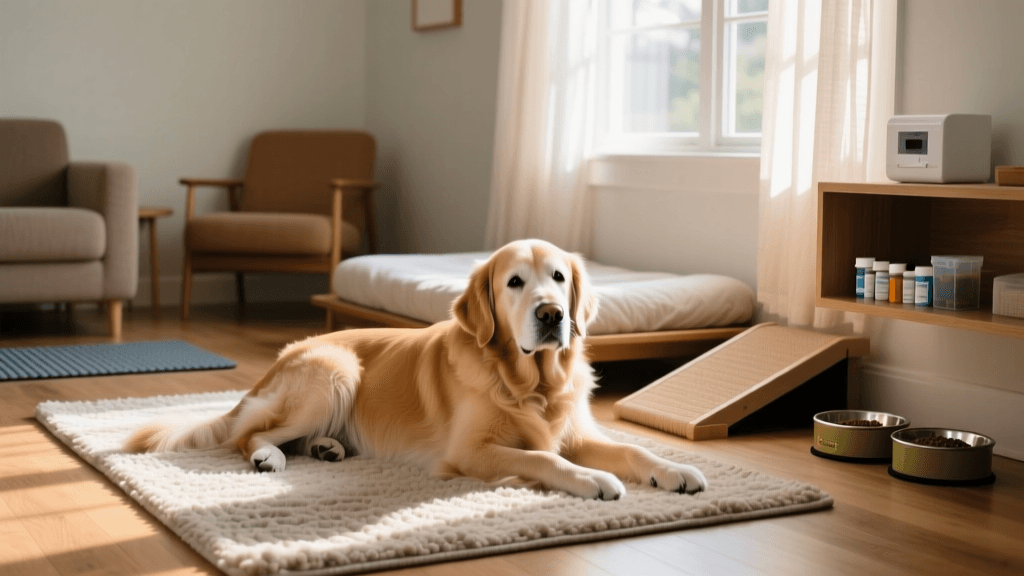
Cover high-traffic areas and pathways leading to essential resources (food, water, bed, and doors) with non-slip rugs. Avoid rugs with curled edges that could become tripping hazards. For a more customizable solution, interlocking foam puzzle mats or yoga mats with a textured, non-slip backing provide excellent grip and slight cushioning. If you prefer to keep your rugs, invest in heavy-duty, non-slip rug pads to anchor them firmly to the floor.
Ramps and Stairs
Jumping on and off the couch or into the car puts immense concussive force on a senior dog's joints. Invest in pet ramps or stairs. When selecting a ramp, pay close attention to the incline. The ideal incline for a senior dog is between 18 and 25 degrees. A ramp that is too steep will cause anxiety and may result in a slide-down accident. Look for ramps with side rails and a high-traction surface, such as artificial grass or ridged rubber.
Orthopedic Bedding
Older dogs spend significantly more time sleeping or resting. A thin, poly-fill stuffed bed will not provide the necessary support. Upgrade to a high-density memory foam orthopedic bed. The foam should be at least 4 inches thick to prevent the dog's heavy joints from bottoming out against the hard floor. Consider beds with waterproof liners to protect the foam from age-related incontinence, and opt for low-profile designs so your dog does not have to step high to get into bed.
Adjusting Your Daily Routine
Your dog's exercise needs do not disappear as they age, but the type of exercise must evolve. The goal shifts from burning off excess energy to maintaining muscle mass and joint mobility without causing inflammation.
From Cardio to "Sniffaris"
Instead of long, brisk, three-mile walks, break your dog's exercise into three or four shorter, 10-to-15-minute outings. Embrace the concept of a "Sniffari"—a slow, meandering walk where the dog dictates the pace and is allowed to sniff every bush and tree. Mental stimulation through scent work is highly tiring for dogs and provides immense cognitive benefits without the physical wear and tear of high-impact cardio.
Potty Breaks and Hydration
Aging kidneys are less efficient at concentrating urine, and a weakening sphincter muscle means your dog simply cannot "hold it" as long as they used to. Increase the frequency of potty breaks. If you work long hours, consider hiring a midday dog walker or installing a doggy door that leads to a secure, easily accessible, well-lit potty area. Ensure water bowls are placed on multiple levels of your home so your dog never has to navigate stairs just to get a drink.
Diet and Nutrition Adjustments
Metabolism slows down as dogs age, making them more prone to obesity, which exacerbates joint pain. However, simply cutting calories is not always the answer, as senior dogs still require high-quality protein to prevent muscle wasting (sarcopenia).
According to experts at the Tufts University Cummings School of Veterinary Medicine, there is no single "senior" nutrient profile that fits every aging dog. A dog with early kidney disease will need a phosphorus-restricted diet, while a dog with cancer might need a high-calorie, high-fat diet to prevent weight loss. Always consult your veterinarian before switching to a senior-specific formula. That said, incorporating Omega-3 fatty acids (EPA and DHA) through high-quality fish oil supplements is widely recommended to support cognitive function and reduce joint inflammation.
Senior Dog Care: Cost and Product Comparison
Investing in your senior dog's comfort requires some financial planning. Below is a comparison chart of essential modifications and products to help you budget for your dog's golden years.
| Product / Modification | Estimated Cost | Primary Benefit | Key Feature to Look For |
|---|---|---|---|
| Orthopedic Memory Foam Bed | $75 - $180 | Joint support and pressure relief | Minimum 4-inch thick human-grade memory foam |
| Pet Ramp (Couch or Bed) | $50 - $120 | Prevents jumping injuries | Incline between 18-25 degrees with side rails |
| Non-Slip Paw Grips / Socks | $15 - $30 | Improves traction on hard floors | Breathable material with silicone paw pads |
| Elevated Food & Water Bowls | $25 - $60 | Reduces neck and spine strain | Adjustable height to match dog's shoulder level |
| Snuffle Mat / Puzzle Toys | $20 - $45 | Low-impact mental stimulation | Machine washable with varying difficulty levels |
Veterinary Care and Preventative Health
The American Kennel Club (AKC) recommends that senior dogs transition from annual wellness exams to bi-annual (every six months) check-ups. Because dogs age much faster than humans, a six-month gap is equivalent to several human years, allowing for the early detection of diseases like diabetes, hypothyroidism, and chronic kidney disease.
Request a comprehensive senior blood panel and urinalysis at every visit to establish a baseline and catch internal changes before outward symptoms appear. Furthermore, do not neglect dental health; periodontal disease is rampant in older dogs and can lead to systemic infections affecting the heart and liver.
"Aging is not a disease, but the physiological changes that accompany it can make your dog more susceptible to illness. Proactive, bi-annual veterinary care is the cornerstone of ensuring your senior dog's golden years are truly golden."
Conclusion: Patience and Empathy
Living with a senior dog requires a shift in perspective. Accidents in the house, hesitation at the top of the stairs, or a slower pace on your morning walks are not acts of defiance; they are the natural realities of an aging body. By making thoughtful modifications to your home, adjusting your daily routines, and staying vigilant with veterinary care, you honor the lifelong bond you share. The effort you put into their comfort today is the ultimate way to say thank you for a lifetime of unconditional love.
priya-sutaria
All our authors care for dogs every day — read more of their work on the authors page.