Greyhound vs French Bulldog: The Best Apartment Dogs
Discover whether a Greyhound or French Bulldog is the best apartment dog. Compare exercise needs, costs, space requirements, and daily routines.
The Apartment Dog Dilemma: Big vs. Small
When urban dwellers and apartment residents begin their search for a canine companion, the default assumption is often that smaller dogs are inherently better suited for confined spaces. However, sharing your life with a dog in an apartment requires looking far beyond mere physical dimensions. Energy levels, vocalization, grooming needs, and daily routines play a much more significant role in determining whether a dog will thrive in an apartment environment. In this comprehensive breed comparison, we are pitting a giant of the racing world against a beloved small-breed companion: the Greyhound and the French Bulldog.
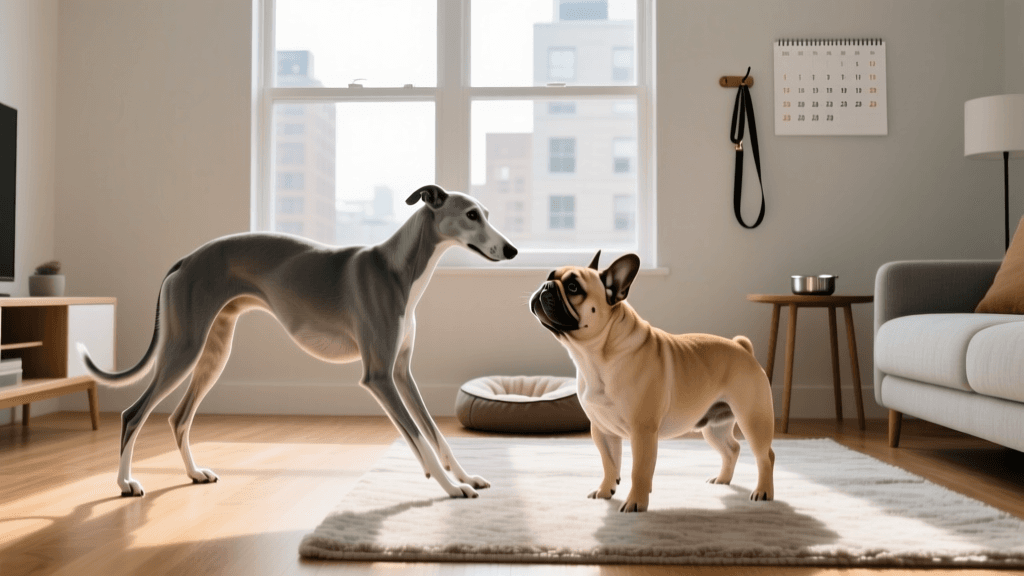
At first glance, comparing a 70-pound sighthound to a 25-pound brachycephalic companion seems like an exercise in contrasts. Yet, both breeds frequently appear on "best apartment dogs" lists for entirely different reasons. According to the American Kennel Club (AKC), the Greyhound is famously known as a "45-mph couch potato," possessing a calm, low-energy indoor demeanor that makes them surprisingly excellent apartment residents. On the other hand, the French Bulldog is a small, adaptable, and deeply affectionate breed that requires minimal space to feel entirely at home. But which one is truly the better fit for your specific daily routine, budget, and lifestyle? Let us break down the practical realities of living with each breed.
Space, Size, and Crate Requirements
While apartments are measured in square footage, a dog's living experience is measured in usable floor space and the footprint of their essential gear. The French Bulldog is undeniably the winner when it comes to physical footprint. Weighing between 16 and 28 pounds and standing 11 to 13 inches tall at the shoulder, a Frenchie requires a relatively small sleeping area. A standard 24-inch or 30-inch wire crate (such as the Midwest iCrate) is perfectly adequate for their indoor den, taking up minimal space in a studio or one-bedroom apartment.
The Greyhound, conversely, is a large breed. Males typically stand 28 to 30 inches tall and weigh 65 to 70 pounds, while females are slightly smaller. Despite their size, Greyhounds are notorious for being "space-efficient" indoors because they spend the vast majority of their time curled up in a tight ball on a soft surface. However, their crate requirements are substantial. You will need a 42-inch to 48-inch extra-large crate, which demands a significant footprint in your living room or bedroom. Furthermore, because Greyhounds have very little body fat and thin coats, they require thick, orthopedic dog beds or memory foam mats to prevent pressure sores on their bony prominences, adding to the floor space dedicated to their comfort.
Daily Exercise and Routine Realities
The most critical factor in apartment dog ownership is the daily exercise routine. Without a private backyard, every bathroom break and exercise session requires leashing up, navigating hallways, and stepping out into the urban environment.
The French Bulldog Routine
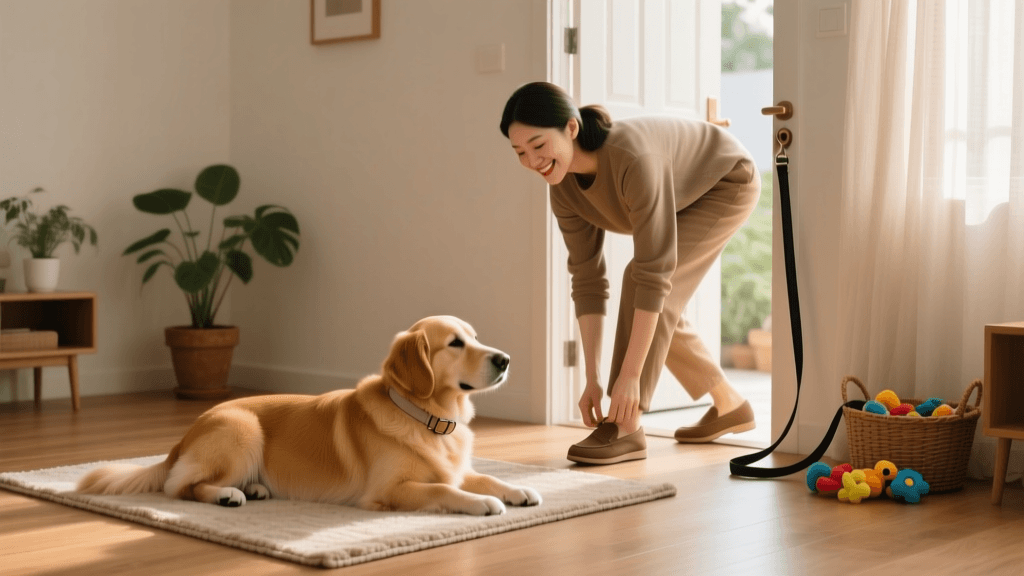
French Bulldogs require moderate, low-impact exercise. A daily routine consisting of two 15-to-20-minute leash walks, combined with some indoor play using a Kong Classic or a snuffle mat, is usually sufficient to keep them physically and mentally satisfied. However, their brachycephalic (flat-faced) anatomy means they are highly susceptible to heat exhaustion. During the summer months, apartment dwellers must restrict Frenchie walks to the early morning or late evening, and always carry a portable water bottle. Their exercise routine is highly predictable and easily managed around a standard 9-to-5 work schedule.
The Greyhound Routine
Contrary to popular belief, retired racing Greyhounds do not need miles of running every day. A daily routine of two 20-to-30-minute brisk walks is usually enough to maintain their muscle tone and mental health. However, to truly satisfy their sighthound instincts, they benefit from a weekly visit to a securely fenced dog park where they can engage in short, explosive sprints. The primary challenge for apartment dwellers is the leash requirement; Greyhounds have an incredibly high prey drive and a strong instinct to chase. They can never be trusted off-leash in an unfenced area, meaning urban owners must be diligent about finding secure, enclosed spaces for their dog to stretch its legs.
Multi-Pet Households and Socialization
If your apartment living situation involves sharing space with other pets, the breed you choose will drastically alter your household dynamics. French Bulldogs are generally highly sociable, eager to please, and adaptable. They tend to get along wonderfully with other dogs and, with proper early socialization, can coexist peacefully with cats. Their stubborn streak might make training a challenge, but their underlying temperament is companionable and agreeable.
Greyhounds present a unique challenge in multi-pet households due to their prey drive. Many retired Greyhounds have never been exposed to small animals and may instinctively view cats, rabbits, or even small dog breeds (like Chihuahuas or Yorkies) as prey. While many Greyhounds can be successfully "cat-tested" and trained to live with felines, it requires a patient, structured introduction process and constant supervision. If you live in a multi-pet apartment or frequently use communal apartment dog parks, a French Bulldog is generally the safer, more predictable choice.
Cost of Ownership: Food, Gear, and Vet Bills
Sharing your life with a dog is a financial commitment, and the costs vary wildly between a giant sighthound and a small brachycephalic breed. Below is a structured comparison of the estimated annual costs associated with each breed.
| Expense Category | French Bulldog | Greyhound |
|---|---|---|
| High-Quality Kibble (Annual) | $300 - $450 (1 to 1.5 cups/day) | $600 - $850 (3 to 4 cups/day) |
| Preventative Medications (Flea/Tick/Heartworm) | $150 - $200 (Small/Medium dose) | $250 - $350 (Large/XL dose) |
| Pet Insurance (Average Monthly Premium) | $50 - $90 (High hereditary risk) | $30 - $50 (Generally healthy) |
| Initial Gear (Crate, Bed, Harness) | $150 - $250 | $250 - $400 (XL orthopedic bed, 42" crate) |
| Winter Gear (Coats/Sweaters) | $50 (Optional) | $150 - $250 (Essential for thin coats) |
While the Greyhound costs more in terms of daily caloric intake, preventative medications, and oversized gear, the French Bulldog is notoriously expensive when it comes to veterinary care and pet insurance. Because Frenchies are prone to a host of hereditary and structural issues, insurance premiums are significantly higher, and out-of-pocket vet costs for skin allergies, ear infections, and spinal issues can quickly escalate into the thousands.
Health Considerations and Lifespan
Health profiles are a vital part of selecting a dog that fits your emotional and financial capacity for care. The French Bulldog is a brachycephalic breed, meaning their shortened airways can lead to Brachycephalic Obstructive Airway Syndrome (BOAS). As noted by veterinary experts at the AKC, this condition can cause severe breathing difficulties, exercise intolerance, and sleep apnea. Furthermore, their bat-like ears require weekly cleaning to prevent chronic yeast infections, and their facial folds must be wiped daily to avoid dermatitis. Their average lifespan is 10 to 12 years.
Greyhounds, by contrast, are generally robust and free of the severe genetic defects that plague many purebreds, thanks to their history as working athletes. Their average lifespan is 12 to 14 years. However, they are uniquely sensitive to anesthesia due to their low body fat, meaning any surgical procedures require a veterinarian experienced with sighthounds. They are also highly prone to severe periodontal disease, requiring diligent daily tooth brushing and professional dental cleanings. Additionally, like many deep-chested breeds, owners must be educated on the signs of Gastric Dilatation-Volvulus (bloat) and utilize slow-feeder bowls to prevent rapid eating.
Travel and Commuting
For the urban professional who travels frequently or relies on public transit, the French Bulldog holds a distinct advantage. If your Frenchie weighs under 20 pounds, they can easily fit into an airline-approved soft-sided carrier under the seat in front of you, making air travel relatively stress-free. They are also compact enough to comfortably ride in a rideshare or on a subway train without drawing undue attention.
Traveling with a Greyhound requires logistical planning. They are far too large for cabin flights and would need to travel via specialized pet transport or road trips. Furthermore, their long snouts and slender bodies make standard car harnesses ineffective; owners must invest in specialized, crash-tested sighthound harnesses or custom-fitted car barriers to ensure safety during road trips.
Final Verdict: Which Breed Fits Your Lifestyle?
Ultimately, the choice between a Greyhound and a French Bulldog for apartment living comes down to your personal lifestyle, budget, and tolerance for specific quirks.
- Choose the French Bulldog if: You want a highly portable, deeply affectionate companion who thrives on being by your side, you have the budget for higher veterinary and insurance costs, and you prefer a dog that can easily travel with you on planes and public transit.
- Choose the Greyhound if: You have the floor space for a large crate and orthopedic bed, you enjoy a quiet, independent, and gentle companion, you are committed to managing their high prey drive on walks, and you prefer a breed with fewer hereditary respiratory and structural health issues.
Both breeds can flourish in an apartment setting, provided their unique physical and emotional needs are met. By looking past the size stereotypes and focusing on the daily realities of care, you can confidently select the perfect canine roommate for your urban lifestyle.
aaron-whyte
All our authors care for dogs every day — read more of their work on the authors page.