Navigating the Senior Dog Stage: Home Adaptations and Daily Routines
Learn how to adapt your home and daily routine for a senior dog. Discover practical tips on mobility aids, orthopedic beds, and age-appropriate care.
Watching your vibrant, energetic puppy grow into a distinguished senior dog is one of the most rewarding experiences of pet ownership. However, the transition into the senior life stage brings a unique set of challenges that require proactive adjustments to your home environment and daily schedule. According to the ASPCA, dogs are generally considered senior when they reach the last 25 percent of their expected lifespan. This means giant breeds like Great Danes may enter their senior years as early as age five or six, while smaller breeds like Chihuahuas might not show signs of aging until they are ten or twelve years old.
Identifying the Senior Life Stage
The shift into the senior life stage is rarely an overnight transformation. Instead, it presents as a gradual slowing down. You might notice your dog hesitating before jumping into the car, sleeping more deeply and for longer durations, or developing a slight cloudiness in their eyes. Recognizing these subtle changes early allows you to implement supportive care before mobility issues or cognitive decline severely impact their quality of life. The goal of senior dog care is not just to extend their lifespan, but to maximize their healthspan, ensuring their golden years are comfortable, pain-free, and enriching.
Essential Home Adaptations for Aging Joints
As dogs age, conditions like osteoarthritis, hip dysplasia, and general muscle atrophy become increasingly common. Adapting your living space is one of the most impactful ways to support your aging companion.
1. Upgrading Flooring for Traction
Hardwood, tile, and laminate floors are notoriously slippery and can cause a senior dog to splay out, leading to severe joint strain or acute injuries like torn cruciate ligaments. Cover high-traffic areas and your dog's favorite resting spots with low-pile, non-slip area rugs. Alternatively, interlocking foam puzzle mats (often used in home gyms or playrooms) provide excellent grip and gentle cushioning for arthritic joints. Ensure all rugs have a heavy-duty rubber backing or use non-slip rug tape to prevent the mats from sliding out from under your dog's paws.
2. Ramps and Stairs: The 1:4 Slope Rule
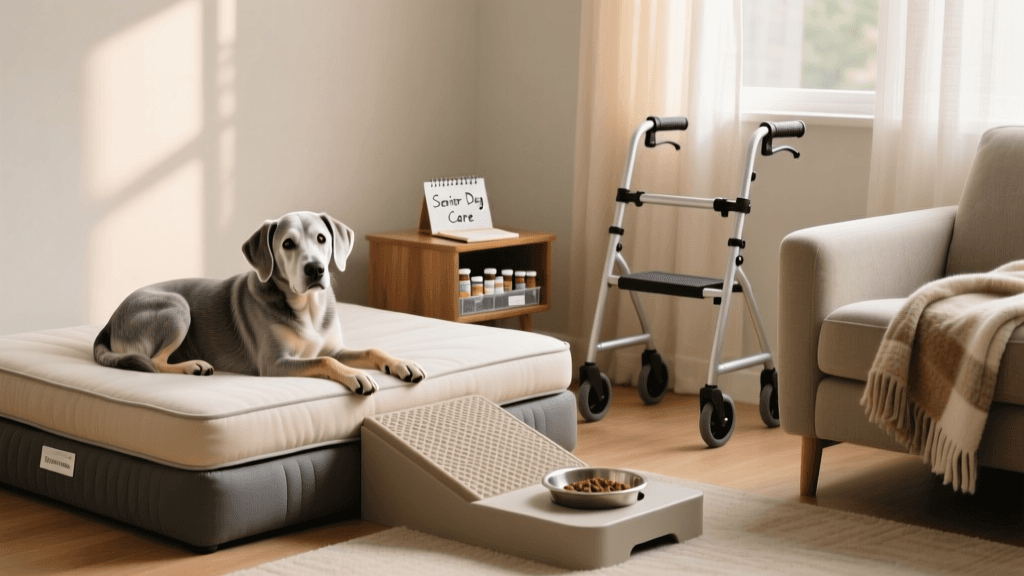
Jumping on and off furniture creates immense concussive force on aging joints. While pet stairs are popular, they still require significant joint flexion. A ramp is often a superior choice for dogs with severe arthritis or spinal issues like Intervertebral Disc Disease (IVDD). When purchasing or building a ramp, adhere to the 1:4 slope ratio for safety: for every one inch of vertical height, you need four inches of ramp length. For example, if your bed is 24 inches high, you will need a ramp that is at least 96 inches (8 feet) long to ensure the incline is gentle enough for an aging dog to navigate without strain.
3. Investing in True Orthopedic Support
Many beds labeled 'orthopedic' are simply stuffed with polyester fiberfill that flattens out within weeks, offering zero joint support. A true orthopedic bed must utilize high-density memory foam or supportive orthopedic foam. For small to medium dogs, a minimum thickness of 4 inches is recommended. For large and giant breeds (over 70 pounds), look for beds with at least 6 to 7 inches of therapeutic foam, such as the Big Barker Orthopedic Dog Bed, which typically ranges from $250 to $350. This investment prevents pressure sores and ensures your dog's hips and shoulders do not bottom out against the hard floor.
Mobility Aid Comparison Chart
| Mobility Aid Type | Best Use Case | Estimated Cost | Pros and Cons |
|---|---|---|---|
| Adjustable Pet Ramp | Couch and bed access | $60 - $150 | Pros: Gentle on joints, customizable height. Cons: Takes up significant floor space. |
| High-Density Foam Stairs | Small to medium dogs, low furniture | $35 - $90 | Pros: Compact, lightweight. Cons: Too steep for severe arthritis or large breeds. |
| Rear Lifting Harness | Stairs, vehicles, and slippery floors | $25 - $65 | Pros: Provides full hindquarter support. Cons: Requires physical strength from the owner. |
| Orthopedic Memory Foam Bed | Primary resting and sleeping | $80 - $350 | Pros: Prevents pressure sores, supports joints. Cons: High initial cost, bulky. |
Restructuring Your Daily Routine
Life with a senior dog requires a shift in how you approach daily exercise, mental stimulation, and basic care routines. The American Kennel Club emphasizes that while senior dogs still need exercise, the intensity and duration must be carefully managed.
Transitioning to 'Sniffaris'
Replace long, fast-paced walks with shorter, more frequent 'sniffaris.' A 15 to 20-minute walk where the dog is allowed to stop, sniff, and process their environment provides immense mental enrichment. The mental fatigue generated by processing complex scent trails is often more tiring for a senior dog than a mile of physical walking, and it puts significantly less wear and tear on their cartilage.
Adjusting Potty Break Schedules
Aging kidneys lose some of their ability to concentrate urine, and older dogs may experience a weakening of the urinary sphincter. This means your senior dog simply cannot hold it as long as they used to. Adjust your routine to include mid-day potty breaks or consider installing a doggy door to a secure, easily accessible yard. If you work long hours, hiring a mid-day dog walker or utilizing indoor potty solutions like large artificial grass patches can prevent uncomfortable accidents and urinary tract infections.
Low-Impact Mental Enrichment
When physical mobility is limited, mental stimulation becomes crucial to prevent boredom and canine cognitive dysfunction. Incorporate snuffle mats, which encourage natural foraging behaviors, or use lick mats spread with plain, dog-safe pumpkin puree and frozen. Licking is a naturally soothing behavior for dogs that releases endorphins, helping to calm anxious senior dogs without requiring physical exertion.
Nutritional Adjustments and Joint Support
As your dog's metabolism slows down and their activity level decreases, their caloric requirements will likely drop. Obesity is one of the most detrimental factors for an aging dog, as excess weight places exponential stress on compromised joints. According to nutrition experts at the Tufts University Cummings Veterinary Medical Center, there is no universal 'senior dog food' profile, making it vital to evaluate your individual dog's body condition score rather than blindly switching to a senior-labeled kibble.
In addition to weight management, targeted supplementation can vastly improve joint health. Look for supplements containing:
- Glucosamine Hydrochloride and Chondroitin Sulfate: These building blocks help maintain cartilage health and synovial fluid viscosity.
- Omega-3 Fatty Acids (EPA and DHA): Sourced from wild-caught fish oil, Omega-3s are potent anti-inflammatories. A general therapeutic dosage is roughly 300mg of combined EPA/DHA per 10 pounds of body weight, though you should always confirm this with your veterinarian.
- Green Lipped Mussel: A natural source of glycosaminoglycans and unique anti-inflammatory compounds that many holistic veterinarians recommend for aging joints.
Proactive Veterinary Care and Monitoring
The 'wait and see' approach is dangerous in the senior life stage. Dogs age approximately seven times faster than humans, meaning a six-month delay in veterinary care is akin to a human skipping doctors' appointments for three or four years. Transition from annual wellness exams to bi-annual check-ups. These visits should include a comprehensive senior blood panel (Complete Blood Count, Chemistry Profile, and Urinalysis) and a thyroid check. Early detection of conditions like chronic kidney disease, hypothyroidism, and liver dysfunction allows for dietary and medical interventions that can add years to your dog's life.
Embracing the Slower Pace
Living with a senior dog is an exercise in patience, empathy, and deep companionship. By making thoughtful adaptations to your home, adjusting your daily routines to match their physical capabilities, and staying proactive with veterinary care, you honor the bond you share. The senior stage may be slower, but it is often filled with a profound, quiet devotion that makes every adaptation entirely worthwhile.
tom-renshaw
All our authors care for dogs every day — read more of their work on the authors page.