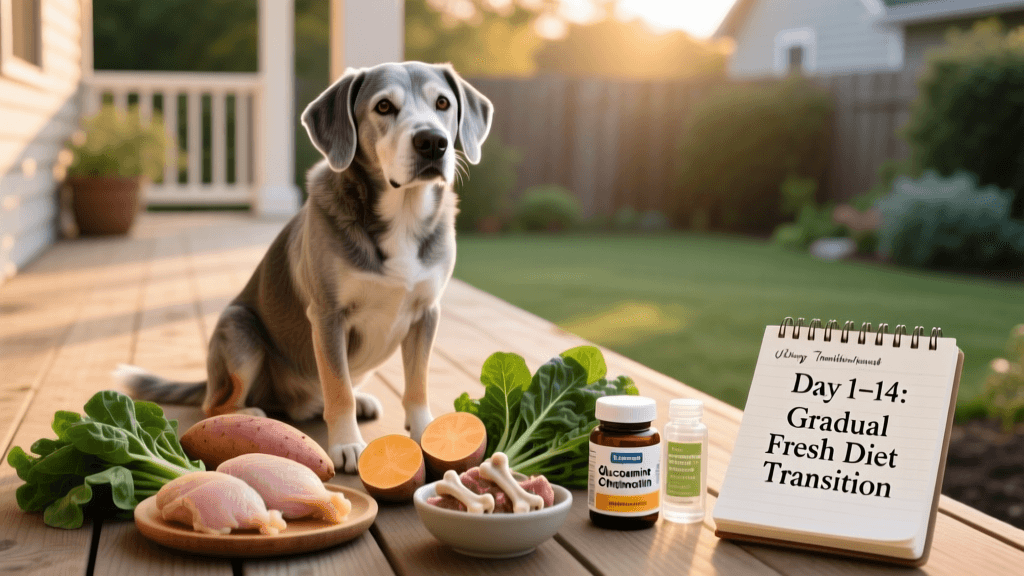
2026 Guide: Safe Fresh Food Transition For Senior Dogs
Discover the safest way to transition your senior dog to a fresh food diet in 2026. Includes a 14-day schedule, joint supplements, and digestive tips.
The Evolution of Senior Canine Nutrition in 2026
Welcome to 2026, a year where the paradigm of canine nutrition has shifted dramatically away from ultra-processed, extruded kibble toward biologically appropriate, fresh, and gently cooked diets. For senior dogs—typically those over seven years of age, or five years for giant breeds—this dietary evolution offers profound benefits. As our understanding of canine aging deepens, veterinary nutritionists increasingly recognize that older dogs require highly bioavailable proteins, enhanced moisture content, and targeted functional ingredients to support their changing physiology.
Transitioning a senior dog to a raw or fresh food diet, however, is not as simple as swapping out their food bowl overnight. Aging dogs possess more sensitive gastrointestinal tracts, decreased endogenous enzyme production, and slower metabolic rates. A rushed transition can lead to severe digestive upset, nutrient malabsorption, and unnecessary stress on their system. This comprehensive guide will walk you through the safest, most effective methods for introducing a fresh diet to your senior companion, ensuring their golden years are vibrant, comfortable, and full of vitality.
Why Senior Dogs Require a Slower Dietary Transition
When transitioning a young, healthy adult dog to a fresh diet, a standard 7-day protocol is often sufficient. Senior dogs, however, require a more measured approach. The microbiome of an aging dog is less resilient and takes longer to adapt to new macronutrient profiles and bacterial exposures inherent in raw or lightly cooked foods.
Furthermore, the moisture content in fresh diets is significantly higher than in kibble—often ranging from 70% to 85%, compared to kibble's 10%. While this hydration is incredibly beneficial for senior kidney function and joint lubrication, a sudden influx of water volume can cause loose stools if the digestive tract is not given time to adjust. According to experts at the Tufts University Cummings Veterinary Medical Center, gradual dietary shifts are paramount for older pets to prevent osmotic diarrhea and ensure the gut flora can properly ferment and process the new, highly digestible proteins.
The 14-Day Senior Dog Fresh Food Transition Schedule
To protect your senior dog's delicate digestive system, we recommend a strict 14-day transition schedule. This allows the pancreas to gradually upregulate enzyme production and the gut microbiome to adapt to the new food matrix. Always measure your dog's food by weight (using a digital kitchen scale) rather than volume to ensure precise caloric intake.
| Phase | Days | Fresh Diet Ratio | Old Diet Ratio | Key Action & Monitoring |
|---|---|---|---|---|
| Phase 1 | 1 to 3 | 10% | 90% | Introduce fresh food as a 'topper'. Monitor stool consistency closely. |
| Phase 2 | 4 to 6 | 25% | 75% | Add a canine-specific digestive enzyme to meals to aid breakdown. |
| Phase 3 | 7 to 9 | 50% | 50% | Midpoint check. If stools are soft, hold this phase for 2 extra days. |
| Phase 4 | 10 to 12 | 75% | 25% | Reduce old diet. Ensure adequate water intake as kibble is removed. |
| Phase 5 | 13 to 14 | 100% | 0% | Full fresh diet. Monitor energy levels, coat shine, and overall appetite. |
Crucial 2026 Supplement Additions for Senior Dogs
A high-quality commercial fresh food or a properly formulated homemade diet provides the baseline nutrition your dog needs. However, the raw and fresh diet philosophy in 2026 heavily emphasizes 'functional supplementation'—adding specific, whole-food ingredients that target common senior ailments like osteoarthritis, cognitive decline, and renal stress.
Joint and Mobility Support
Cartilage degradation is one of the most common issues in aging dogs. While fresh diets naturally contain more glucosamine and chondroitin (if bone and cartilage are included in the grind), therapeutic doses are often required for seniors. Incorporate New Zealand Green-Lipped Mussel (GLM) powder into their daily meals. GLM is rich in ETA (eicosatetraenoic acid), a rare omega-3 fatty acid that actively inhibits inflammatory pathways. For a 50-pound senior dog, adding 500mg of high-quality GLM powder daily can yield noticeable improvements in morning stiffness within three weeks.
Digestive Enzymes and Microbiome Support
As dogs age, their pancreas produces fewer digestive enzymes, making it harder to extract nutrients from food. Even though fresh food is inherently more bioavailable, supplementing with a full-spectrum plant and animal-based enzyme blend ensures maximum nutrient absorption. Additionally, introducing raw, unpasteurized goat milk kefir or a multi-strain canine probiotic (containing Lactobacillus acidophilus and Bifidobacterium animalis) helps fortify the gut lining and supports the immune system, which is heavily housed in the gastrointestinal tract.
Hydration and Renal Function
Kidney disease is a leading concern for senior canines. The high moisture content of a fresh diet is already a massive advantage over dry kibble, but you can enhance this by adding homemade, unsalted bone broth to their meals. Bone broth provides easily absorbable amino acids, collagen, and trace minerals that support renal health and gut integrity. Ensure the broth is made without onions, garlic, or excess sodium, and simmer it for at least 24 hours to extract maximum nutrients from the bones.
Addressing the Dental Health Myth
One of the most persistent myths in canine nutrition is that dogs need dry kibble to 'scrape' their teeth clean. Veterinary dentists have thoroughly debunked this; kibble shatters upon impact and does little to reduce plaque, while the starchy carbohydrates actually promote bacterial growth in the mouth.
Transitioning to a soft, fresh diet does not inherently harm your senior dog's teeth. In fact, fresh diets are typically much lower in refined carbohydrates and sugars, which drastically reduces the oral microbiome's ability to produce the acids that cause periodontal disease. If your senior dog still has strong teeth, incorporating recreational raw meaty bones (like raw, weight-bearing marrow bones or duck necks, sized appropriately for the dog) two to three times a week provides excellent mechanical cleaning. For seniors with advanced dental disease or missing teeth, the soft texture of a fresh diet is a blessing, allowing them to eat comfortably without oral pain. Maintain their dental health through daily brushing with enzymatic toothpaste and regular veterinary dental assessments.
Sourcing and Safety: Adhering to Global Guidelines
When feeding a fresh or raw diet, especially to a vulnerable senior dog, nutritional completeness is non-negotiable. An imbalanced diet can lead to severe deficiencies, particularly in calcium, phosphorus, and trace minerals, which can accelerate bone loss in older dogs. The WSAVA Global Nutrition Guidelines strongly recommend feeding diets formulated by board-certified veterinary nutritionists that meet or exceed AAFCO or FEDIAF nutrient profiles for adult maintenance.
In 2026, the market is flooded with 'gently cooked' and 'raw' meal delivery services. When selecting a provider, look for transparency regarding their formulation process. Ensure the company employs a full-time veterinary nutritionist and conducts rigorous feeding trials and pathogen testing (for Salmonella, Listeria, and E. coli). If you choose to prepare a homemade raw diet, you must use a science-backed pre-mix or consult with a veterinary nutritionist to formulate a recipe tailored to your dog's specific bloodwork and health history.
Monitoring Your Senior Dog's Response
Once the 14-day transition is complete, your role shifts to ongoing monitoring. The American Kennel Club emphasizes the importance of regular wellness checks for senior dogs, and your daily observations at home are the first line of defense against health issues.
- Body Condition Score (BCS): Senior dogs are prone to both obesity (due to reduced activity) and muscle wasting (sarcopenia). Adjust the caloric density of their fresh meals to maintain an ideal BCS of 4 or 5 out of 9. You should be able to easily feel their ribs without pressing hard, and they should have a visible abdominal tuck.
- Stool Quality: Ideal fresh-food stools are small, firm, and easy to pick up. Because fresh diets are highly digestible and contain less indigestible filler than kibble, you will likely notice a significant reduction in stool volume and odor.
- Coat and Skin: The bioavailable omega fatty acids in fresh meats and added fish oils should result in a softer, shinier coat and a reduction in dry, flaky skin within the first 60 days of the transition.
- Energy and Cognition: Many owners report a 'puppy-like' resurgence in energy and mental clarity once their senior dog is removed from the inflammatory burden of ultra-processed foods and artificial preservatives.
Final Thoughts on Fresh Feeding for Seniors
Transitioning your senior dog to a raw or fresh food diet in 2026 is one of the most impactful investments you can make in their quality of life. By respecting their aging physiology with a slow, 14-day transition, supplementing with targeted functional ingredients like Green-Lipped Mussel and digestive enzymes, and adhering to strict nutritional guidelines, you can help your loyal companion thrive well into their twilight years. Always consult with your primary veterinarian or a board-certified veterinary nutritionist before making significant dietary changes, especially if your dog is managing chronic conditions like diabetes, severe renal disease, or pancreatitis.
anouk-beaumont
All our authors care for dogs every day — read more of their work on the authors page.